What Is Morning Sickness and Why Does It Happen?
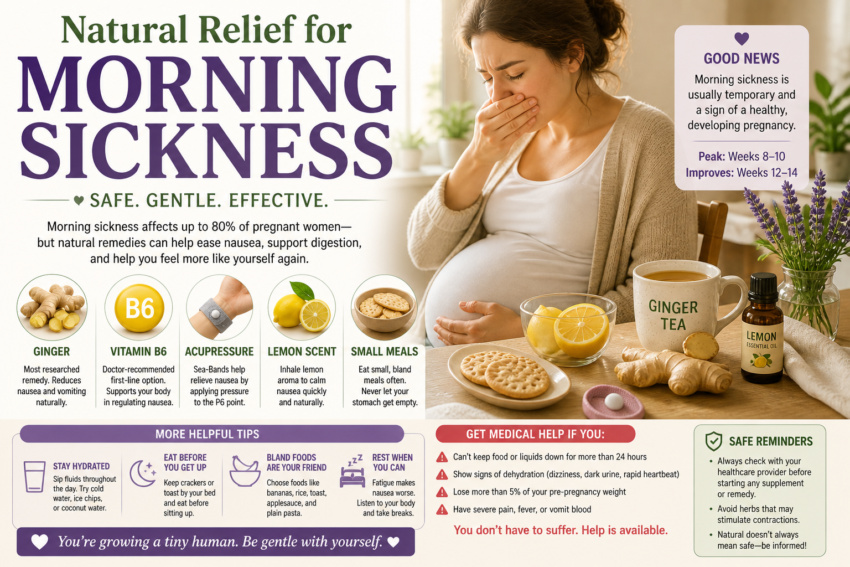
Morning sickness is nausea and vomiting during pregnancy — usually in the first trimester, though the name is famously misleading. It can strike at any time of day, often with no warning, and for many pregnant women it’s one of the most challenging parts of early pregnancy.
It typically begins around week 6 and peaks between weeks 8 and 10. Most women find it improves significantly by weeks 12–14, though for some it lingers into the second trimester or beyond.
The main culprit is human chorionic gonadotropin (hCG) — the hormone that surges rapidly in early pregnancy. Rising estrogen levels play a role too. Both are signs of a healthy, developing pregnancy, which is some comfort — though little consolation when you’re nauseous at 6am and can’t face breakfast.
About 70–80% of pregnant women experience some level of nausea during the first trimester. For most, it’s manageable. For some, it escalates into hyperemesis gravidarum — a severe form of pregnancy nausea that causes significant dehydration, weight loss, and inability to keep any food or liquid down. If your symptoms are that severe, natural remedies are not enough and you need medical care promptly.
For the majority of women — moderate nausea that makes mornings difficult and food unappealing — natural approaches offer real, meaningful relief. Here’s what actually works.
Does Natural Relief Actually Work? What the Research Says
The honest answer is: yes, for several remedies — and we have the clinical trials to prove it.
Ginger and vitamin B6 both have multiple randomized controlled trials supporting their effectiveness for pregnancy nausea. Acupressure has reasonable clinical support too. For other remedies like lemon aromatherapy and dietary adjustments, the evidence is more observational or based on traditional use — but they’re considered safe during pregnancy and many women find them genuinely helpful.
What natural remedies can’t do is treat hyperemesis gravidarum or severe nausea that’s causing dehydration or weight loss. In those cases, medical treatment — including IV fluids and anti-nausea medication — is necessary and shouldn’t be delayed.
One more important note: “natural” doesn’t automatically mean safe during pregnancy. Some herbs that are harmless when not pregnant can stimulate contractions or cause harm to a developing baby. We’ll flag anything that needs a caution throughout this guide.
Ginger — The Most Evidence-Backed Remedy for Morning Sickness
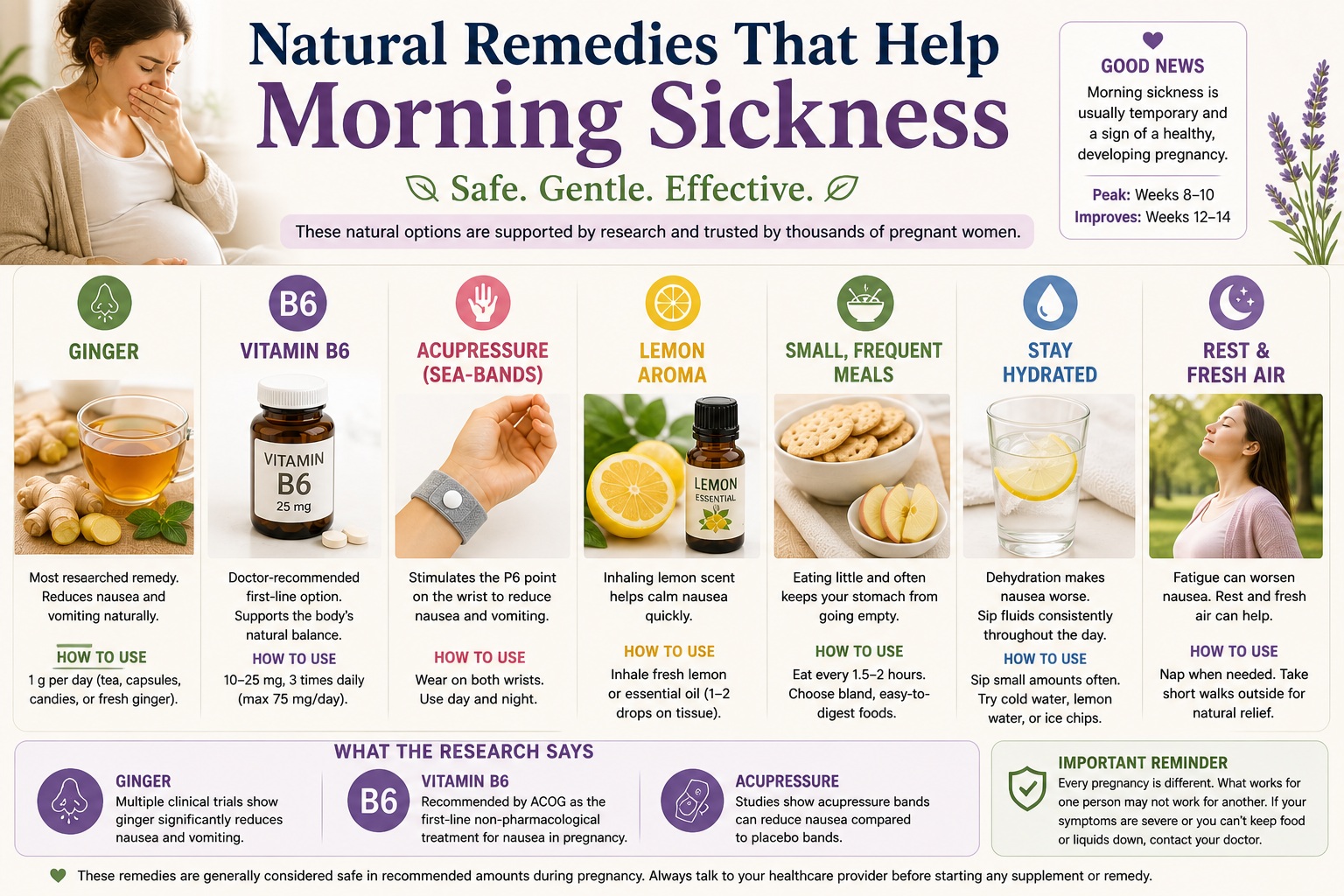
If you’re going to try one natural remedy for morning sickness, make it ginger. It’s the most thoroughly studied natural treatment for pregnancy nausea and consistently shows up as effective in clinical research.
Multiple randomized controlled trials have found ginger significantly reduces nausea and vomiting in the first trimester compared to placebo. A review published in the journal Obstetrics & Gynecology found ginger was effective and safe for treating pregnancy-related nausea. The American College of Obstetricians and Gynecologists (ACOG) lists ginger as a non-pharmacological option for morning sickness relief.
How it works: Ginger contains gingerols and shogaols — compounds that speed gastric emptying and reduce the nausea signals sent from the gut to the brain.
Forms and how to use:
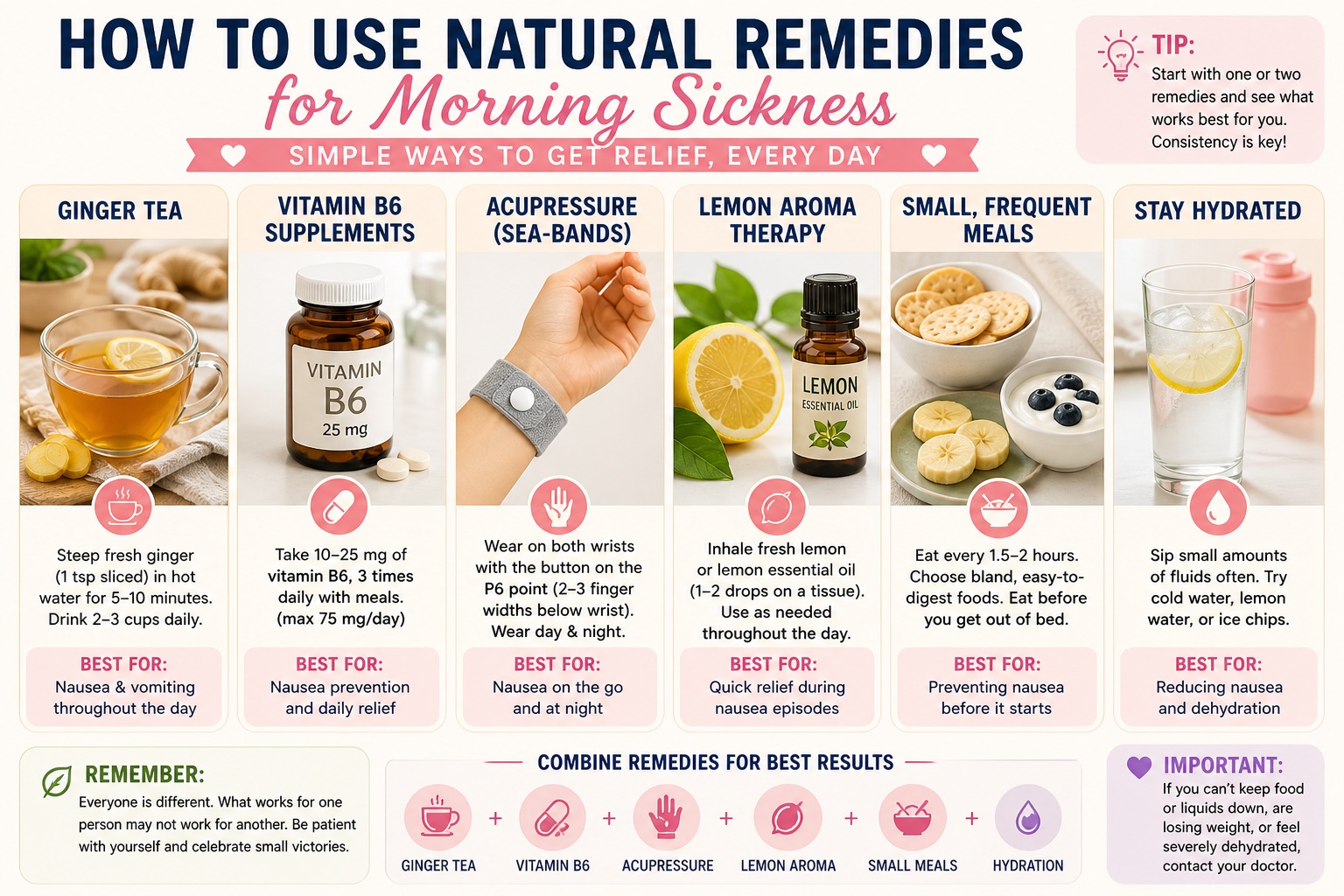
- Ginger tea: Steep fresh ginger root (about 1g) in hot water for 5 minutes. Drink 2–3 cups per day. One of the most effective and pleasant ways to get a therapeutic dose.
- Ginger capsules: 250mg capsules taken 4 times daily (1g total) is the dose used in most clinical trials. Look for products standardized to contain gingerols.
- Ginger candies or chews: Convenient for on-the-go nausea. Look for products made with real ginger, not artificial ginger flavoring.
- Crystallized ginger: Easy to nibble on throughout the day — check the ginger content on the label.
- Ginger ale: Most commercial ginger ales contain minimal real ginger. Homemade ginger ale or ginger beer with real ginger content works better.
Safety: Up to 1g of ginger per day is considered safe during pregnancy by most health authorities. Higher doses haven’t been studied thoroughly in pregnancy — stick to the established range. A small number of women experience mild heartburn from ginger. If that’s you, try a different form or reduce the amount.
Vitamin B6 — The Doctor-Recommended Natural Option
Vitamin B6 (pyridoxine) is the closest thing the medical world has to a recommended natural remedy for morning sickness. It’s the first-line recommendation from ACOG for nausea and vomiting in pregnancy — often before medications are considered.
How it works: The exact mechanism isn’t fully understood, but B6 appears to reduce the brain’s nausea response and helps regulate neurotransmitters involved in nausea signaling. Whatever the mechanism, the results in clinical trials are clear — it works.
Dosage: The standard dose used in clinical studies is 10–25mg taken 3 times per day (30–75mg total daily). Don’t exceed 100mg per day during pregnancy without medical guidance.
Forms: B6 is available as a standalone supplement (look for pyridoxine HCl) or as part of a prenatal vitamin. Many prenatal vitamins contain B6 — check the label to see how much yours provides before adding an additional supplement.
The B6 + Doxylamine combination: The most effective OTC approach for morning sickness combines B6 with doxylamine (an antihistamine found in Unisom SleepTabs). This combination is the active ingredient in Diclegis/Bonjesta — FDA-approved prescription medication for pregnancy nausea. Many OBs recommend taking B6 alongside half a Unisom tablet at night as a safe, effective, and affordable alternative. Ask your doctor before trying this.
Safety: B6 at recommended doses is considered very safe during pregnancy. It’s a water-soluble vitamin — excess is excreted rather than stored. Very high doses (above 200mg/day) have been associated with nerve issues, but this is far above the therapeutic range for morning sickness.
Acupressure and Sea-Bands
Acupressure targets the P6 (Neiguan) point — located on the inner wrist, about two finger-widths below the wrist crease between the two central tendons. Stimulating this point has been used in traditional Chinese medicine for nausea relief for centuries.
The modern version is a Sea-Band — an elastic wristband with a small plastic button that applies continuous pressure to the P6 point. They’re widely available, inexpensive, and safe to use throughout pregnancy.
What the research says: Results are mixed but generally positive. Several clinical trials have found acupressure (both manual and wristband) reduces nausea and vomiting in early pregnancy compared to placebo bands. A Cochrane review on interventions for nausea in pregnancy found acupressure shows promise, though evidence quality varies.
They work best for mild to moderate nausea. For severe nausea, they’re unlikely to be sufficient on their own — but they make an excellent complement to other remedies.
How to use them correctly: Position the button directly over the P6 point. Wear on both wrists for best effect. They can be worn continuously and are particularly useful at night when nausea often disrupts sleep.
Dietary Changes That Help Morning Sickness
What and when you eat has a significant impact on morning sickness severity. These aren’t dramatic interventions — but they’re consistent, free, and effective.
Eat small, frequent meals. An empty stomach makes nausea worse. Gastric acid with nothing to digest amplifies the nausea signal. Eating small amounts every 1.5–2 hours keeps the stomach from going empty. Think 6–8 small snacks rather than 3 large meals.
Eat before you get up. Keep dry crackers, plain rice cakes, or toast by your bed. Eating something bland before you even sit up in the morning can significantly reduce that first-wave nausea. Blood sugar drops overnight and an empty stomach first thing is a major nausea trigger.
Choose bland, easy-to-digest foods. The BRAT diet (bananas, rice, applesauce, toast) is a classic for a reason. Plain crackers, plain pasta, boiled potatoes, and white rice are all easy on a sensitive stomach.
Cold foods over hot. Hot foods release more aroma, and many pregnant women find strong smells trigger nausea. Cold or room-temperature foods are often better tolerated. Cold fruit, cold sandwiches, and chilled smoothies frequently go down easier than hot meals.
Stay hydrated. Dehydration makes nausea significantly worse. If drinking large amounts of water triggers nausea, try small sips constantly throughout the day rather than large glasses. Cold water, water with lemon, coconut water, or ice chips can all be easier to tolerate than plain room-temperature water.
Protein before bed. A protein-rich snack before sleeping — peanut butter on toast, a handful of nuts, a hard-boiled egg — helps stabilize blood sugar overnight and reduces morning nausea. This is one of the most consistent pieces of advice from midwives and obstetric dietitians.
Foods to avoid: Fatty or fried foods, spicy foods, strong-smelling foods, coffee, and iron supplements taken on an empty stomach (a common culprit — take with food or switch to a lower-iron prenatal if your doctor agrees).
Aromatherapy and Scent-Based Relief
Smell is one of the strongest nausea triggers during pregnancy — and it can also be a powerful nausea reliever. Many pregnant women find certain scents significantly calm their nausea.
Lemon: The most consistently reported helpful scent for pregnancy nausea. A study published in the Iranian Red Crescent Medical Journal found that inhaling lemon essential oil reduced nausea and vomiting in pregnant women compared to a control group. Carry a cut lemon in a zip-lock bag and inhale when nausea strikes. Lemon essential oil on a tissue works too.
Peppermint: Another commonly cited nausea reliever. Peppermint’s menthol activates cold receptors that reduce the sensation of nausea. Peppermint tea, peppermint essential oil on a tissue, or peppermint candies can all help. Note: some women find peppermint worsens heartburn — if that’s you, stick to lemon.
Safe use of essential oils during pregnancy: Inhaling a small amount from a tissue or diffuser is generally considered low-risk. Avoid applying essential oils directly to skin during pregnancy without diluting in a carrier oil, and avoid internal use of essential oils entirely during pregnancy.
Other Natural Remedies Worth Trying
Chamomile Tea
Chamomile has mild anti-nausea and calming properties and is generally considered safe in moderate amounts during pregnancy. One to two cups per day is the usual guidance — avoid excessive consumption. It also helps with sleep disruption, which often accompanies nausea.
Raspberry Leaf Tea — With an Important Caution
Raspberry leaf is sometimes suggested for pregnancy discomfort, but it should be avoided in the first trimester. It’s thought to stimulate uterine contractions and most midwives and health authorities advise against using it before 32 weeks of pregnancy. Skip it during the first trimester entirely.
Cold Water and Ice Chips
Many women find cold water and sucking on ice chips easier to tolerate than room temperature drinks during nausea episodes. Keeping a water bottle in the freezer and sipping on near-frozen water throughout the day can significantly improve fluid intake when nausea makes drinking difficult.
Rest and Sleep
Fatigue dramatically worsens nausea. The first trimester brings intense tiredness alongside morning sickness — and the two feed each other. Prioritizing rest isn’t laziness — it’s a genuine therapeutic intervention. Nap when you can. Go to bed earlier. The nausea will be worse when you’re exhausted.
Fresh Air and Gentle Movement
For some women, fresh air provides immediate nausea relief. A short slow walk outside — even 10 minutes — can interrupt a nausea episode. Light yoga and stretching are also reported helpful by many pregnant women, though intense exercise can worsen nausea.
Natural Remedies to Avoid During Pregnancy
Not everything labeled “natural” or “herbal” is safe during pregnancy. Several commonly suggested remedies should be avoided:
Herbs to avoid:
- Pennyroyal — can stimulate uterine contractions and is toxic in high doses. Avoid entirely.
- Black cohosh — used for nausea by some, but can stimulate labor. Avoid in first trimester.
- Blue cohosh — similar risks to black cohosh. Avoid.
- High-dose raspberry leaf — avoid in first trimester.
- Dong quai — can stimulate uterine contractions. Avoid during pregnancy.
Essential oils to avoid internally or in high doses: Clary sage, juniper, rosemary, and thyme in concentrated amounts can be uterine stimulants. Avoid these during pregnancy.
High-dose supplements: More isn’t better when pregnant. Stick to recommended doses for B6, ginger, and any other supplements. Fat-soluble vitamins (A, D, E, K) accumulate in the body — excessive intake can cause harm. Always check supplement doses against prenatal vitamin content to avoid doubling up.
When Natural Remedies Aren’t Enough — When to See a Doctor
Natural remedies work well for most cases of mild to moderate morning sickness. But there are clear signs that you need medical help rather than another ginger tea.
See a doctor if you:
- Can’t keep any food or liquid down for more than 24 hours
- Are showing signs of dehydration (dark urine, dizziness, rapid heartbeat, feeling faint)
- Have lost more than 5% of your pre-pregnancy body weight
- Are vomiting blood or material that looks like coffee grounds
- Have severe abdominal pain alongside nausea
- Feel so unwell that you can’t function in daily life
These are signs of hyperemesis gravidarum — a serious condition that requires medical treatment, often including IV fluids, anti-nausea medication, and sometimes hospitalization. It affects about 1–2% of pregnancies and is not something to push through with home remedies.
Your doctor has safe, effective options including vitamin B6/doxylamine, ondansetron (Zofran), and metoclopramide. There is no benefit to suffering through severe nausea — seeking help is always the right call and the medication options are safe for your baby.
Frequently Asked Questions
What is the fastest natural relief for morning sickness?
For immediate relief during a nausea episode, inhaling lemon scent or peppermint, sipping cold water or ginger tea, and applying pressure to the P6 wrist point are the fastest-acting options. Longer-term, consistent use of ginger (1g/day) and vitamin B6 (up to 75mg/day) provide the most reliable ongoing relief.
Does ginger actually work for morning sickness?
Yes — it’s the most evidence-backed natural remedy for pregnancy nausea. Multiple clinical trials have confirmed that 1g of ginger per day significantly reduces nausea and vomiting compared to placebo, and it’s endorsed by the American College of Obstetricians and Gynecologists as a safe first-line option.
Is it safe to take B6 for morning sickness?
Yes, at recommended doses. Up to 75mg per day of vitamin B6 (pyridoxine) is considered safe during pregnancy and is recommended by ACOG. Always check how much B6 your prenatal vitamin already contains before adding a separate supplement.
When does morning sickness usually end?
For most women, morning sickness peaks around weeks 8–10 and improves significantly by weeks 12–14. About 10% of women continue to experience nausea beyond the first trimester. In rare cases it can persist throughout pregnancy — if that’s happening, talk to your doctor.
Can morning sickness harm my baby?
Typical morning sickness doesn’t harm the baby. In fact, some research suggests moderate nausea in the first trimester is associated with a lower risk of miscarriage — possibly because it reflects strong hCG production from a healthy pregnancy. Severe hyperemesis gravidarum, however, can affect fetal growth if it causes significant nutritional deficiency — another reason severe cases need medical treatment.
Final Thoughts
Morning sickness is miserable — but for most women it’s manageable, and temporary. The remedies with the strongest evidence — ginger and vitamin B6 — are safe, affordable, and accessible. Pair them with sensible dietary habits (frequent small meals, bland foods, protein before bed), try acupressure wristbands, and keep lemon nearby for nausea episodes.
The best approach for most women is layering several strategies rather than relying on one. Ginger tea in the morning, B6 with meals, sea-bands on the wrist, crackers by the bed — small things that add up to a meaningful improvement in how you feel day to day.
And if natural remedies aren’t cutting it — please see your doctor. There is no prize for suffering through severe nausea. Effective medical help exists and using it is the right decision for you and your baby.
This article is for informational purposes only and does not constitute medical advice. Always consult your healthcare provider before starting any supplement or remedy during pregnancy.