This post contains affiliate links. If you buy through our links we may earn a small commission — at no extra cost to you. This never influences our recommendations.
Why Parsley Tea Deserves More Attention
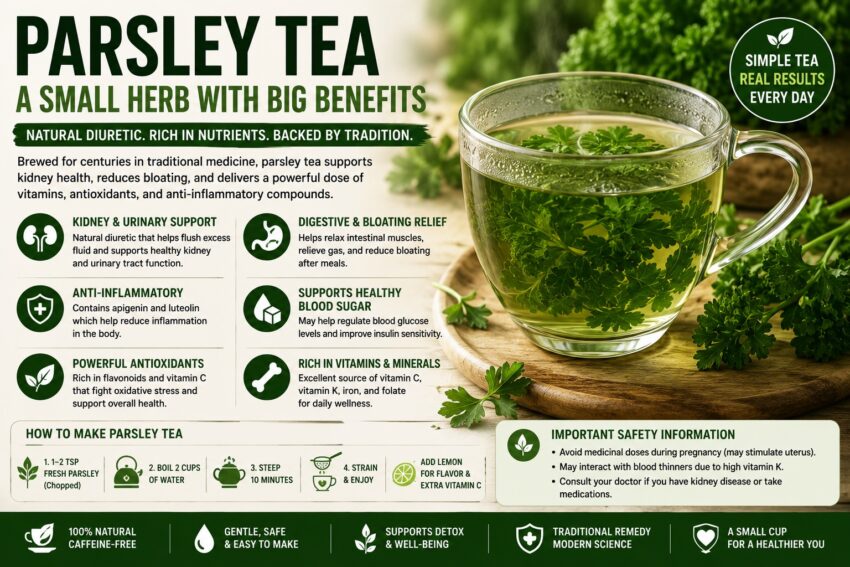
Most people encounter parsley as a wilting garnish on a restaurant plate — something pushed to the side and forgotten. That’s a shame, because parsley (Petroselinum crispum) has one of the most impressive nutritional and medicinal profiles of any common herb, and brewing it as a tea delivers its active compounds in a form the body absorbs readily.
Parsley has been used medicinally since ancient times across Greek, Roman, and Middle Eastern traditions — for kidney complaints, menstrual irregularity, digestive issues, and as a general tonic. Modern phytochemistry has given those traditional uses a mechanistic foundation: the volatile oils, flavonoids, and unusually high concentrations of certain vitamins in parsley explain much of what traditional herbalists observed.
What’s Actually in Parsley
Flavonoids — apigenin and luteolin are the primary anti-inflammatory compounds. Apigenin has been extensively studied and shows anti-inflammatory activity through COX-2 inhibition (the same enzyme targeted by ibuprofen), along with antioxidant and mild anxiolytic properties. Both survive into parsley tea at meaningful concentrations.
Volatile oils — myristicin and apiole give parsley its distinctive aroma and drive its medicinal effects. Myristicin has antimicrobial and antioxidant properties. Apiole stimulates smooth muscle in the bladder and ureter (explaining the diuretic effect) and in the uterus (explaining why medicinal-dose parsley is contraindicated in pregnancy).
Vitamin C — parsley contains more vitamin C by weight than most citrus fruits. One cup of fresh parsley provides over 130% of the daily recommended intake. Parsley tea preserves a portion of this, with meaningful amounts remaining in a properly brewed cup.
Vitamin K — parsley is one of the highest dietary sources of vitamin K1, essential for blood clotting and bone metabolism. This is relevant for people on anticoagulant therapy — more on this in the safety section.
Chlorophyll — the compound responsible for parsley’s deep green colour has mild detoxifying, antimicrobial, and deodorizing properties. It’s what makes parsley a traditional breath freshener and gives the tea its distinctive colour.
Iron — parsley is a good plant-based iron source, and the vitamin C in the same plant enhances iron absorption — a beneficial natural pairing.
Parsley Tea Benefits — What the Evidence Actually Says
Kidney and Urinary Health — Natural Diuretic
Parsley’s most documented effect is diuresis — increasing urine production. The mechanism involves apiole and myristicin stimulating smooth muscle contraction in the urinary tract and inhibiting sodium and potassium reabsorption in the kidney tubules, causing more water to be excreted. Animal studies have consistently confirmed this diuretic effect. A 2002 study published in the Journal of Ethnopharmacology found that parsley seed extract significantly increased urine volume compared to controls.
What this means practically: Parsley tea is a genuine natural diuretic — useful for mild water retention, supporting urinary tract health by flushing the system, and reducing the bloating associated with excess fluid retention.
What it doesn’t mean: Increased urination doesn’t equal kidney cleansing in any medically meaningful sense. Parsley tea supports healthy kidney function — it doesn’t treat kidney disease, reverse kidney damage, or eliminate substances the kidneys can’t process on their own.
Anti-Inflammatory Effects
Apigenin and luteolin inhibit the NF-κB inflammatory pathway and COX-2 enzyme — two primary molecular drivers of inflammation. A study published in Molecular Nutrition & Food Research found parsley extract significantly reduced inflammatory markers in cell studies. This anti-inflammatory activity makes parsley tea potentially useful for conditions involving chronic low-grade inflammation, though robust human clinical trials remain limited.
Antioxidant Activity
Parsley has exceptionally high antioxidant capacity — consistently ranking among the top herbs in ORAC measurements. The flavonoids, vitamin C, and volatile oils all contribute. Regular parsley tea consumption adds meaningful antioxidant support to the diet.
Blood Sugar Support
Several animal studies have found parsley extract to have hypoglycemic (blood sugar-lowering) effects. The mechanism involves flavonoids inhibiting certain digestive enzymes that break down carbohydrates into glucose. If you take diabetes medications, parsley tea’s potential blood sugar-lowering effect could be additive — monitor blood sugar carefully and inform your doctor.
Digestive Support and Bloating Relief
Parsley has carminative properties — it relaxes intestinal smooth muscle and helps expel trapped gas. The diuretic effect also addresses the water retention component of bloating. Together, these make parsley tea genuinely useful for the bloated, heavy feeling after meals. For a broader look at herbal options for digestive discomfort, see our guide to the best herbal teas for an upset stomach.
Bone Health (Vitamin K)
Parsley is exceptionally rich in vitamin K1 — critical for activating the proteins that bind calcium into bone matrix. Regular dietary parsley consumption contributes meaningfully to bone health maintenance.
Immune Support (Vitamin C)
The high vitamin C content in parsley supports immune function through multiple pathways — stimulating white blood cell production, acting as an antioxidant in immune cells, and supporting the skin barrier.
Parsley Tea for Kidneys — What It Actually Does
What parsley tea genuinely does for kidneys:
- Increases urine flow — confirmed diuretic effect
- May help flush the urinary tract, reducing bacterial accumulation
- Supports healthy kidney function through antioxidant protection of kidney tissue
- May reduce mild water retention from fluid buildup
What it can’t do: Treat kidney disease, kidney infection, or kidney stones. Repair kidney damage. Replace medical management of chronic kidney conditions.
The kidney stone nuance — important: Parsley contains oxalates — compounds that bind to calcium in the urine. People prone to calcium oxalate kidney stones (the most common type) should use parsley tea cautiously — high oxalate intake can increase stone formation risk. If you have a history of kidney stones, consult your doctor before drinking parsley tea regularly.
When to see a doctor: Kidney pain, blood in urine, painful urination, frequent urinary tract infections, or any diagnosed kidney condition warrant medical evaluation — not herbal tea.
Parsley Tea for Weight Loss — Honest Assessment
Parsley tea is sometimes marketed as a weight loss aid. Here’s the honest picture.
The weight loss effect is almost entirely driven by the diuretic action — parsley tea increases urine output, which reduces water weight. Water weight loss appears quickly on the scale and can be meaningful (1–3 lbs) when fluid retention is significant. But it isn’t fat loss. No compound in parsley directly stimulates fat metabolism, increases caloric expenditure, or suppresses appetite in any clinically meaningful way. The weight lost from the diuretic effect returns as soon as you rehydrate.
Where parsley tea has legitimate value in weight management: Replacing high-calorie, sugary beverages with parsley tea reduces overall caloric intake. The carminative and digestive effects reduce bloating. The anti-inflammatory properties may support metabolic health over time. These are real but modest benefits — not a weight loss solution.
Parsley Tea for Bloating — How It Helps
For bloating specifically, parsley tea works through two mechanisms:
Carminative action: Parsley’s volatile oils relax intestinal smooth muscle, reducing spasms and helping trapped gas pass. This is the same mechanism as peppermint and fennel — parsley is less potent than either but still meaningfully effective for mild gas-related bloating.
Diuretic action: When bloating is caused or worsened by water retention — the premenstrual bloating many women experience, or the general puffiness from high-sodium meals — parsley tea’s diuretic effect reduces fluid accumulation in tissue.
The combination of both mechanisms makes parsley tea particularly useful for bloating that has both gas and water retention components — which describes most everyday bloating.
How to Make Parsley Tea — Fresh vs. Dried
Fresh parsley tea delivers more vitamin C and volatile oils — the best choice when fresh parsley is available.
- Rinse a small handful of fresh parsley (about ¼ cup packed, stems and leaves)
- Roughly chop or bruise the parsley to release more compounds
- Place in a mug and pour 250ml (8oz) of just-boiled water over it
- Cover immediately and steep for 5–10 minutes
- Strain and drink warm — add lemon juice and raw honey to taste
Dried parsley tea is more convenient and keeps longer.
- Measure 1–2 teaspoons of dried parsley leaf into a tea infuser
- Pour just-boiled water over the herb
- Cover and steep for 5–10 minutes
- Strain thoroughly and drink warm
Parsley and ginger tea — the most effective combination for bloating and digestive symptoms. Ginger amplifies the carminative and anti-inflammatory effect while making the flavour considerably more pleasant. Steep 1 teaspoon dried parsley with 4–5 slices of fresh ginger for 10 minutes, strain, add honey and lemon. Drink after meals.
Parsley and lemon tea — best for vitamin C content and as a morning tonic. Steep 1 teaspoon dried parsley for 10 minutes, add juice of half a lemon and raw honey. The lemon’s acidity enhances absorption of some parsley compounds and adds a bright flavour that balances parsley’s savory note.
Key steeping tip: Always cover the cup while steeping — volatile oils (including myristicin and apiole) evaporate quickly. Covering retains them in the tea. Don’t steep for more than 15 minutes — longer steeping increases bitterness without significantly increasing compound concentration.
Best Store-Bought Parsley Tea — Verified Amazon Picks
Buddha Teas Organic Parsley Leaf Tea — Best Overall
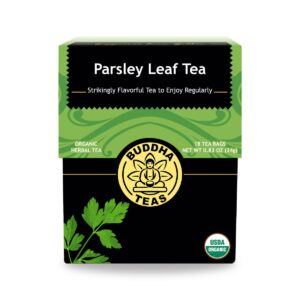
Buddha Teas is one of the most trusted single-ingredient herbal tea brands on Amazon. Their organic parsley leaf tea uses certified organic parsley leaves — OU Kosher, Non-GMO, caffeine-free, and completely free of artificial additives. Unbleached tea bags throughout. The savory, slightly earthy flavour is authentic parsley — not masked with flavourings. For a clean, quality-controlled parsley tea without preparation hassle, this is the most trustworthy option.
Alvita Organic Parsley Herbal Tea — Best Value (3-Pack)
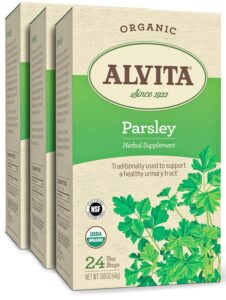
Alvita has been making single-herb teas since 1922 — one of the longest-established herbal tea brands available. Their organic parsley tea uses premium-quality organic parsley leaves in earth-friendly, recycled paperboard packaging with oxygen-bleached (not chlorine-treated) tea bags. The 3-pack of 72 bags offers excellent value for regular drinkers. Alvita’s reputation is built on botanical accuracy and consistent quality.
Palm Beach Medicinal Herbs Parsley Leaf Tea — Best for Medicinal Intent
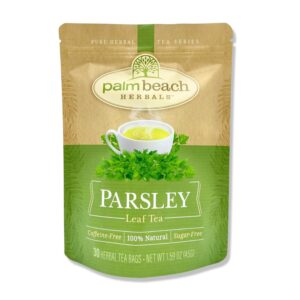
Pure parsley leaf, no fillers, no preservatives, packaged in a foil-lined resealable pouch for maximum freshness. The 30-bag count and resealable pouch format keeps dried herb fresher than standard cardboard boxes. Positioned specifically for kidney function, antioxidant support, and digestive health. Brewing instructions recommend 5–15 minutes steeping — on the longer end, extracting more active compounds.
Parsley Tea Side Effects — Who Should Be Careful
Blood thinners (warfarin, heparin, aspirin): Parsley is extremely high in vitamin K1 — the direct antagonist of warfarin. High vitamin K intake reduces warfarin’s anticoagulant effect. If you take any blood thinner, maintain consistent parsley intake (sudden large increases or decreases can destabilize your INR) and inform your doctor.
Diabetes medications: Parsley’s potential blood sugar-lowering effect may be additive with hypoglycemic medications. Monitor blood glucose carefully if drinking parsley tea regularly alongside diabetes treatment.
Diuretic medications: Combining parsley tea with pharmaceutical diuretics increases the risk of dehydration and electrolyte imbalance, particularly low potassium (hypokalemia). Discuss with your doctor before combining.
Kidney disease: Despite parsley’s kidney-supportive reputation, people with diagnosed kidney disease need to be cautious. The oxalate content is problematic for kidney stone formers, and the increased workload from diuresis may not be appropriate for compromised kidneys.
Allergies: Parsley belongs to the Apiaceae (carrot) family, along with celery, fennel, dill, and coriander. People with Apiaceae family allergies can cross-react to parsley.
High doses: Medicinally excessive parsley consumption can cause liver and kidney damage, haemolytic anaemia, and photosensitivity. These risks apply to concentrated extracts and very high intake — not to 1–3 cups of tea per day. But they make the case for moderation and against intensive daily use for extended periods.
Parsley Tea During Pregnancy — An Important Warning
Culinary parsley — amounts used in cooking — is safe during pregnancy. There is no evidence that eating a garnished dish or cooking with parsley as a seasoning poses any risk.
Medicinal-dose parsley tea should be avoided during pregnancy.
The reason is apiole — one of parsley’s primary volatile oil compounds. Apiole is a known uterotonic: it stimulates uterine muscle contractions. Historically, concentrated parsley preparations were used as abortifacients precisely for this reason. While a cup of weak parsley tea is unlikely to trigger contractions, concentrated tea and regular medicinal consumption carry real risk during pregnancy.
The safe guidance:
- Avoid parsley tea during the first trimester entirely
- During the second and third trimesters, limit to very occasional mild cups only
- Avoid parsley seed tea or concentrated parsley extracts throughout pregnancy
- If you are pregnant and have been drinking strong parsley tea regularly, mention it at your next prenatal appointment
This is not a theoretical risk — it has a clear pharmacological mechanism and historical documentation. When in doubt, avoid during pregnancy.
How Much Parsley Tea Should You Drink?
For general wellness: 1 cup per day is appropriate for ongoing use. This delivers the antioxidant, vitamin, and mild anti-inflammatory benefits without the risk of excess apiole or oxalate accumulation.
For specific therapeutic goals (diuresis, bloating, kidney support): 2–3 cups per day for up to 4 weeks is generally considered safe for healthy adults. Take a 1–2 week break before resuming if using regularly.
Signs you’re drinking too much:
- Frequent urination to the point of dehydration — dark urine, persistent thirst, dizziness
- Unusual fatigue or muscle weakness — can signal electrolyte loss from excess diuresis
- Skin sensitivity to sun — photosensitivity from volatile oil accumulation
- Digestive discomfort or nausea
If any of these occur, reduce intake and drink more plain water.
Frequently Asked Questions
Is parsley tea good for kidneys?
Parsley tea supports kidney health by increasing urine flow, providing antioxidant protection for kidney tissue, and supporting a healthy urinary environment. It doesn’t treat kidney disease or kidney stones — and people with diagnosed kidney conditions or a history of kidney stones should consult their doctor before use.
Can I drink parsley tea every day?
Yes, at 1–2 cups per day for most healthy adults — short to medium term. Extended daily use at higher doses (3+ cups/day for months) is less well-studied. Periodic breaks (1–2 weeks off per month) are sensible for ongoing regular use. For other safe daily herbal options, see our guide to herbal teas for sleep — chamomile in particular is one of the safest herbs for daily long-term use.
Does parsley tea help with water retention?
Yes — this is one of its most reliably documented effects. The diuretic action increases urine output, helping shed excess fluid retained in tissues. This is particularly useful for premenstrual water retention and the puffiness from high-sodium meals. The effect is real but temporary — water weight returns when you rehydrate normally.
How long does parsley tea take to work?
The diuretic effect is typically noticeable within 1–2 hours of drinking — increased urination is the most immediate and reliable effect. Anti-inflammatory and antioxidant benefits are cumulative and build over days to weeks of consistent use. Digestive and bloating relief usually occurs within 30–60 minutes.
Is parsley tea safe?
For most healthy adults at 1–3 cups per day for limited periods — yes. The exceptions are pregnant women (avoid medicinal doses), people on blood thinners or diabetes medications (check with doctor first), people with kidney disease or kidney stones (consult doctor), and people with Apiaceae family allergies. At very high doses or with extended concentrated use, parsley tea can cause harm — moderation is the key.
Final Thoughts
Parsley tea is simultaneously underestimated and overhyped. Underestimated by people who dismiss it as “just a garnish herb” — it has a genuinely impressive compound profile and real documented effects. Overhyped by those marketing it as a weight loss or kidney cleanse solution — the diuretic effect is real, the fat loss claim is not.
The most evidence-supported uses are: natural diuresis for water retention, digestive and bloating support, antioxidant and anti-inflammatory daily supplementation, and kidney health support through increased urine flow. For all of these, 1–2 cups per day of good-quality parsley tea — made from organic parsley leaf, steeped properly — is a genuinely useful addition to a wellness routine.
Make it from fresh parsley when you have it. Use a quality pre-made bag when you don’t. Add lemon and honey. And if you’re pregnant, on blood thinners, or managing kidney disease — have that conversation with your doctor first.
This article is for informational purposes only and does not constitute medical advice. Always consult a qualified healthcare provider before starting any herbal supplement, especially if you take prescription medications, are pregnant, or have an existing health condition.