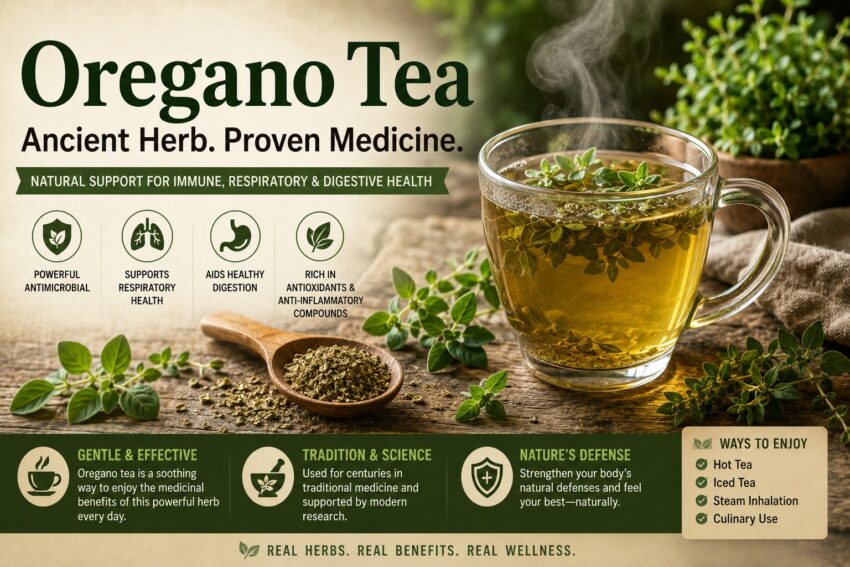
Oregano as Medicine — More Than a Kitchen Herb
Most people’s relationship with oregano begins and ends in the kitchen — a dried jar on the spice rack, sprinkled on pizza without much thought. But oregano has a parallel life as one of the most thoroughly studied medicinal herbs in the world.
The ancient Greeks used it for wound healing and respiratory complaints. Traditional Mediterranean and Latin American herbalism relied on it for digestive problems, coughs, and infections. And modern pharmacology has confirmed what those traditions intuited: oregano contains some of the most potent antimicrobial compounds found in any plant.
Before going further, three forms of oregano need distinguishing — because they’re not interchangeable.
Oregano the culinary herb (Origanum vulgare) — the dried or fresh leaves used in cooking. Nutritious, pleasant as a tea, and mildly therapeutic at culinary doses.
Oregano tea — fresh or dried oregano leaves steeped in hot water. More concentrated than culinary use, easier on the body than oil, and the most accessible form of medicinal oregano for daily use.
Oil of oregano — a concentrated extract of oregano’s active compounds, typically standardized to 70–80% carvacrol. Far more potent than tea, with a correspondingly higher risk of side effects. Not the same as oregano essential oil, which is not for internal use.
Understanding which form you’re using — and why — is the most important starting point for anyone exploring oregano as a medicinal herb.
What’s Actually in Oregano
The therapeutic properties of oregano come from a specific profile of active compounds. Knowing what they are explains why oregano does what it does.
Carvacrol is the primary active compound and the one most studied in modern research. It has demonstrated potent antimicrobial activity against a wide range of bacteria and fungi including Staphylococcus aureus, E. coli, Candida albicans, and various respiratory pathogens. It also has anti-inflammatory and antioxidant properties. Carvacrol is present in oregano leaves but is highly concentrated in oil of oregano.
Thymol is the second major phenolic compound — structurally related to carvacrol and similarly antimicrobial. Found in both oregano and thyme, thymol contributes to oregano’s expectorant properties, making it useful for coughs and respiratory congestion.
Rosmarinic acid is a potent anti-inflammatory and antioxidant also found in rosemary, sage, and lemon balm. It inhibits inflammatory enzymes including COX-2 — the same target as ibuprofen, though at lower potency. Rosmarinic acid survives into oregano tea and contributes meaningfully to its anti-inflammatory effects.
Flavonoids — including luteolin and apigenin — add antioxidant activity and additional anti-inflammatory effects. These infuse into tea water effectively and are particularly relevant to the tea preparation.
Vitamins and minerals — oregano is a surprisingly rich source of vitamin K, manganese, iron, and antioxidant vitamins A and E, contributing meaningfully to nutritional value especially when fresh leaves are used.
The important distinction: oregano tea delivers a gentler, broader spectrum of these compounds. Oil of oregano delivers a concentrated dose of carvacrol and thymol specifically. Neither is universally better — the right form depends on what you’re trying to achieve.
Oregano Tea Benefits — What the Evidence Actually Says
Antimicrobial and Antiviral Properties
The antimicrobial evidence for oregano’s active compounds — primarily carvacrol and thymol — is one of the strongest in herbal medicine. Laboratory studies have consistently shown these compounds inhibit the growth of bacteria including Staphylococcus aureus (including some MRSA strains), Listeria, E. coli, and Salmonella. Antifungal activity against Candida species is also well documented.
The honest caveat: most of this research is in vitro — laboratory studies on isolated compounds, not human clinical trials for oregano tea specifically. The concentrations needed to inhibit bacteria in a test tube aren’t always achievable through drinking tea. Oregano tea’s antimicrobial effects are real but shouldn’t be overstated as a clinical antibiotic equivalent. It’s best used as supportive care during mild infections and first-line support at the onset of a cold — not a replacement for antibiotics when antibiotics are genuinely needed.
Anti-Inflammatory Effects
Rosmarinic acid and the flavonoids in oregano have documented anti-inflammatory activity through multiple pathways. A study published in the journal Food Chemistry demonstrated that oregano extract significantly inhibited COX-2 enzyme activity — the same mechanism as NSAIDs like ibuprofen. Regular consumption of oregano tea may help reduce low-grade chronic inflammation, though human clinical trials specifically for oregano tea are limited.
Antioxidant Activity
Oregano has one of the highest antioxidant capacities of any herb — consistently ranking above most vegetables and fruits in ORAC measurements. The flavonoids and rosmarinic acid are the primary contributors. Regular oregano tea consumption adds meaningful antioxidant support alongside a varied diet.
Respiratory Health and Cough Relief
This is one of oregano’s most consistent traditional uses and one with reasonable mechanistic support. Thymol and carvacrol have expectorant properties — they help loosen and thin mucus in the respiratory tract, making it easier to clear. Oregano tea’s warmth soothes irritated throat tissue, and the steam provides mild bronchodilation.
A study published in Phytotherapy Research found that a combination of thyme and oregano extract reduced cough frequency in patients with bronchitis. For everyday coughs and respiratory congestion from colds, oregano tea with honey is a genuinely useful remedy. See our full guide to herbal supplements for bronchitis for a broader look at respiratory herbs.
Digestive Support
Oregano has carminative properties — it relaxes the smooth muscle of the digestive tract, reduces gas and bloating, and stimulates digestive secretions. The bitter compounds stimulate bile production, which aids fat digestion. For mild digestive discomfort, bloating, and sluggish digestion, a cup of oregano tea after meals is a traditional and practically effective remedy.
Immune System Support
The combination of antimicrobial, antioxidant, and anti-inflammatory activity makes oregano a useful immune-support herb during cold and flu season. Most usefully taken at the first sign of illness rather than as a year-round daily supplement at high doses.
Oregano Tea vs. Oil of Oregano — Which Should You Use?
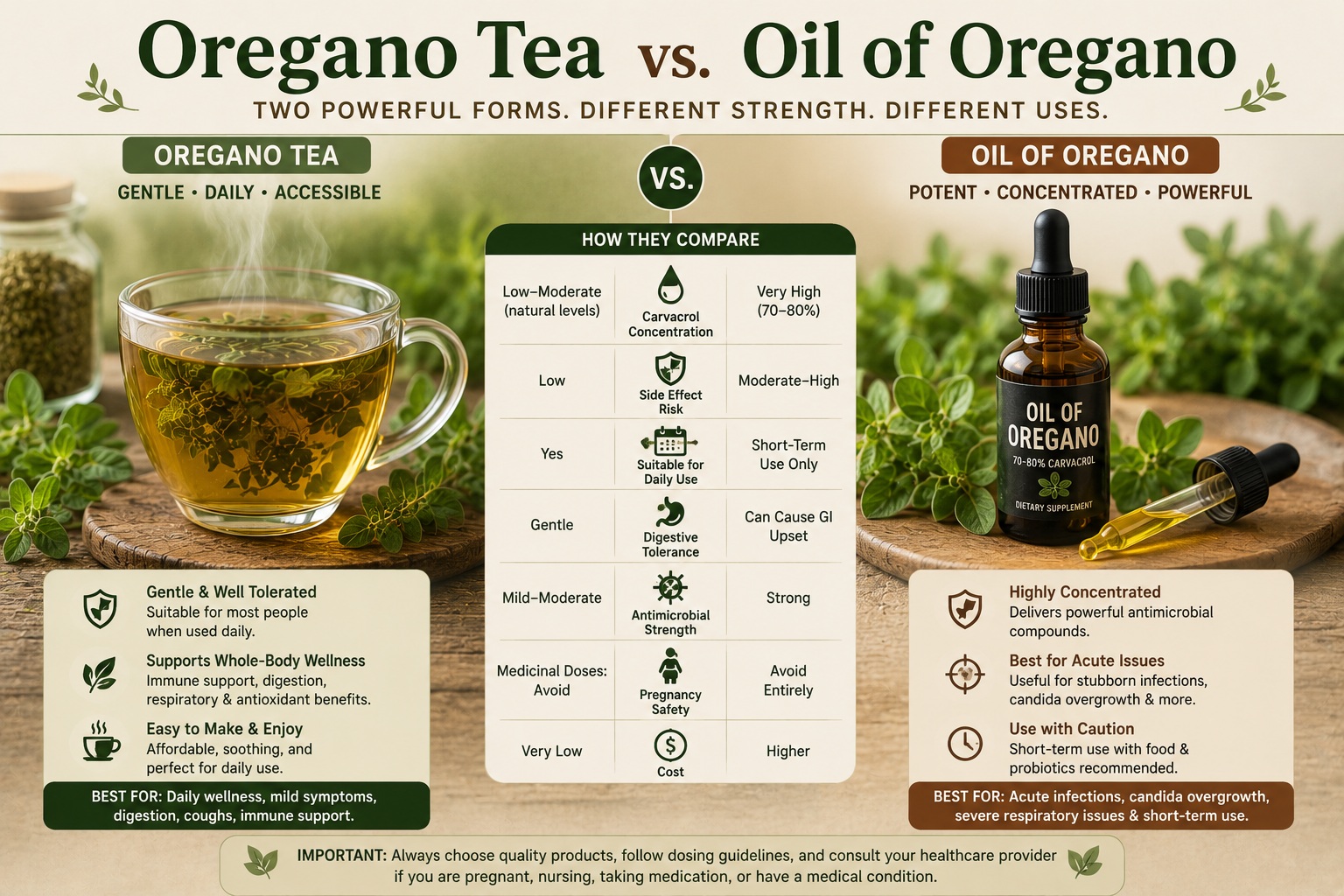
| Factor | Oregano Tea | Oil of Oregano |
|---|---|---|
| Carvacrol concentration | Low–moderate | Very high (70–80%) |
| Side effect risk | Low | Moderate–high |
| Suitable for daily use | ✅ Yes | ⚠️ Short-term only |
| Digestive tolerance | Gentle | Can cause GI upset |
| Antimicrobial strength | Mild–moderate | Strong |
| Pregnancy safety | Medicinal doses: avoid | Avoid entirely |
| Cost | Very low | Higher |
Choose oregano tea when: You want gentle daily immune and antioxidant support, you’re managing mild digestive symptoms, you have a cough or cold, or you’re sensitive to the strong effects of oil of oregano.
Choose oil of oregano when: You’re dealing with a more acute situation — a stubborn infection, significant candida overgrowth, or a severe respiratory infection — and need the concentrated antimicrobial power. Use for 2 weeks or less, not as a daily long-term supplement.
For most people, most of the time, oregano tea is the more sensible choice. It delivers therapeutic compounds at a dose the body handles easily, can be drunk daily without side effect concerns, and is far cheaper and more pleasant than oil.
How to Make Oregano Tea
Making oregano tea properly extracts maximum therapeutic compounds without creating a bitter, unpleasant drink.
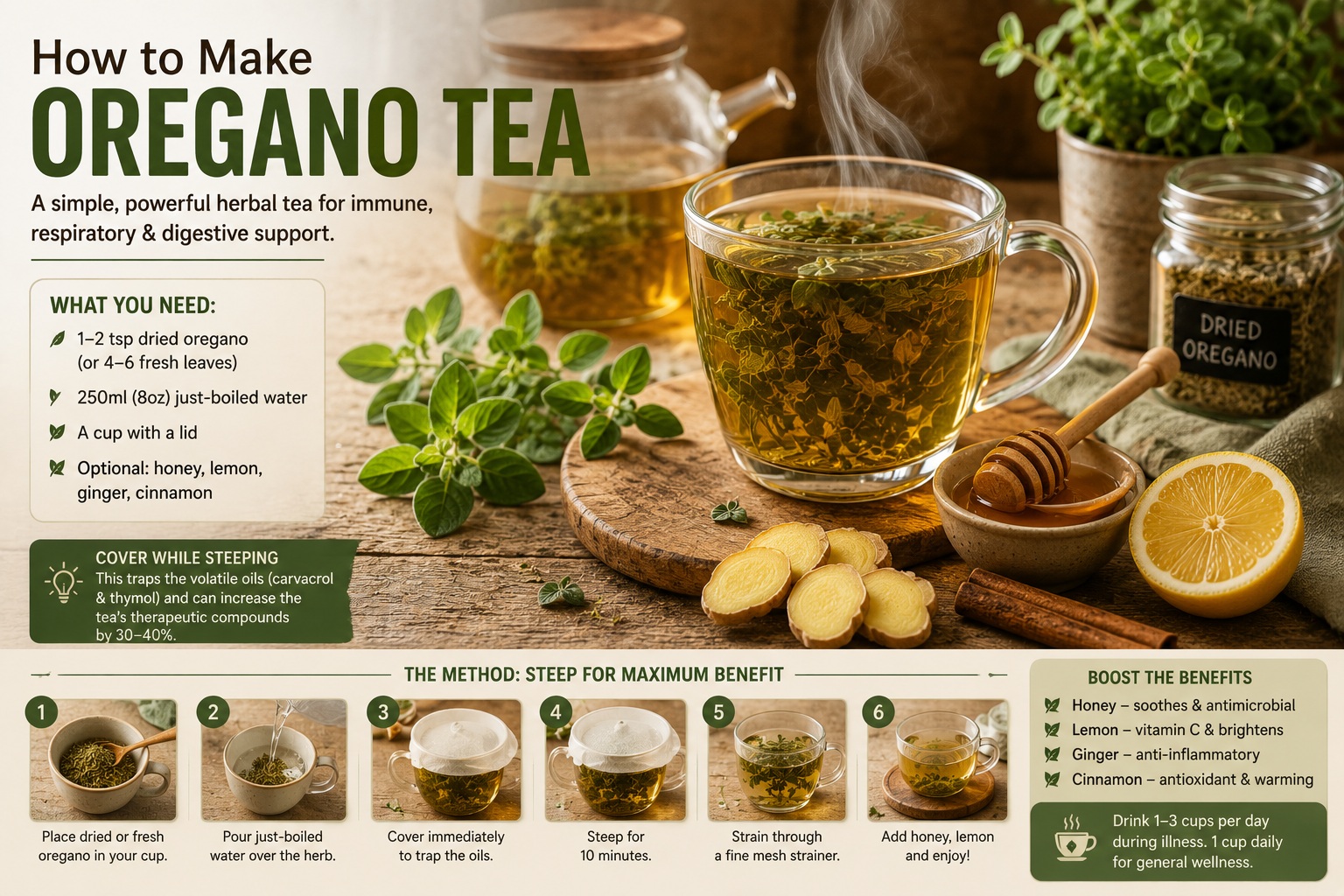
What you need:
- 1–2 teaspoons of dried oregano (or 4–6 fresh leaves)
- 250ml (8oz) of just-boiled water
- A cup with a lid or a small saucer to cover it
The method:
- Place the dried or fresh oregano directly in the cup
- Pour just-boiled water over the herb
- Cover immediately with a lid or saucer — this traps the volatile oils (carvacrol, thymol) that would otherwise evaporate
- Steep for 10 minutes
- Strain through a fine mesh strainer
- Add raw honey and lemon to taste
The covering step is critical. Most of oregano’s antimicrobial volatile compounds evaporate with steam if the cup is left uncovered. Covering during steeping can increase the therapeutic compound content of the final tea by 30–40%.
Additions that improve both taste and effect:
- Raw honey — soothing, antimicrobial, improves palatability considerably
- Fresh lemon juice — adds vitamin C, brightens the flavour, mildly astringent
- Fresh ginger slices — amplifies anti-inflammatory and antimicrobial action
- A stick of cinnamon — pleasant flavour, additional antioxidant content
How much to drink: 1–3 cups per day during active illness. 1 cup per day for general wellness maintenance.
Best time to drink oregano tea: After meals for digestive support. Before bed for respiratory and immune benefits during illness — the warmth and volatile compounds continue working as you sleep. In the morning for general immune maintenance, though some people with sensitive stomachs prefer to eat first.
What Is Oregano Tea Good For — Specific Uses
For cough and respiratory infections: Oregano tea with honey is one of the most effective natural cough remedies available. Drink it hot, breathe the steam as you sip, and drink 3 cups per day at the first sign of respiratory illness. The combination of thymol (expectorant), carvacrol (antimicrobial), and honey (soothing) covers the main mechanisms simultaneously. For sore throat alongside the cough, see our guide to the best herbal drinks for sore throat.
For digestive issues: One cup of oregano tea after meals helps with bloating, gas, sluggish digestion, and mild cramping. The carminative and bitter compounds stimulate digestive secretions and relax gut smooth muscle. More effective as a consistent daily habit than as a one-off remedy.
For immunity during cold season: Start drinking oregano tea at the first sign of a cold — scratchy throat, fatigue, the sense that something is coming. The antimicrobial and antioxidant support works best early, before an infection is fully established.
For inflammation: A daily cup of oregano tea provides mild but consistent anti-inflammatory support through rosmarinic acid and flavonoids. Not a replacement for medical treatment of inflammatory conditions, but a useful adjunct for general inflammation management.
Oil of Oregano Side Effects — The Honest Picture
Oil of oregano is potent enough to cause real side effects, particularly in the digestive system.
Gastrointestinal side effects are the most common:
- Diarrhea — the most frequently reported side effect. The high carvacrol content can irritate the intestinal lining and disrupt gut flora. More likely at higher doses and on an empty stomach.
- Nausea — particularly when taken without food. Always take oil of oregano with a meal.
- Acid reflux and heartburn — carvacrol can relax the lower esophageal sphincter in some people, allowing stomach acid to reflux upward. People with existing GERD should use oil of oregano cautiously or avoid it.
- Gas and bloating — the concentrated oil can disturb gut microbiome balance, causing gas in some users.
- Constipation — less common than diarrhea but reported by some users.
Allergic reactions are possible, particularly in people allergic to plants in the Lamiaceae (mint) family — basil, thyme, sage, marjoram, and lavender. Introduce cautiously if you have known mint family allergies.
Drug interactions:
- Blood thinners (warfarin, aspirin): carvacrol has antiplatelet effects and may enhance anticoagulant action
- Diabetes medications: oregano may lower blood sugar — monitor levels carefully
- Lithium: oregano may affect kidney excretion of lithium — avoid combining
How long does oil of oregano stay in your system? The active compounds are metabolized by the liver and typically cleared from the bloodstream within 24–48 hours. However, effects on gut flora can persist for 1–2 weeks after stopping — which is why probiotics are often recommended alongside any course of oil of oregano.
Side effects from oregano tea are considerably milder. The lower concentration of active compounds means digestive irritation is uncommon at normal tea doses. Most people drink oregano tea without any side effects at all.
Oregano and Pregnancy — An Important Safety Note
Oregano in culinary amounts — the amount used in cooking — is considered safe during pregnancy. There is no credible evidence that eating food seasoned with oregano poses any risk.
Medicinal doses of oregano — including strong oregano tea, supplements, and especially oil of oregano — should be avoided during pregnancy.
The reason is oregano’s historical use as an emmenagogue — a herb that stimulates menstrual flow and uterine contractions. At medicinal concentrations, oregano may stimulate uterine muscle, which carries a risk of miscarriage in early pregnancy or premature labor in later pregnancy.
The practical guidance:
- Oil of oregano: avoid entirely during pregnancy
- Strong oregano tea (more than 1 cup per day): avoid during pregnancy
- Occasional mild oregano tea: considered low risk by most herbalists, but the conservative approach is to avoid medicinal oregano use entirely during pregnancy
- Culinary oregano in cooking: safe
Always discuss any herbal supplementation with your midwife or obstetrician during pregnancy.
How to Use Oregano Leaves as Medicine
Fresh leaf tea — 4–6 fresh leaves steeped in covered hot water for 10 minutes. Milder than dried leaf tea but pleasant and still therapeutically active. Good for those who find dried oregano too strong.
Dried leaf tea — 1–2 teaspoons steeped covered for 10 minutes. The standard preparation for most medicinal uses.
Steam inhalation — add a generous handful of fresh or dried oregano to a bowl of very hot water, drape a towel over your head, and inhale the steam for 5–10 minutes. Delivers carvacrol and thymol directly to the respiratory tract — excellent for nasal congestion, sinus issues, and chest coughs. See our guide to herbs for sinus relief for more on herbal steam inhalation.
Poultice for skin — fresh oregano leaves bruised and applied to minor wounds, insect bites, or skin irritation provide mild antimicrobial and anti-inflammatory benefit. A well-documented traditional use across multiple herbal traditions.
How many leaves per day: Traditional herbalism typically suggests 1–2 teaspoons of dried herb (equivalent to 8–12 fresh leaves) as a daily therapeutic dose in tea form. Going significantly beyond this doesn’t provide proportionally more benefit and may increase digestive irritation.
Oregano Oil and Digestive Issues — Practical Guidance
To minimize diarrhea: Always take oil of oregano with food — never on an empty stomach. Start with the lowest recommended dose and increase gradually. Take probiotics alongside any course of oil of oregano to help maintain gut flora balance.
To minimize acid reflux: Avoid oil of oregano if you have active GERD or frequent heartburn. If you have mild occasional reflux and want to use oregano, take it with food, avoid lying down within 2 hours of taking it, and consider switching to oregano tea instead.
For gas and bloating: Oregano tea often reduces gas while oil of oregano can cause it — if you experience gas from the oil, reduce the dose, take it with food, and consider switching to tea form for digestive applications.
Duration limits: Don’t use oil of oregano continuously for more than 2–3 weeks without a break. Longer continuous use increases the risk of gut flora disruption and may reduce effectiveness as the body adapts.
Frequently Asked Questions
What is oregano tea good for?
Oregano tea is most useful for respiratory infections and coughs (expectorant and antimicrobial action), digestive support including gas, bloating, and sluggish digestion, general immune support especially at the onset of a cold, and as a daily antioxidant and anti-inflammatory drink. Its effects are gentle and cumulative — it works best as a consistent habit rather than an occasional remedy.
What does oregano do for the body?
Oregano provides antimicrobial support through carvacrol and thymol, reduces inflammation through rosmarinic acid and flavonoids, delivers significant antioxidant activity, supports respiratory health through expectorant compounds, and aids digestion through carminative and bitter properties. It also provides meaningful levels of vitamin K, manganese, and iron — particularly when used as fresh herb tea.
Is dried oregano good for you?
Yes — dried oregano retains most of the active compounds of fresh oregano and is nutritionally significant at culinary doses. It’s higher in antioxidants than most vegetables and contains meaningful levels of several vitamins and minerals. The drying process actually concentrates the active compounds, making dried oregano more potent than fresh on a gram-for-gram basis.
Can you eat raw or fresh oregano?
Yes. Fresh oregano leaves are perfectly safe to eat raw and are nutritious. They can be added to salads, used as garnish, blended into pestos, or chewed directly. Raw fresh oregano has a stronger, more peppery flavour than dried oregano. The medicinal compounds are present in raw leaves though the volatile oils are less bioavailable than in a hot tea preparation.
Does oregano tea help with cough?
Yes — with reasonable evidence. Thymol and carvacrol have expectorant properties that help loosen and clear mucus from the respiratory tract. Multiple studies on thyme-oregano combination extracts have demonstrated reduction in cough frequency during bronchitis. Oregano tea with honey covers both the expectorant and soothing mechanisms simultaneously and is one of the more effective natural cough remedies available.
What is the best time to drink oregano tea?
For digestive benefits: after meals. For respiratory and immune support during illness: throughout the day and especially before bed — the warmth and compounds continue working during sleep. For general wellness maintenance: morning or evening, whichever fits your routine. Consistency matters more than timing.
How long does oil of oregano stay in your system?
The active compounds — carvacrol and thymol — are metabolized by the liver and typically cleared from the bloodstream within 24–48 hours. However, the effects on gut bacteria can persist for 1–2 weeks after stopping. This is why a probiotic course is recommended after finishing any course of oil of oregano — to help restore gut flora balance.
Is oregano healthy?
Yes, both as a culinary herb and as a medicinal tea. It has one of the highest antioxidant contents of any herb, documented antimicrobial and anti-inflammatory properties, and a meaningful nutritional profile. The healthiest way to use it for most people is as a culinary herb in cooking and as a regular or occasional tea — rather than as concentrated oil used long-term.
Final Thoughts
Oregano earns its place in the medicine cabinet alongside the spice rack. The evidence for its antimicrobial, anti-inflammatory, and antioxidant properties is solid — and the gap between what the research confirms and what most people know about oregano is surprisingly large.
Oregano tea is the most practical daily form: gentle enough for regular use, effective enough to notice a difference, and inexpensive enough to make a habit without thinking about it. Cover it while steeping, add honey and lemon, drink 1–3 cups a day when you’re fighting something off — and treat it as the warming, genuinely useful herbal drink it is.
Oil of oregano has its place for more acute situations but deserves respect as a potent substance with real side effects. Use it short-term, with food, with probiotics, and not during pregnancy.
And if you have a genuine infection — don’t talk yourself into herbal tea as a substitute for medical care. Oregano tea can absolutely be part of how you feel better, but it’s not the whole answer when the whole answer is needed.
This article is for informational purposes only and does not constitute medical advice. Always consult a qualified healthcare provider before starting any herbal supplement, especially if you take prescription medications, are pregnant, or have an existing health condition.