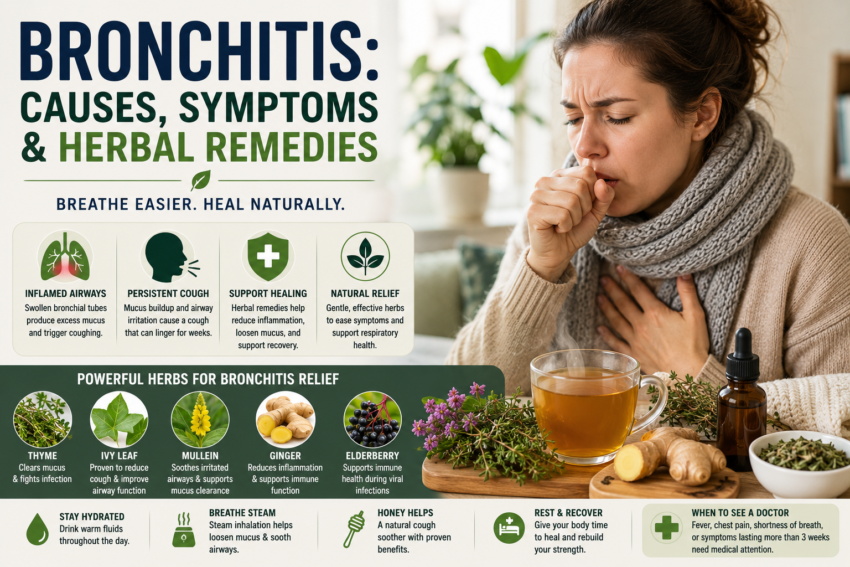
What Is Bronchitis and Why Does It Linger?
Bronchitis is inflammation of the bronchial tubes — the airways that carry air in and out of your lungs. When those tubes get inflamed, they produce excess mucus, and the body responds with the cough that makes bronchitis so miserable.
There are two types, and the difference matters for treatment.
Acute bronchitis is almost always caused by a viral infection — the same viruses that cause colds and flu. It typically lasts 1–3 weeks. The cough can drag on for longer than most people expect, sometimes up to 6–8 weeks as the airways heal. Antibiotics don’t help because viruses don’t respond to them — a fact that surprises many people who’ve been prescribed them in the past.
Chronic bronchitis is a different condition entirely — it’s classified as a form of COPD (Chronic Obstructive Pulmonary Disease) and is defined as a productive cough lasting at least 3 months per year for two consecutive years. It’s almost always caused by long-term irritant exposure, most commonly smoking. It’s a serious, progressive condition that needs proper medical management.
Most people searching for herbal help are dealing with acute bronchitis — the kind that follows a cold or flu and refuses to clear up. That’s where herbs have the most to offer.
When to see a doctor before trying anything else:
- Fever above 38.5°C (101.3°F)
- Coughing up blood or rust-coloured mucus
- Shortness of breath or chest pain
- Symptoms lasting more than 3 weeks without improvement
- Underlying lung conditions (asthma, COPD, emphysema)
- Age over 65 or immunocompromised
These warrant medical evaluation first. Natural remedies can support recovery — they’re not a substitute for care when something serious is happening.
Can Herbal Supplements Actually Help Bronchitis?
Yes — several herbs have genuine clinical evidence for bronchitis-related symptoms, and a few have been studied specifically for bronchitis in randomized controlled trials.
The mechanisms herbs use to help bronchitis fall into three categories:
Expectorants thin and loosen mucus, making it easier to cough up and clear from the airways. This is the most useful property for bronchitis — the cough itself isn’t the problem, it’s the thick mucus the cough is trying to shift. Herbs like thyme, mullein, and elecampane work this way.
Anti-inflammatories reduce swelling and irritation in the bronchial tubes, which eases the cough reflex and improves airflow. Licorice root, ginger, and ivy leaf all have documented anti-inflammatory activity in the respiratory tract.
Antimicrobials help fight the viral or bacterial infection driving the inflammation. Oregano oil, thyme, and elderberry all have antimicrobial properties, though most acute bronchitis is viral and no herb eliminates a virus the way antiviral drugs do.
What herbal supplements can’t do: cure bacterial bronchitis that’s progressed to a point where antibiotics are genuinely needed, or reverse the structural damage of chronic bronchitis. Honest expectations lead to better outcomes.
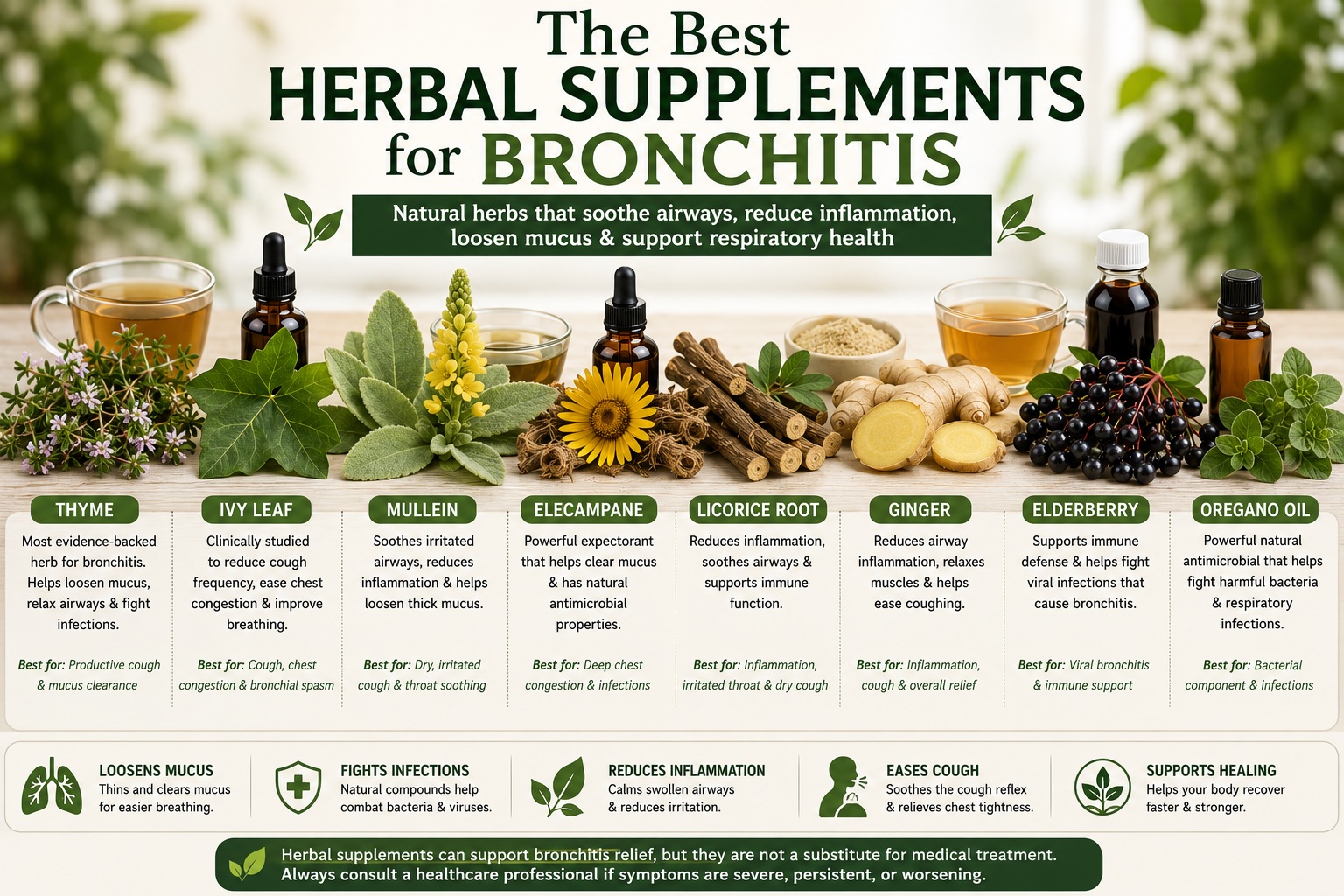
The Best Herbal Supplements for Bronchitis
Thyme — The Most Evidence-Backed Herb for Bronchitis
If there’s one herb that stands out above everything else for bronchitis, it’s thyme. It has more clinical evidence behind it than any other herb in this category — and it’s been specifically studied for bronchitis, not just general cough.
A landmark study published in Arzneimittelforschung (Drug Research) compared a thyme-ivy syrup to the standard expectorant drug ambroxol in patients with acute bronchitis. Thyme-ivy performed equivalently — with fewer side effects. Multiple subsequent studies have confirmed that thyme extract reduces cough frequency, improves mucus clearance, and shortens the duration of acute bronchitis.
How it works: thyme contains thymol and carvacrol — compounds that relax the bronchial muscles, reduce spasm, and stimulate the cilia (tiny hair-like structures in the airways that clear mucus). It’s an expectorant and antispasmodic in one.
How to use it: Thyme tea is the most traditional form — steep a teaspoon of dried thyme in hot water for 10 minutes, add honey. Thyme-ivy syrup (widely available in pharmacies and online) is the form used in clinical trials. Thyme tincture or capsules also work. Aim for 2–3 doses daily during acute bronchitis.
Safety: Safe for most adults at normal food and medicinal doses. Avoid high-dose thyme supplements during pregnancy. People with thyroid conditions should check with their doctor — thymol may affect thyroid hormone metabolism at high doses.
Ivy Leaf — Clinically Studied for Cough and Bronchitis
Ivy leaf (Hedera helix) is less well-known than thyme but has arguably the largest clinical trial base of any herbal bronchitis remedy. It’s been tested in tens of thousands of patients across multiple countries and is a mainstream pharmaceutical ingredient in several European cough syrups.
The active compounds — saponins, particularly hederacoside C — work as expectorants and antispasmodics. They thin bronchial secretions, reduce bronchospasm, and improve airflow. A systematic review published in Complementary Medicine Research found ivy leaf extract significantly reduced acute bronchitis symptoms including cough frequency, sleep disruption, and general wellbeing ratings.
How to use it: Ivy leaf is most commonly available as a standardized extract in syrups, tablets, or drops. The standardized extract is significantly more reliable than non-standardized products — the saponin content in raw leaf varies too widely to dose consistently.
Safety: Use only prepared/standardized ivy leaf extracts — raw ivy leaf is toxic if ingested. Do not use in children under 2 without medical advice. Occasionally causes nausea or allergic reactions.
Mullein — The Traditional Lung Herb
Mullein (Verbascum thapsus) has been used for respiratory conditions for centuries across European, Native American, and Ayurvedic traditions. Modern research is limited compared to thyme and ivy leaf, but the traditional use is consistent and the mechanism is well understood.
Mullein works primarily as a demulcent (soothes irritated mucous membranes) and expectorant. The mucilage in the leaves coats and calms inflamed bronchial tissue while simultaneously loosening mucus for easier clearance. For the dry, irritating cough of bronchitis — where the airway feels raw and scratchy — mullein is particularly appropriate.
How to use it: Mullein leaf tea is the standard preparation — steep 1–2 teaspoons of dried leaf in hot water for 15 minutes, then strain carefully through a fine cloth (the tiny leaf hairs can irritate the throat if not removed). Drink 2–3 cups per day. Mullein tincture and capsules are also available.
Safety: Well-tolerated and considered safe for most adults. Always filter mullein tea carefully. Not enough evidence to recommend during pregnancy.
Elecampane — The Forgotten Bronchitis Herb
Elecampane (Inula helenium) is one of those herbs that practitioners who know it love — and most people have never heard of. It has a long history of use specifically for respiratory infections with heavy mucus production, which is exactly the profile of productive bronchitis.
The active compound inulin acts as a mild expectorant. But what makes elecampane particularly interesting for bronchitis is its antimicrobial properties — laboratory studies have found it active against a range of respiratory bacteria including Staphylococcus aureus. It won’t replace antibiotics, but for the bacterial component that can complicate viral bronchitis, it’s a useful addition.
How to use it: Elecampane root tea (simmer 1 teaspoon of dried root in water for 20 minutes) or tincture. Has a distinctive bitter, earthy taste — combining it with honey and ginger makes it more palatable.
Safety: Avoid during pregnancy and breastfeeding. May cause allergic reactions in people sensitive to plants in the daisy family. Not recommended for long-term use without breaks.
Licorice Root — Anti-Inflammatory and Soothing
Licorice root (Glycyrrhiza glabra) has been used in traditional Chinese and Ayurvedic medicine for bronchitis and cough for thousands of years. Modern research shows it works on multiple pathways simultaneously — it’s anti-inflammatory, antiviral, expectorant, and demulcent all at once.
The active compound glycyrrhizin inhibits several inflammatory pathways involved in bronchial swelling and has demonstrated antiviral activity against common respiratory viruses. The demulcent properties soothe the raw, irritated feeling in the throat and upper airways that comes with a persistent bronchitis cough.
How to use it: Licorice root tea, tincture, or deglycyrrhizinated licorice (DGL) capsules — which are the form to use for longer-term supplementation.
Important safety note: Standard licorice root contains glycyrrhizin, which can raise blood pressure and cause potassium loss at high doses or with long-term use. Don’t use standard (non-DGL) licorice root for more than 4–6 weeks continuously. People with high blood pressure, heart disease, or kidney problems should use DGL form only or avoid entirely. Check interactions with diuretics and corticosteroids.
Ginger — Reduces Airway Inflammation
Ginger is well-known as a digestive remedy but it’s equally relevant for respiratory inflammation. The gingerols and shogaols in ginger inhibit several pro-inflammatory compounds involved in bronchial swelling — including prostaglandins and leukotrienes, the same targets as some conventional anti-inflammatory drugs.
A study published in the American Journal of Respiratory Cell and Molecular Biology found that ginger compounds directly relaxed airway smooth muscle — the same mechanism used by bronchodilator medications, though at a much less powerful scale. For bronchitis, this means reduced bronchospasm and a less persistent cough.
How to use it: Fresh ginger tea (simmer sliced ginger in water for 10 minutes, add honey and lemon) is the most bioavailable form. Ginger capsules standardized to gingerols are a convenient alternative. Aim for 1–2g of ginger per day during acute bronchitis.
Safety: Safe for most adults at culinary and moderate supplemental doses. May enhance blood-thinning effects of warfarin at high doses. Avoid high-dose supplements in the first trimester of pregnancy.
Elderberry — Antiviral Support
Since most acute bronchitis is viral in origin, elderberry’s antiviral properties are directly relevant — though it’s more preventive and early-stage than curative once bronchitis is established.
Multiple clinical trials have found elderberry extract reduces the duration and severity of respiratory viral infections. The flavonoids in elderberry appear to inhibit viral entry into cells and stimulate certain immune responses. For bronchitis that follows a cold or flu, starting elderberry at the first sign of illness may reduce how severe the bronchitis becomes.
How to use it: Elderberry syrup (1 tablespoon 3–4 times daily during illness) or capsules. Most effective when started early — within the first 48 hours of symptoms.
Safety: Cooked elderberry preparations are safe. Avoid raw elderberries — they contain compounds that can cause nausea and vomiting. Use with caution in people on immunosuppressant medications.
Oregano Oil — Natural Antimicrobial
Oil of oregano’s active compounds — carvacrol and thymol — have broad antimicrobial activity documented in laboratory settings against bacteria and some viruses. It’s a popular remedy for respiratory infections and the mechanism is plausible. Clinical evidence in humans specifically for bronchitis is more limited than thyme and ivy leaf, but it’s well-tolerated and widely used.
How to use it: Oil of oregano capsules or liquid drops (always diluted — never undiluted directly in the mouth). Follow product dosing instructions. Take with food to minimize stomach upset. Don’t use continuously for more than 2 weeks.
Safety: Not recommended during pregnancy. May interact with blood-thinning medications. If you’re allergic to plants in the Lamiaceae family (mint, basil, sage), introduce cautiously.
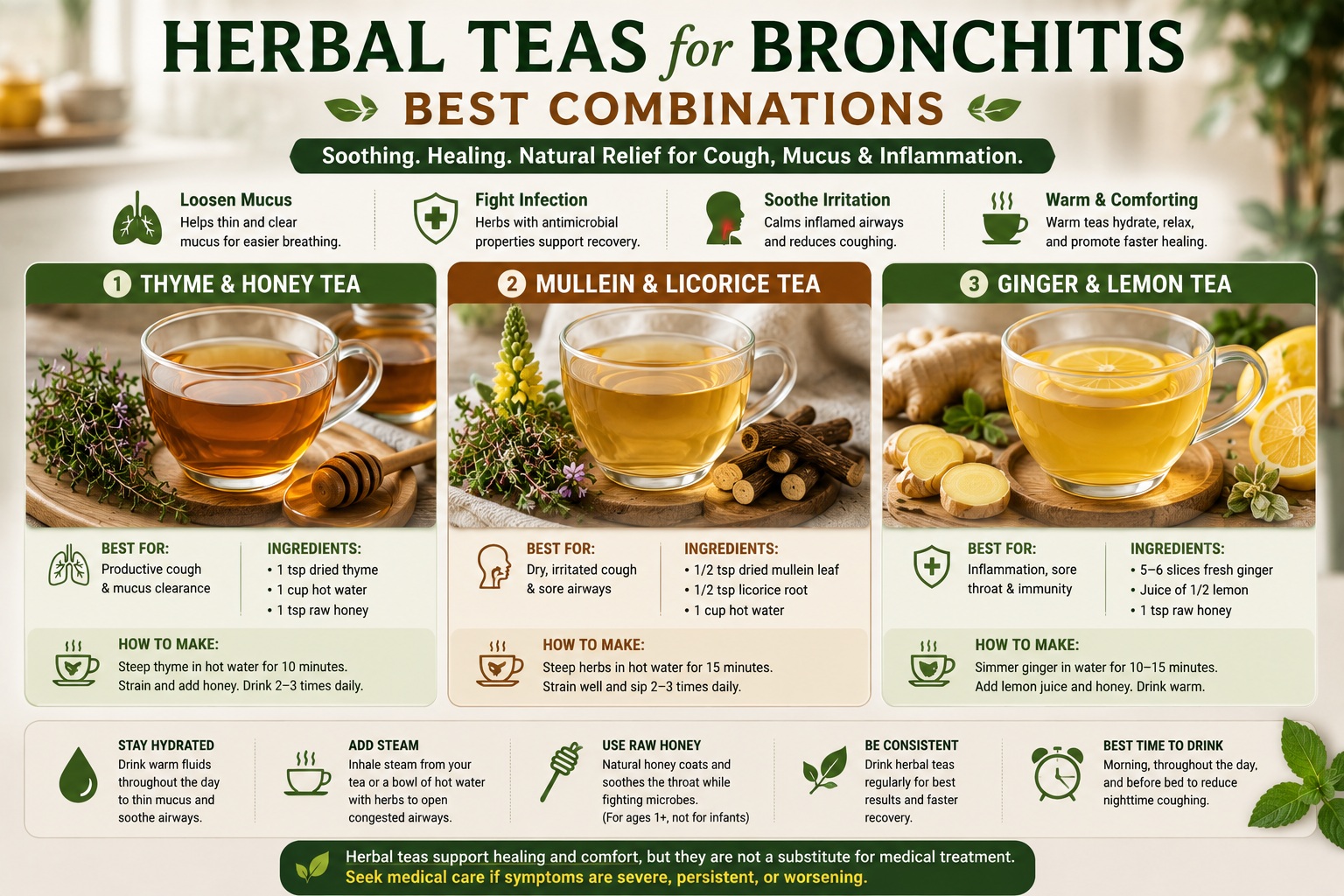
Herbal Teas for Bronchitis — Best Combinations
Herbal teas deliver a double benefit — the therapeutic compounds themselves plus steam inhalation as you drink, which soothes airways directly. Here are three effective combinations:
Thyme and honey tea
Steep 1 teaspoon dried thyme in 250ml hot water for 10 minutes. Strain, add a teaspoon of raw honey. Drink 3 times per day. This is the closest thing to a clinically validated herbal bronchitis remedy — thyme for expectorant and antispasmodic action, honey for soothing and its own antimicrobial properties.
Mullein and licorice root tea
Combine half a teaspoon each of dried mullein leaf and dried licorice root. Steep in hot water for 15 minutes. Strain carefully. The mullein soothes inflamed airways; the licorice reduces inflammation and adds natural sweetness. Good for the dry, raw-feeling stage of bronchitis. Limit to 2 cups per day and don’t use long-term if you have high blood pressure.
Ginger and lemon tea
Simmer 5–6 slices of fresh ginger in 500ml water for 10–15 minutes. Add fresh lemon juice and raw honey. Drink throughout the day. Works on airway inflammation and feels genuinely restorative. The lemon adds vitamin C; the honey soothes.
Herbal Supplements for Chronic Bronchitis — Special Considerations
Chronic bronchitis is a different situation from acute. Here’s what changes:
Duration of use matters more. Short-term use of strong antimicrobials like oregano oil is fine during an acute flare. Long-term use is riskier and less well-studied. For ongoing support, milder expectorants like mullein and thyme tea are more appropriate.
Drug interactions become more relevant. People with chronic bronchitis often take multiple medications — bronchodilators, corticosteroids, blood thinners. Licorice root interacts with corticosteroids. High-dose ginger interacts with blood thinners. Elderberry may interact with immunosuppressants. Always discuss with your prescribing doctor before adding herbal supplements.
Herbs support — they don’t replace. Chronic bronchitis with significant airflow limitation needs proper pulmonary care. Herbal support can improve quality of life and symptom management, but it doesn’t address the underlying structural changes in the airways.
What to Look for When Buying Herbal Supplements for Bronchitis
Standardized extracts where available. For ivy leaf and thyme in particular, standardized extracts contain a guaranteed level of the active compounds. Non-standardized products vary wildly in potency.
Third-party testing. Look for NSF International, USP, or ConsumerLab certification — or brands that publish their own certificate of analysis. This confirms what’s on the label is actually in the product.
Forms matter. Tinctures and liquid extracts absorb faster than capsules. Teas deliver the herb directly as you inhale the steam. Capsules are most convenient for consistent daily dosing. Syrups (especially ivy leaf and thyme) are the forms used in most clinical trials.
Dosage transparency. Avoid proprietary blends that don’t disclose individual herb amounts. You can’t assess safety or efficacy if you don’t know how much of each herb you’re getting.
Herbal Remedies for Bronchitis to Avoid
Coltsfoot (Tussilago farfara). Traditionally used for coughs and bronchitis but contains pyrrolizidine alkaloids (PAs) — compounds that are toxic to the liver and potentially carcinogenic. The German Commission E withdrew its approval for internal use. Avoid entirely.
Comfrey (Symphytum officinale). Same issue — pyrrolizidine alkaloids in the leaves and roots make internal use dangerous. Do not take comfrey internally under any circumstances.
High-dose eucalyptus oil internally. Eucalyptus essential oil inhaled via steam or diffuser is helpful and safe. Taken internally it’s toxic — even small amounts can cause seizures and respiratory failure. Never ingest essential oils.
Standard licorice root long-term. Raises blood pressure and depletes potassium. Fine short-term, problematic if used continuously for months.
Any herb-drug interaction you haven’t checked. If you’re on anticoagulants, immunosuppressants, diabetes medications, or antihypertensives — check interactions before adding any herbal supplement. The interactions are real and can be clinically significant.
Supporting Recovery Alongside Herbal Supplements
Steam inhalation. Fill a bowl with hot water, add a few drops of eucalyptus essential oil, drape a towel over your head, and breathe deeply for 5–10 minutes. This directly soothes inflamed airways and loosens mucus. Do it 2–3 times a day during acute bronchitis.
Honey. Raw honey has genuine antimicrobial and soothing properties — and unlike most cough syrups, it has solid clinical evidence behind it. A review published in BMJ Evidence-Based Medicine found honey more effective than usual care including antibiotics for upper respiratory tract symptoms. A teaspoon at bedtime reduces nocturnal coughing noticeably in most people.
Hydration. Thin mucus drains and clears more easily than thick mucus. Staying well hydrated — warm fluids especially — is one of the most practically effective things you can do for bronchitis. Hot liquids also provide mild bronchodilation from the steam and warmth.
Rest. Acute bronchitis is an active infection. Your immune system needs energy. Pushing through it delays recovery more often than it accelerates it.
Air quality. Avoid smoke, dust, and strong chemical fumes — anything that further irritates already inflamed airways. A cool-mist humidifier helps if the air is dry.
When Natural Remedies Aren’t Enough
Herbal supplements support recovery — they’re not emergency medicine. See a doctor if:
- You develop a fever above 38.5°C (101.3°F) — especially if it arrives after initial improvement
- Mucus turns yellow-green and thick — may indicate bacterial superinfection
- You develop shortness of breath, wheezing, or chest pain
- Symptoms worsen after the first week rather than improving
- You’re still significantly unwell after 3 weeks
- You’re coughing up blood — any amount
Bronchitis can progress to pneumonia, particularly in older adults, smokers, and people with existing lung conditions. The cough of pneumonia is often similar to bronchitis — the difference is usually diagnosed with a chest X-ray. When in doubt, get checked.
Frequently Asked Questions
What is the fastest herbal remedy for bronchitis?
Thyme — either as a tea with honey or as a standardized thyme-ivy syrup — consistently shows the fastest onset in clinical studies. It works within days of consistent use. Steam inhalation with eucalyptus oil provides immediate but temporary relief for congestion and airway irritation.
Can I take herbal supplements alongside antibiotics?
Most of the herbs covered here can be taken alongside antibiotics without interaction. The exceptions to check: high-dose ginger or garlic with blood-thinning antibiotics, and any herb that affects liver enzyme activity with medications metabolized by the liver. When in doubt, ask your pharmacist — they can check specific combinations quickly.
How long does bronchitis last with herbal treatment?
Acute viral bronchitis typically lasts 1–3 weeks regardless of treatment. Herbal remedies — particularly thyme and ivy leaf — have been shown to shorten duration by 2–4 days and significantly reduce symptom severity during that time. The lingering cough after the infection clears can last another 4–6 weeks as the airways heal — herbs help during this phase too.
Is thyme or mullein better for bronchitis?
They work differently and complement each other. Thyme is more powerful as an expectorant and antispasmodic — better for the active coughing phase. Mullein is more soothing — better for the dry, raw-feeling stage when the cough is irritating rather than productive. Many herbalists use both together.
Are herbal supplements safe for bronchitis in children?
Some herbs are appropriate for children with age-appropriate dosing; others are not. Honey (in children over 12 months), thyme tea at low doses, and elderberry syrup are generally considered safe for children. Avoid ivy leaf tinctures in children under 2. Always consult a pediatrician before giving any herbal supplement to a young child.
Final Thoughts
Bronchitis is uncomfortable, persistent, and frustrating — but most cases of acute bronchitis resolve on their own. What herbal supplements do best is shorten that recovery time, reduce symptom severity, and make the weeks of coughing more manageable.
The herbs with the strongest evidence are the ones to start with: thyme and ivy leaf for active coughing and mucus clearance, mullein for soothing irritated airways, elderberry if you’re in the early viral stage, ginger and licorice for inflammation. Add steam inhalation and honey, stay hydrated, and rest.
Be realistic about what herbs can achieve. They won’t cure bacterial pneumonia or reverse chronic COPD. But for the viral bronchitis that follows a winter cold and refuses to leave — they make a genuine difference.
This article is for informational purposes only and does not constitute medical advice. Always consult a qualified healthcare provider before starting any herbal supplement, especially if you take prescription medications, are pregnant, or have an existing health condition.
1 thought on “Herbal Supplements for Bronchitis: What Actually Helps and What to Avoid”