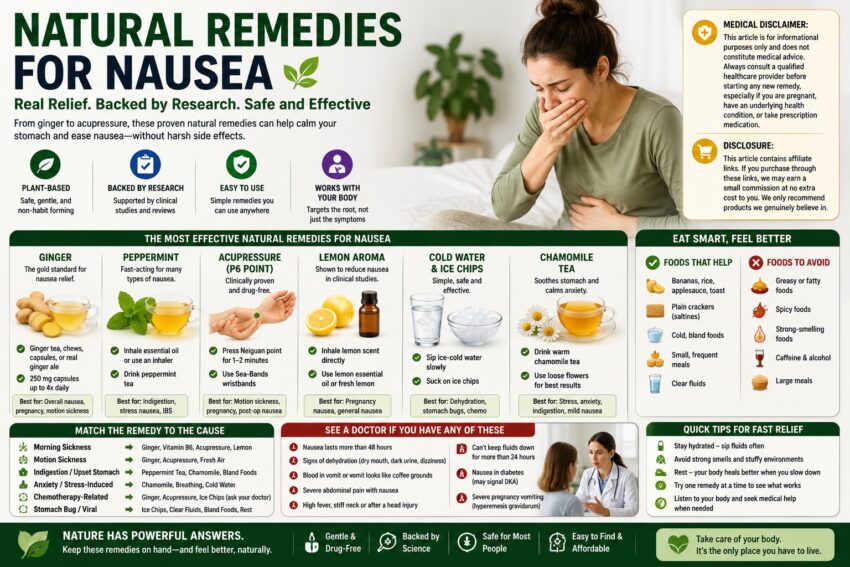
Medical Disclaimer: This article is for informational purposes only and does not constitute medical advice. Always consult a qualified healthcare provider before starting any new remedy, especially if you are pregnant, have an underlying health condition, or take prescription medication.
Disclosure: This article contains affiliate links. If you purchase through these links, we may earn a small commission at no extra cost to you. We only recommend products we genuinely believe in.
Why You Feel Nauseated — and Why It Matters
Nausea is your body’s distress signal. It can come from motion sickness, stress, pregnancy, a stomach bug, or something you ate three hours ago. The cause matters because the most effective remedy usually depends on what triggered it.
The good news: several **natural remedies for nausea** have real clinical evidence behind them. This isn’t a list of folk tales. We’ll tell you what works, what the research says, and where each remedy fits best.
Ginger: The Most Evidence-Backed Remedy
Ginger is the gold standard of natural nausea relief. Multiple systematic reviews — including studies published in the British Journal of Anesthesia and cited by the National Center for Complementary and Integrative Health (NCCIH) — support its effectiveness against chemotherapy-induced nausea, post-operative nausea, and pregnancy-related morning sickness.
**Active compounds gingerols and shogaols** work directly on the digestive tract and may also block serotonin receptors involved in the nausea reflex. That’s not a casual mechanism — it’s similar to how some anti-nausea drugs work.
How to use it:
- Fresh ginger tea: steep 1–2 teaspoons of freshly grated ginger in hot water for 10 minutes
- Ginger chews or candies: convenient for on-the-go nausea
- Ginger capsules: 250 mg taken up to four times daily is the dose used in most clinical trials
- Flat ginger ale made with real ginger (most commercial versions don’t count)
If you want a reliable supplement, Nature’s Way Ginger Root capsules are a well-regarded option with standardized extract.
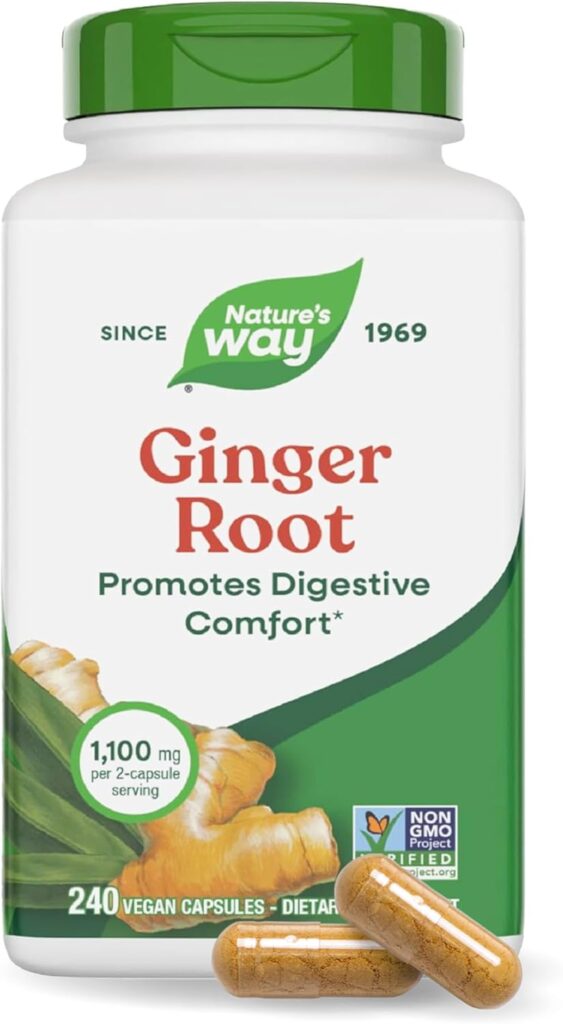
For something more immediate, Gin-Gins Original Ginger Chews are popular for quick relief, especially during travel.

Also worth reading: if your nausea is pregnancy-related, our guide on natural morning sickness remedies covers ginger dosing in more depth for that specific context.
Peppermint: Fast-Acting Aromatherapy and More
Peppermint works in two ways: inhaled and ingested. **Peppermint aroma has been shown in multiple studies** to reduce nausea intensity, particularly post-operative nausea. Nurses in clinical settings have used peppermint oil inhalation as a low-risk adjunct treatment — a 2014 study in the Journal of PeriAnesthesia Nursing found significant nausea reduction with inhaled peppermint oil.
Peppermint tea works well for nausea caused by indigestion or an upset stomach. The menthol relaxes the muscles of the gastrointestinal tract, which can ease cramping and the urge to vomit.
How to use it:
- Inhale peppermint essential oil directly from the bottle or on a cotton ball
- Drink peppermint tea between meals (not immediately after eating if you have acid reflux)
- Use a peppermint aromatherapy inhaler for portable relief
Caution: If you have GERD or acid reflux, peppermint can relax the lower esophageal sphincter and worsen symptoms. Skip it in that case.
For nausea and other digestive complaints, pairing peppermint with the right herbal teas can make a real difference — our roundup of the best herbal teas for an upset stomach is a useful companion read.
Acupressure: The P6 Point That Actually Has Research
The **P6 (Neiguan) acupressure point** sits about two finger-widths below your inner wrist, between the two central tendons. Pressing it firmly has been studied in dozens of randomized trials for chemotherapy nausea, morning sickness, and post-operative nausea.
A Cochrane review (one of the most respected sources in evidence-based medicine) found that P6 stimulation reduced nausea compared to sham acupressure. It’s not magic — but it’s real enough to be used in hospital settings.
How to use it:
- Press the P6 point firmly with your thumb for 1–2 minutes, then switch wrists
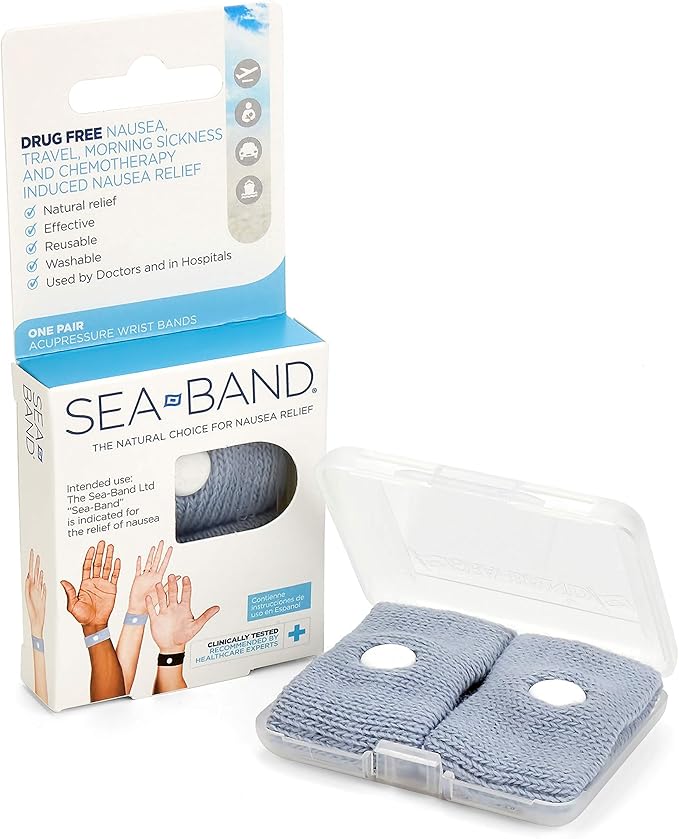
- Use Sea-Bands (wristbands with a built-in plastic stud that maintains constant pressure) — these are drug-free, safe during pregnancy, and inexpensive
Sea-Band Adult Wristbands are the most widely used acupressure bands for nausea. They’re commonly recommended by OBGYNs for morning sickness and by travel medicine specialists for motion sickness.
Lemon and Citrus Aromatherapy
The scent of lemon is surprisingly effective. A 2014 randomized controlled trial published in Iranian Red Crescent Medical Journal found that inhaling lemon essential oil significantly reduced nausea and vomiting in pregnant women compared to a placebo.
The mechanism isn’t fully understood, but citrus scent may influence the area of the brain that processes nausea signals. Whatever the reason — it works, it’s safe, and it costs almost nothing to try.
How to use it:
- Cut a fresh lemon and inhale the scent directly
- Add a few drops of lemon essential oil to a diffuser
- Put a drop on a cotton ball and breathe slowly through it
Cold Water and Ice Chips
Simple but genuinely useful. **Sipping cold water slowly** — especially ice-cold — can calm the stomach and reduce the intensity of nausea. Ice chips work even better for people who can’t keep fluids down, as they hydrate slowly without overwhelming the stomach.
The American Cancer Society recommends ice chips and cold, clear liquids as a first-line strategy for chemotherapy-related nausea. The same principle applies broadly.
Avoid large gulps of water. Cold water in small amounts works better than warm water in quantity.
BRAT-Adjacent Foods: Eating Smart When Nauseated
When nausea is linked to eating or digestive upset, **bland, easy-to-digest foods** reduce the load on your stomach. The classic BRAT diet (bananas, rice, applesauce, toast) is a well-known recommendation from the American Academy of Family Physicians.
Other foods that tend to help:
- Plain crackers (saltines are most commonly cited)
- Cold foods — less smell, easier to tolerate
- Small, frequent meals rather than large ones
- Protein-rich snacks like plain nuts or chicken broth
Foods to avoid when nauseated:
- Fatty or greasy food
- Strong-smelling food
- Spicy food
- Caffeine and alcohol
Fresh Air and Controlled Breathing
Getting fresh air or sitting near an open window often reduces nausea noticeably, especially if the cause is motion sickness or being in a stuffy environment. **Slow, deep breathing** activates the parasympathetic nervous system, which counteracts the stress response that amplifies nausea.
A technique called 4-7-8 breathing (inhale for 4 counts, hold for 7, exhale for 8) has been used in clinical anxiety management and may help settle nausea triggered by anxiety or stress. It’s not a cure, but it costs nothing and has no downside.
Chamomile Tea
Chamomile has antispasmodic properties that help relax the muscles of the stomach and intestines. It’s widely used for nausea associated with anxiety, stress, or indigestion. The European Medicines Agency formally acknowledges chamomile as a traditional remedy for mild gastrointestinal symptoms including nausea.
Brew a strong cup — one heaped teaspoon of dried chamomile flowers steeped for 10 minutes. Drink it warm, not hot.
If you’re exploring herbal teas more broadly, check out our guide to Chinese herbal teas — several, including aged tangerine peel and perilla leaf, are traditionally used for nausea and stomach settling.
Vitamin B6 (Pyridoxine)
Vitamin B6 is the most clinically studied supplement for pregnancy-related nausea. The American College of Obstetricians and Gynecologists (ACOG) officially recommends **Vitamin B6 (10–25 mg up to three times daily)** as a first-line treatment for morning sickness.
It’s useful outside of pregnancy too — B6 plays a role in serotonin production, and deficiency has been linked to nausea in some populations. If you’re not pregnant, the evidence is less robust, but the safety profile is excellent at normal doses.
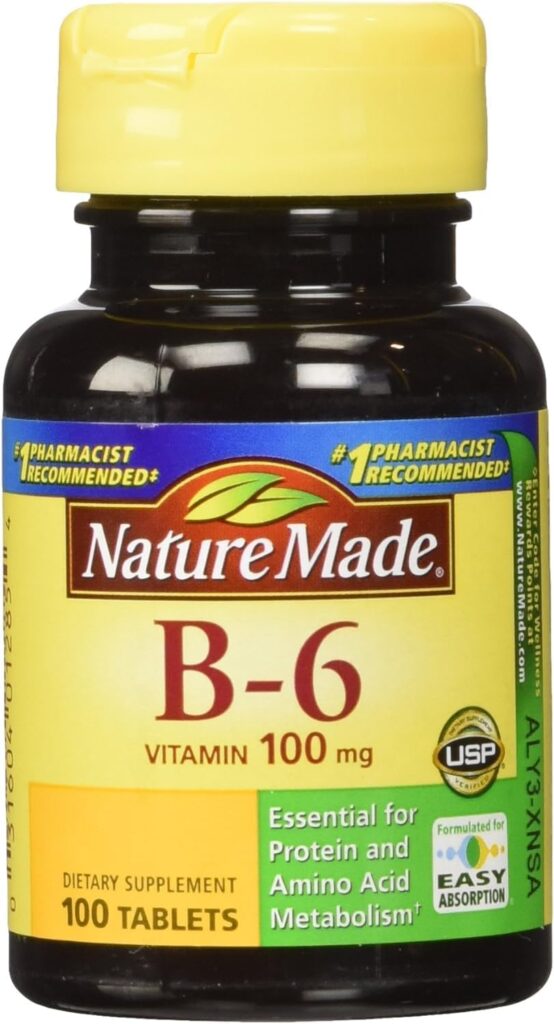
A simple B6 supplement like Nature Made Vitamin B6 100mg tablets is widely available. Note: high-dose B6 (over 200mg/day) long-term can cause nerve damage — stick to recommended doses.
What Doesn’t Work (Or Isn’t Proven)
Plenty of popular suggestions circulate online with little backing. Here’s a quick breakdown:
| Remedy | Verdict | Notes |
|---|---|---|
| Coca-Cola / soda | Weak evidence | Carbonation may help briefly; sugar and caffeine can worsen |
| Apple cider vinegar | No clinical evidence | May irritate an already unsettled stomach |
| Activated charcoal | Not for general nausea | Used for poisoning in ERs, not everyday nausea |
| Probiotics | Mixed evidence | May help gut health long-term but not for acute nausea |
| Fennel tea | Traditional use only | Some antispasmodic properties but limited nausea-specific studies |
Matching the Remedy to the Cause
Not every remedy works for every type of nausea. This quick-reference table helps you pick the right tool:
| Nausea Type | Best Natural Remedies |
|---|---|
| Morning sickness (pregnancy) | Ginger, Vitamin B6, acupressure (P6), lemon scent |
| Motion sickness | Ginger, acupressure bands, fresh air, fixed horizon focus |
| Post-eating / indigestion | Peppermint tea, chamomile, bland foods, cold water |
| Anxiety / stress-induced | Chamomile, controlled breathing, cold water |
| Chemotherapy-related | Ginger (ask oncologist first), acupressure, ice chips |
| Stomach bug / viral | Ice chips, bland foods, clear fluids, rest |
When to See a Doctor
Natural remedies work well for mild, short-term nausea. But some symptoms are warning signs that need medical attention — don’t push through these.
**See a doctor if you have any of the following:**
- Nausea lasting more than 48 hours without improvement
- Signs of dehydration: dry mouth, dark urine, dizziness, no urination for 8+ hours
- Blood in your vomit or vomit that looks like coffee grounds
- Severe abdominal pain alongside nausea
- Nausea after a head injury
- High fever combined with nausea and stiff neck (possible meningitis — go to the ER)
- Nausea in a diabetic — this can signal diabetic ketoacidosis
- Pregnancy with severe vomiting and inability to keep any fluids down (hyperemesis gravidarum)
You know your body. If something feels off beyond ordinary queasiness, trust that instinct and get checked out.
Similarly, if you’re dealing with related digestive symptoms, our article on natural remedies for constipation covers the overlap between gut health and nausea well.
Quick Summary: Natural Remedies for Nausea That Are Worth Trying
Here’s everything distilled into one place:
- Ginger — strongest evidence overall; use tea, chews, or capsules (250mg up to 4x/day)
- Peppermint — excellent for aromatherapy and indigestion-related nausea; avoid with acid reflux
- Acupressure (P6 point) — Cochrane-reviewed; Sea-Bands are the easiest application
- Lemon scent — proven in pregnancy; simply inhale fresh lemon or use essential oil
- Vitamin B6 — ACOG-recommended for morning sickness; safe at standard doses
- Chamomile tea — best for stress-related or indigestion nausea
- Cold water / ice chips — universally helpful; sip slowly
- Bland foods and small meals — reduce the digestive burden
- Fresh air and controlled breathing — free, immediate, and surprisingly effective
None of these **natural remedies for nausea** require a prescription. Most you already have at home or can get for a few dollars. Start with ginger or acupressure — they have the most consistent evidence — and layer in others based on your specific trigger.
Frequently Asked Questions
What is the fastest natural remedy for nausea?
Peppermint aromatherapy works fastest — inhaling it provides relief within minutes for many people. Ginger is more effective overall but takes slightly longer to act, especially in capsule form.
Does ginger actually work for nausea?
Yes. Ginger is the most clinically studied natural remedy for nausea with consistent positive results across multiple types — pregnancy, chemotherapy, post-surgery, and motion sickness. The NCCIH acknowledges the evidence as promising.
Is it safe to use natural remedies for nausea during pregnancy?
Ginger (in food amounts and moderate supplement doses), acupressure, lemon aromatherapy, and Vitamin B6 are all considered safe during pregnancy by most medical authorities. Always check with your OB or midwife before starting any supplement.
Can anxiety cause nausea?
Yes. Anxiety activates the “fight or flight” response, which directly affects the gut. Chamomile tea, controlled breathing, and cold water are particularly useful for anxiety-related nausea.
How long should nausea last before I worry?
Most nausea from common causes resolves within 24–48 hours. If it persists beyond that, or if you can’t keep fluids down for more than 24 hours, see a doctor.
Does peppermint tea help nausea?
Yes, particularly for nausea caused by indigestion or an upset stomach. However, if you have acid reflux or GERD, peppermint can worsen symptoms by relaxing the esophageal sphincter.
Medical Disclaimer: The information in this article is intended for general educational purposes only. It is not a substitute for professional medical advice, diagnosis, or treatment. Always seek the guidance of your physician or qualified health provider with any questions you may have regarding a medical condition.