
This post contains affiliate links. If you buy through our links we may earn a small commission — at no extra cost to you. This never influences our recommendations.
This article is for informational purposes only and does not constitute medical advice. Hair loss can have many underlying causes, some requiring medical diagnosis and treatment. Always consult a qualified healthcare provider before starting any supplement, particularly if hair loss is sudden, patchy, or accompanied by other symptoms.
An Honest Starting Point
Most natural remedies for hair loss have weak-to-modest evidence at best, based on small or lower-quality studies. A couple are genuinely more interesting than the rest, and most are low-risk to try. But none carries the weight of evidence that established treatments like minoxidil or finasteride do, and it would be dishonest to pretend otherwise. This guide ranks what’s actually been studied, explains the mechanisms, and tells you honestly what to expect from each option.
When to See a Doctor First
Natural remedies work best when matched to the actual cause of your hair loss — and some causes need medical attention, not a supplement aisle. See a doctor if:
- Hair loss is sudden, patchy, or comes out in clumps rather than gradual thinning
- You notice scalp redness, scaling, itching, or pain alongside hair loss
- Hair loss follows a major illness, surgery, significant weight loss, or high fever — this pattern (telogen effluvium) often resolves on its own but is worth confirming
- You suspect an underlying condition — thyroid dysfunction and autoimmune conditions are common, treatable causes of hair loss
- You’re a woman experiencing hair loss — the evidence base for female-pattern hair loss is thinner than for men, and a dermatologist can rule out other causes
Understanding Why Hair Loss Happens
Male androgenetic alopecia — the most common form — affects roughly half of men by age 50. It results from genetic predisposition combined with sensitivity to dihydrotestosterone (DHT), a hormone produced when the enzyme 5-alpha reductase converts testosterone. DHT binds to receptors in genetically susceptible hair follicles, gradually shrinking them until they stop producing visible hair. This is the specific mechanism that saw palmetto and finasteride both target, though with very different strength.
Nutritional deficiencies — iron, zinc, vitamin D, and protein specifically — are directly linked to hair loss through an entirely different mechanism, disrupting the hair growth cycle rather than a hormonal pathway. This distinction matters: a remedy addressing DHT won’t help hair loss that’s actually driven by an iron deficiency, and vice versa.
Natural Remedies for Hair Loss — Ranked by Evidence
1. Rosemary Oil — The Most-Cited Single Trial
Rosemary oil has the most frequently cited evidence in this category, largely due to one small randomized trial comparing it directly against 2% topical minoxidil over six months. The two treatments produced roughly comparable improvements in hair count for androgenetic alopecia, with rosemary oil causing notably less scalp itching as a side effect. A broader systematic review of herbal remedies found rosemary works partly by promoting scalp microcirculation — improved blood flow delivering more nutrients to hair follicles — similar to minoxidil’s mechanism.
The honest caveat: this is based on a small trial, not a large body of research. “Comparable to minoxidil” in one study is a genuinely interesting finding, but it doesn’t mean rosemary oil is established as equally effective — it means one study found similar results, which is a meaningfully different claim.
How to use: Apply directly to the scalp, or use a rosemary-infused hair oil formulated for scalp application. Consistency over months matters more than any single application.
2. Saw Palmetto — A Weak but Plausible DHT Blocker
Saw palmetto is marketed as a natural DHT blocker, and the underlying mechanism is real — it inhibits 5-alpha reductase, the same enzyme finasteride targets, reducing DHT production by an estimated 30-40% in some research. One study found saw palmetto improved total hair count by 27% and hair density in 83% of men and women with pattern hair loss when taken orally or applied topically.
The honest caveat, and it’s an important one: saw palmetto’s DHT-blocking effect is significantly weaker than finasteride’s. Multiple reviews describe the effect as “modest” or a “weak possible effect” rather than a genuine alternative to prescription treatment. It’s a plausible complementary option, not a substitute for a treatment with a much larger body of evidence behind it.
How to use: Oral saw palmetto extract, often combined with pumpkin seed oil, which some research suggests may work complementarily. Give it several months before assessing results — DHT-related hair loss responds slowly to any intervention.
3. Pumpkin Seed Oil — Modest Alone, More Interesting Combined
Pumpkin seed oil’s proposed mechanism is anti-inflammatory activity around the hair follicle, and its own clinical evidence is limited to essentially one notable study. What’s more interesting is a documented finding that pumpkin seed oil enhances the effectiveness of topical minoxidil when the two are used together — suggesting a complementary rather than standalone role.
The honest take: treat pumpkin seed oil as a reasonable addition alongside another approach, not a primary treatment to rely on by itself. Marketing claims of dramatic regrowth within weeks are not supported by the single clinical study available, and it’s worth being skeptical of before-and-after photos promising fast results.
4. Nutritional Deficiency Correction — Iron, Zinc, Vitamin D, Biotin
This category works through a completely different mechanism than the DHT-related remedies above, and it’s the one place where “supplement” genuinely means “correct a deficiency” rather than “boost something that’s already normal.” Iron, zinc, vitamin D, and protein deficiencies are directly linked to hair loss and telogen effluvium (diffuse shedding), and correcting a genuine deficiency can produce real improvement.
The honest caveat: this only helps if you actually have a deficiency. Taking biotin, iron, or zinc when your levels are already adequate provides no meaningful additional benefit for hair growth — the evidence for these nutrients helping hair loss is specifically about correcting a shortfall, not general supplementation. A blood test confirming ferritin, vitamin D, and zinc levels is the honest way to know whether this category applies to you before spending money on a “hair vitamin.”
5. Scalp Massage — Low-Cost, Genuinely Reasonable
Regular scalp massage has some evidence suggesting improved microcirculation and hair thickness over time, likely through mechanical stimulation of the follicle and surrounding tissue. It’s low-risk, free, and reasonable to combine with any of the other approaches above — massaging in a rosemary or pumpkin seed oil, for instance, combines two plausible mechanisms in one habit.
Best Products for Natural Hair Loss Support
Best Combined Formula: NOW Foods Saw Palmetto Extract with Pumpkin Seed Oil and Zinc
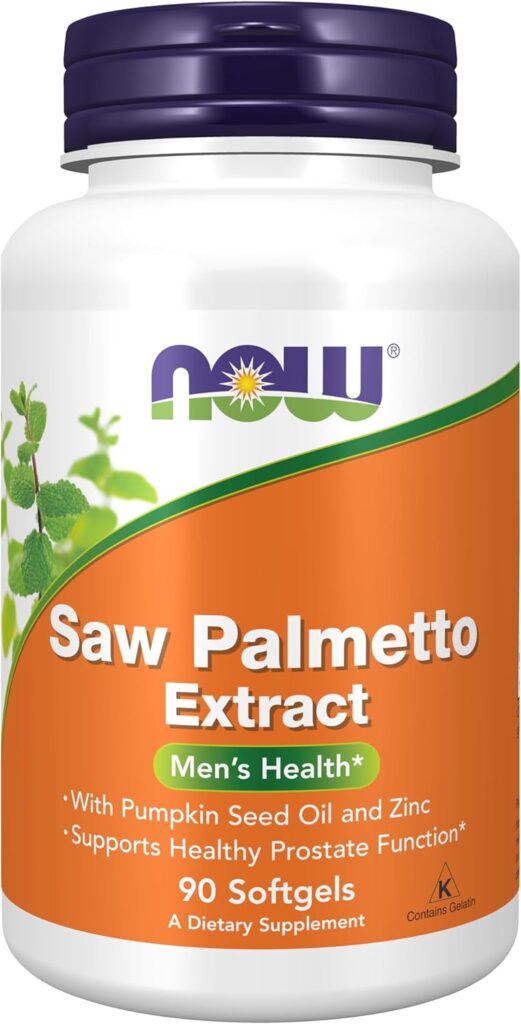
This formula conveniently combines two of the more evidence-supported remedies — saw palmetto and pumpkin seed oil — in one product, with zinc added for its role in hair follicle health. NOW Foods is a 50+ year established, NPA A-rated GMP certified brand, which matters in a supplement category with more than its share of low-quality, unverified products.
Best Topical Option: Mielle Organics Rosemary & Mint Hair Oil

A widely used rosemary-based scalp oil that pairs the remedy with the strongest single-trial evidence in this category with the ease of a topical application you can incorporate into an existing hair care routine. The biotin infusion adds a complementary nutrient, though the primary evidence-based ingredient here is the rosemary itself.
Best for Confirmed Deficiency: Nature’s Bounty Biotin 10,000mcg

A straightforward, high-dose biotin supplement from an established 50-year brand — the right pick specifically if you’ve confirmed a biotin deficiency or want a well-tolerated baseline nutrient while addressing hair loss through other means. As covered above, this works best when an actual deficiency exists rather than as a blanket “hair growth” solution.
What Doesn’t Have Strong Evidence
Essential oil blends marketed for “instant” regrowth: Peppermint, lavender, and tea tree oils are often claimed to stimulate circulation and encourage growth, but the evidence for these specifically (as opposed to rosemary) is considerably thinner. They’re low-risk to try but shouldn’t be expected to perform similarly to rosemary’s more-studied effect.
Caffeine-based hair products: Caffeine is increasingly marketed as a follicle stimulant, with claims of prolonging the growth phase and reducing shedding. The evidence for topical caffeine specifically remains limited and mostly preliminary — a plausible mechanism without a strong body of confirming research yet.
Onion juice: Appears in several small studies with promising-sounding results, but sample sizes are consistently small and the practical downsides (smell, scalp irritation) make it a hard sell regardless of the modest evidence.
Frequently Asked Questions
What is the most effective natural remedy for hair loss?
Rosemary oil has the most frequently cited supporting evidence, based on a small trial finding results comparable to 2% topical minoxidil over six months. Saw palmetto has a plausible DHT-blocking mechanism but a notably weaker effect than pharmaceutical options. None of the natural remedies in this category match the strength of evidence behind established treatments like minoxidil or finasteride.
Can biotin actually regrow hair?
Only if you have an actual biotin deficiency, which is relatively uncommon in people eating a varied diet. Biotin supplementation in people with adequate existing levels has not been shown to provide meaningful additional hair growth benefit. It’s a reasonable thing to correct if genuinely deficient, not a general-purpose hair growth solution.
How long do natural hair loss remedies take to show results?
Generally several months at minimum. Hair growth cycles are slow — a single follicle can take 2-3 months just to move from resting to active growth phase, so any intervention (natural or pharmaceutical) needs sustained use over 3-6 months before meaningful visual change is realistic to expect.
Is saw palmetto as effective as finasteride for hair loss?
No — while saw palmetto works through a similar mechanism (inhibiting the enzyme that produces DHT), multiple reviews describe its effect as significantly weaker than finasteride’s. It may be a reasonable complementary or lower-risk starting option, but shouldn’t be expected to match a prescription treatment’s results.
Should women use the same natural remedies as men for hair loss?
The evidence base for most of these remedies is heavily weighted toward male androgenetic alopecia, with considerably less research specific to female pattern hair loss or postmenopausal hair thinning. Women experiencing hair loss should see a doctor to rule out other causes (thyroid, iron deficiency, hormonal changes) before assuming a DHT-related mechanism applies.
The Bottom Line
Natural remedies for hair loss deserve an honest framing: rosemary oil and saw palmetto have genuine, if modest, evidence behind them, and correcting an actual nutritional deficiency can produce real improvement — but none of these approaches carries the weight of evidence that established medical treatments do. The most useful thing you can do before spending money on any hair supplement is figure out which category your hair loss actually falls into, since a DHT-blocking remedy won’t help a deficiency-driven problem, and vice versa.
For related content on supplements and evidence-based natural health, see our guides on natural remedies for low energy and fatigue and herbs for inflammation.
This article is for informational purposes only. Always consult a qualified healthcare provider before starting any supplement, particularly if hair loss is sudden, patchy, or accompanied by other symptoms.