
This post contains affiliate links. If you buy through our links we may earn a small commission — at no extra cost to you. This never influences our recommendations.
This article is for informational purposes only and does not constitute medical advice. UTIs can range from mild to medically serious, and untreated infections can progress to kidney infection. Always consult a qualified healthcare provider for diagnosis and treatment, particularly if you have fever, back pain, blood in urine, or symptoms that don’t improve within 24–48 hours.
When to See a Doctor — Read This First
Natural remedies have genuine evidence for UTI prevention and mild symptom support. They are not a substitute for medical treatment of an active, confirmed infection. See a doctor promptly if you have:
- Fever, chills, or back/flank pain — possible signs of kidney involvement
- Blood in urine
- Nausea or vomiting alongside urinary symptoms
- Symptoms that don’t improve within 24–48 hours of home management
- You are pregnant
- You have diabetes, a compromised immune system, or a urinary catheter
- Recurrent UTIs (3+ per year) — this needs proper medical workup, not just repeated home treatment
Uncomplicated UTIs in otherwise healthy adults are commonly treated with a short course of antibiotics. Natural remedies are most appropriately used for prevention of recurrent UTIs, and for supporting comfort and recovery alongside — not instead of — appropriate medical care for an active infection.
Why UTIs Happen — and Why Prevention Is Where Natural Remedies Help Most
The vast majority of UTIs are caused by E. coli bacteria that travel from the digestive tract to the urethra and bladder. The bacteria’s ability to cause infection depends heavily on adhesion — specialised structures called fimbriae let E. coli grip onto the cells lining the urinary tract. Once attached, the bacteria multiply and trigger the burning, urgency, and frequency that define a UTI.
This adhesion mechanism is the single most important thing to understand about natural UTI remedies, because the two best-evidenced natural approaches — D-mannose and cranberry — both work by blocking it, not by killing bacteria directly. This is fundamentally different from how antibiotics work, and it explains both their strengths (genuinely useful for prevention, very low side effect risk) and their limits (they don’t treat an established infection the way antibiotics do).
Natural Remedies for UTI — Ranked by Evidence
1. D-Mannose — The Strongest Evidence of Any Natural UTI Remedy
D-mannose is a simple sugar, structurally similar to glucose, found naturally in cranberries, apples, and oranges. It works through direct anti-adhesion: D-mannose binds to the same receptor sites on bladder wall cells that E. coli fimbriae use to attach. When D-mannose occupies those binding sites first, the bacteria can’t adhere — they simply get flushed out with urine instead.
The clinical evidence here is genuinely strong relative to most natural remedies. A widely cited 2014 RCT found D-mannose powder as effective as the antibiotic nitrofurantoin for preventing recurrent UTI over six months, with significantly fewer side effects. A 2022 non-interventional study examined D-mannose as a treatment option for acute uncomplicated lower UTIs and found promising results worth further investigation. Because D-mannose is metabolised only minimally by the body and excreted rapidly in urine, it reaches the bladder in concentrated form — exactly where it needs to act.
Dose: For prevention, 1–2g daily. For acute symptom support at the first sign of a UTI, 1.5–3g every 2–3 hours on day one, then reducing to 1–2g daily for several days. Always take with water — adequate fluid intake amplifies the flushing mechanism that makes D-mannose work.
Safety: Excellent safety profile. Since D-mannose isn’t significantly metabolised, it doesn’t meaningfully affect blood sugar even in people with diabetes, though those with diabetes should still monitor and discuss with their doctor. Mild digestive upset (loose stools) can occur at higher doses.
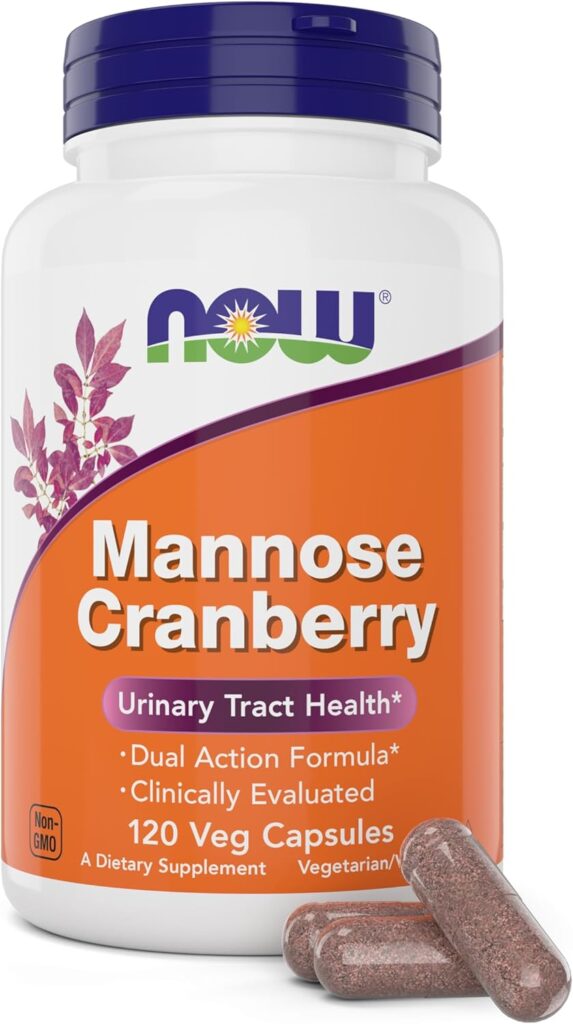
Recommended: NOW Foods Mannose Cranberry — combines 450mg D-mannose with 250mg whole cranberry (with PACs) per capsule, an award-winning dual-action formula from a 50+ year established brand.
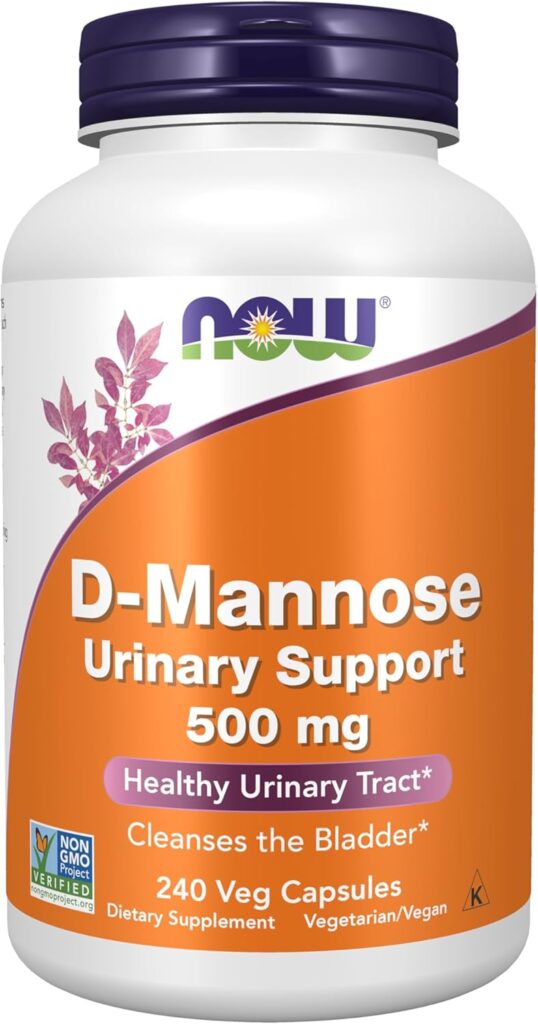
For higher-dose pure D-mannose without cranberry, NOW Foods D-Mannose 500mg, 240 caps delivers 1,500mg per 3-capsule serving — useful for the higher acute-phase dosing protocol.
2. Cranberry — The Best-Studied Traditional Remedy
Cranberry is the most extensively researched plant-based UTI remedy, with research spanning decades. The active compounds are A-type proanthocyanidins (PACs) — these specifically prevent E. coli fimbriae from adhering to the urinary tract wall, the same anti-adhesion mechanism as D-mannose but via a different molecular pathway. A randomised controlled trial by Beerepoot and colleagues found cranberry capsules reduced recurrent UTI rates comparably to the antibiotic trimethoprim, with markedly fewer side effects and without contributing to antibiotic resistance — a genuinely meaningful finding given the growing concern about antibiotic-resistant UTI bacteria.
The form matters significantly. Cranberry juice, while popular, typically contains too little concentrated PAC content to be reliably effective and often comes loaded with added sugar. Capsule or tablet forms standardised to PAC content are the evidence-aligned choice. Look for products specifying PAC content in milligrams — 36mg of PACs per serving is the benchmark used in several positive clinical trials.
Dose: 36mg or more of PACs daily for prevention, taken consistently rather than only when symptoms appear. Cranberry is a prevention tool, not an acute-phase treatment.
Safety: Well-tolerated. High doses may cause mild stomach upset. Cranberry can interact with warfarin — those on blood thinners should consult a doctor before regular use.
3. Probiotics — Restoring the Microbiome Balance That Prevents Recurrence
Recurrent UTIs are often linked to disruption of the vaginal and urinary microbiome — particularly depletion of protective Lactobacillus species, which normally keep E. coli and other UTI-causing bacteria in check. This disruption is especially common after antibiotic treatment, which kills protective bacteria along with the infection, creating a cycle where treating one UTI increases vulnerability to the next.
Research on oral probiotics for UTI prevention shows that specific Lactobacillus strains can help regulate vaginal flora and reduce recurrence, particularly when used alongside — not instead of — other prevention strategies. The mechanism is indirect but biologically coherent: a healthy population of protective bacteria competes with and suppresses the pathogenic bacteria that cause UTIs.
Practical approach: Look for probiotic strains specifically studied for urogenital health — Lactobacillus rhamnosus and Lactobacillus reuteri have the most relevant research. Combination products that pair probiotics with D-mannose and cranberry address both the anti-adhesion mechanism and the underlying microbiome imbalance simultaneously.
Recommended: NATURE TARGET Probiotics for Women UT Health — combines D-mannose, cranberry, hibiscus, dandelion, and uva ursi extract with a probiotic blend in one formula, addressing multiple UTI prevention mechanisms at once rather than requiring several separate supplements.

4. Uva Ursi — Traditional Antibacterial Herb, Use With Caution
Uva ursi (bearberry) has centuries of traditional use for urinary infections, particularly in Native American and European herbal medicine. Its active compound, arbutin, is converted in the body to hydroquinone, which has genuine antibacterial activity in the urinary tract — particularly effective against E. coli. Laboratory research confirms significant antibacterial activity along with astringent and mild diuretic properties.
The important caveat: uva ursi is not appropriate for long-term daily use. Hydroquinone has potential liver toxicity concerns with extended use, and most herbalists recommend limiting uva ursi to short courses (no more than 1–2 weeks) rather than ongoing daily supplementation. It’s also contraindicated during pregnancy and breastfeeding, and should be avoided by anyone with liver conditions.
Practical approach: Uva ursi is best used as a short-term, occasional supportive remedy at the first sign of urinary discomfort — not as a daily prevention supplement. It appears in several combination UTI formulas (including the NATURE TARGET product above) at doses appropriate for that context, which is the safer way to access it rather than high-dose standalone extracts used continuously.
5. Increased Fluid Intake — Simple, Underrated, and Genuinely Effective
It sounds almost too basic to mention, but adequate hydration is one of the more robustly supported interventions for UTI prevention. More fluid intake means more frequent urination, which mechanically flushes bacteria out of the urinary tract before they have time to adhere and establish an infection. Research has shown that women who increased their daily water intake had significantly fewer UTI recurrences compared to those who didn’t.
Practical target: Aim for pale yellow urine as a practical hydration marker — dark yellow urine is a sign you need more fluid. For most adults, this means roughly 2–2.5 litres of water daily, more in hot weather or with physical activity. This single change costs nothing and meaningfully supports every other remedy on this list — D-mannose and cranberry both work better with adequate fluid intake amplifying the flushing mechanism.
UTI Prevention Drink Mixes — A Convenient Modern Approach
Drink mix formats have become popular for UTI prevention because they combine D-mannose with adequate fluid intake in a single convenient step — addressing two evidence-backed mechanisms at once. Uqora’s Complete Regimen is the most established product in this category, combining a D-mannose drink mix (Flush) with daily capsules (Defend) containing D-mannose, green tea extract, and turmeric, plus a vaginal probiotic (Promote).

The brand markets it specifically for women with recurrent UTI challenges and recommends drinking the mix every few days, after sex, or whenever extra urinary tract support is needed.
This kind of regimen approach makes sense given what the research shows: prevention is most effective when multiple mechanisms (anti-adhesion, microbiome support, hydration) are addressed together rather than relying on a single supplement.
Behavioural and Lifestyle Prevention Strategies
Supplements work best alongside — not instead of — the well-established behavioural factors that reduce UTI risk:
- Urinate after sexual activity — one of the most consistently recommended prevention strategies, as it flushes bacteria that may have been introduced during intercourse before they can establish in the urinary tract
- Wipe front to back — reduces the transfer of E. coli from the digestive tract to the urethra
- Don’t hold urine for extended periods — frequent urination keeps bacteria from having time to adhere and multiply
- Avoid irritating feminine hygiene products — douches and scented products can disrupt protective vaginal flora
- Consider underlying factors with a doctor — for women experiencing recurrent UTIs after menopause, topical estrogen therapy (prescription) has shown significant effectiveness, as hormonal changes affect urinary tract tissue and protective flora
What Doesn’t Have Strong Evidence — or Needs Caution
Garlic: Has documented broad-spectrum antibacterial properties in laboratory settings, but direct clinical evidence for UTI prevention specifically is limited. Reasonable as a general health practice, not a primary UTI strategy.
Apple cider vinegar: Popular online but lacks meaningful clinical evidence for UTI prevention or treatment. The acidic environment theory doesn’t hold up well against how UTIs actually develop.
Baking soda: Sometimes recommended to alkalinise urine and reduce burning discomfort. May offer mild symptomatic relief for some people but doesn’t address the underlying bacterial infection and isn’t a substitute for proper treatment.
Goldenseal: Contains berberine, which has antimicrobial properties, but goldenseal specifically carries safety concerns including potential interactions with multiple medications and is not recommended during pregnancy. Berberine from other sources has somewhat better-studied safety profiles if this mechanism is of interest — discuss with a doctor first.
Frequently Asked Questions
Can D-mannose actually cure a UTI, or just prevent one?
D-mannose has shown promise for both prevention and as supportive treatment for mild, uncomplicated UTIs in some research, performing comparably to antibiotics in at least one well-designed trial. However, it works through a different mechanism than antibiotics (anti-adhesion vs. killing bacteria) and isn’t appropriate for more serious infections, kidney involvement, or cases where bacteria have already formed a biofilm. For an active, confirmed UTI, especially with fever or back pain, see a doctor rather than relying on D-mannose alone.
How long does it take for natural UTI remedies to work?
For D-mannose used at acute-phase dosing, some people notice symptom improvement within 24–48 hours. For prevention purposes, cranberry, probiotics, and D-mannose used daily typically need 4–8 weeks of consistent use before their preventive effect on recurrence frequency becomes apparent — these are cumulative strategies, not instant fixes.
Is cranberry juice as effective as cranberry supplements for UTIs?
No — most commercial cranberry juice contains too little concentrated proanthocyanidin (PAC) content to match the doses used in positive clinical trials, and is often high in added sugar. Standardised cranberry capsules or tablets specifying PAC content (36mg+ per serving) are the more evidence-aligned choice for meaningful UTI prevention benefit.
Can men use D-mannose and cranberry for UTI prevention?
Yes — while UTIs are far more common in women due to anatomical factors, the same anti-adhesion mechanisms apply regardless of sex. D-mannose, cranberry, and probiotic approaches are appropriate for men experiencing UTIs, though recurrent UTIs in men warrant medical evaluation since they’re less common and may indicate an underlying issue requiring investigation.
Are natural UTI remedies safe to use alongside antibiotics?
Generally yes — D-mannose, cranberry, and probiotics are commonly used alongside antibiotic treatment without issue, and probiotics specifically can help offset the microbiome disruption that antibiotics cause. Always inform your doctor about any supplements you’re taking, and avoid uva ursi or goldenseal during antibiotic treatment without medical guidance due to potential interactions.
Final Thoughts
D-mannose has the strongest clinical evidence of any natural UTI remedy, working through a genuinely understood anti-adhesion mechanism that’s been validated in head-to-head comparisons with antibiotics for prevention. Cranberry — used in concentrated, PAC-standardised form rather than juice — backs it up with decades of research support. Probiotics address the microbiome imbalance that drives recurrence, particularly important for anyone who’s had antibiotic treatment recently.
For most people focused on prevention, NOW Foods Mannose Cranberry combines the two best-evidenced mechanisms in one product. For a comprehensive daily approach addressing prevention from multiple angles, NATURE TARGET’s combination formula adds probiotic support to the mix. And for anyone dealing with recurrent UTIs specifically, the structured Uqora Complete Regimen offers a more clinically-oriented system worth considering alongside a conversation with your doctor about underlying causes.
For related health topics, see our guides on herbs for inflammation and natural remedies for high blood pressure for broader natural health approaches that complement urinary tract care.
This article is for informational purposes only. UTIs require proper diagnosis, and untreated infections can become serious. Always consult a qualified healthcare provider for symptoms suggesting an active infection, and seek prompt care for fever, back pain, or symptoms that don’t improve quickly.