
This post contains affiliate links. If you buy through our links we may earn a small commission — at no extra cost to you. This never influences our recommendations.
This article is for informational purposes only and does not constitute medical advice. Always consult a qualified healthcare provider before starting any supplement, particularly if you have kidney disease or take medications that interact with magnesium.
Magnesium was the most-searched mineral supplement of 2026, and the supplement aisle doesn’t make the decision easy — oxide, citrate, glycinate, malate, threonate, and half a dozen other forms, with marketing that rarely explains what actually separates them. Glycinate and citrate are the two most commonly compared, and while both are well-absorbed, they behave differently enough in the body that picking the wrong one for your goal is a genuinely common mistake.
The Core Chemistry Difference
Magnesium glycinate is a chelate — magnesium bound to two glycine molecules through amide-like bonds. This structure is absorbed largely intact across amino-acid transporters in the small intestine, a different pathway than most other magnesium forms use.
Magnesium citrate is a salt — magnesium paired with citric acid. It dissociates in the stomach and absorbs through the same divalent mineral pathway used by other magnesium salts, with some additional uptake driven by the citrate molecule’s own absorption.
Both are considered high-bioavailability forms — meaningfully better absorbed than magnesium oxide, a cheaper form that’s poorly absorbed (roughly 4% in some bioavailability studies) and frequently used specifically for its laxative effect rather than genuine magnesium repletion.
The Practical Difference: Digestive Tolerance
This is where the two forms genuinely diverge in day-to-day use. Glycinate is essentially neutral on digestion at normal doses — because it’s absorbed intact through amino-acid transporters rather than through an osmotic mechanism, it doesn’t pull extra water into the intestines the way citrate does.
Citrate’s solubility is exactly what makes it mildly-to-strongly laxative depending on dose — most people notice a noticeably softer stool above roughly 300mg of elemental citrate taken at once. The FDA actually classifies magnesium citrate as a saline laxative, with an official drug label indicated for occasional constipation relief. This isn’t a side effect to be alarmed by — for some people, it’s the entire point of choosing citrate.
Why Glycinate Has Become the “Sleep and Anxiety” Form
The glycine component does more than just carry the magnesium — it’s independently a calming, inhibitory neurotransmitter precursor, acting in the brainstem and spinal cord. This dual mechanism (magnesium supporting GABA receptor function, glycine acting on its own inhibitory pathways) is the reasoning behind glycinate’s reputation as the go-to form for sleep, anxiety, and stress reactivity.
A 2025 randomized, double-blind, placebo-controlled trial — one of the more rigorous studies on this specific question — enrolled 155 adults aged 18-65 with self-reported poor sleep quality. Those taking 250mg of elemental magnesium as bisglycinate daily showed significantly greater reductions in insomnia severity scores versus placebo at week 4.
The honest caveat: the effect size was modest (Cohen’s d = 0.2, a small effect by standard interpretation), and the researchers themselves noted the need for longer trials and more objective sleep measurements — a level of honesty about limitations that’s refreshingly rare in supplement research. This is a real, statistically significant finding, not a dramatic one.
Why Citrate Is the Go-To for Bowel Regularity
When bowel regularity is part of the clinical picture — whether that’s genuine occasional constipation or simply wanting the mild regularity benefit alongside magnesium repletion — citrate serves both purposes simultaneously. This dual function is precisely why it’s one of the most widely available and affordable forms on the market, and why many people specifically choose it over glycinate despite glycinate’s gentler reputation.
Citrate also shows a faster rise in serum magnesium due to its higher solubility, and one 2019 study examining tissue distribution found citrate increased muscle and brain magnesium levels in a dose-independent manner — meaning it reliably raised tissue levels across different doses tested.
The Honest Gap in the Research
Here’s something worth knowing before choosing based on marketing claims alone: there has never been a published clinical trial directly comparing magnesium glycinate and magnesium citrate head-to-head. Everything in the “glycinate is gentler, citrate is more laxative” comparison comes from separate studies of each form individually, plus general pharmacological reasoning about how chelates versus salts behave in the gut — not from a study that put both forms in the same trial and measured the difference directly.
This doesn’t mean the comparison is wrong — the mechanistic reasoning is sound and consistent across multiple independent sources. But it’s an honest distinction between “well-supported by separate evidence” and “directly proven by a head-to-head trial,” and it’s the kind of nuance most supplement marketing skips entirely.
The Label Math Most People Miss: Elemental Magnesium
This is genuinely useful and rarely explained clearly. Magnesium supplements are sold as a compound — the magnesium bound to whatever carrier (glycine, citric acid, oxide) — not as pure elemental magnesium. The carrier takes up a meaningful share of the total tablet weight, and different carriers take up very different amounts.
A 500mg magnesium oxide tablet contains roughly 300mg of elemental magnesium, because oxide is a small molecule and contributes little to the total mass. A 500mg magnesium glycinate tablet, by contrast, contains only around 70mg of elemental magnesium — because the two glycine molecules attached to each magnesium ion make up most of the tablet’s weight. Citrate sits in between these two extremes.
The practical takeaway: always check the “elemental magnesium” figure on the supplement facts panel, not just the total compound weight in the product name. A “500mg” glycinate product and a “500mg” citrate product deliver meaningfully different actual amounts of magnesium to your body, and comparing products by the number in the product name alone will mislead you.
Best Products for Each Form
Best Glycinate: Pure Encapsulations Magnesium Glycinate
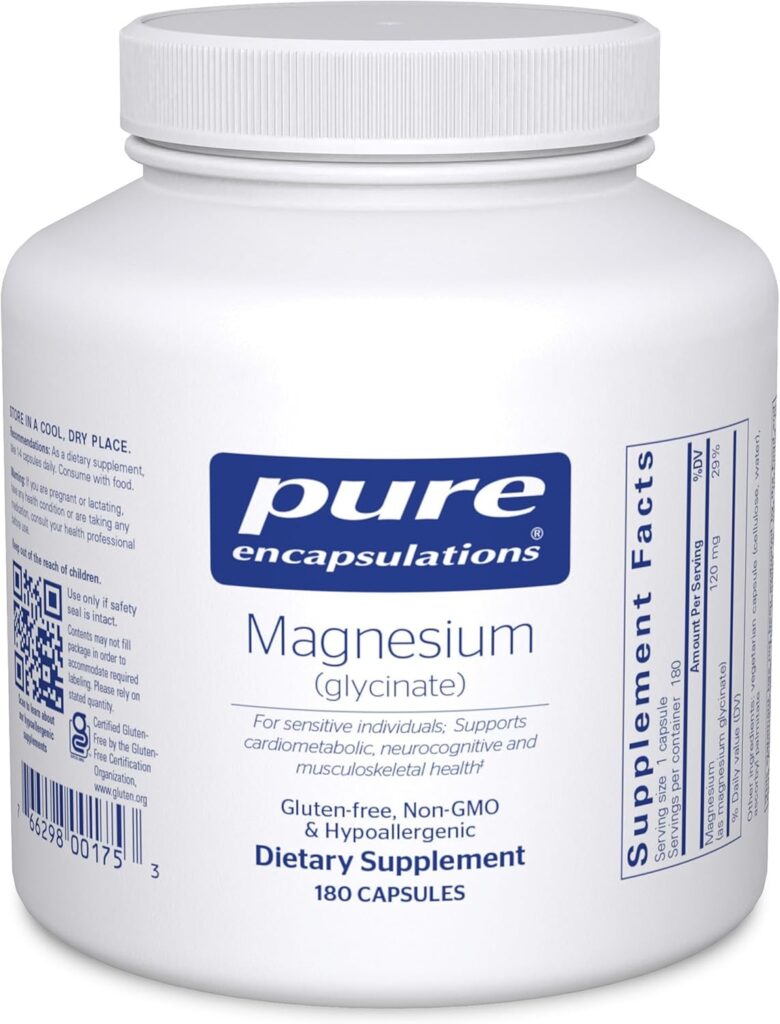
A hypoallergenic, NSF-registered formula free from common allergens and unnecessary fillers — the benchmark quality standard for magnesium glycinate. This is a genuinely clean option for anyone specifically choosing glycinate for its gentle digestive profile, since a poorly formulated product with unnecessary additives can undercut that advantage.
Best Citrate: Nature Made Magnesium Citrate 250mg
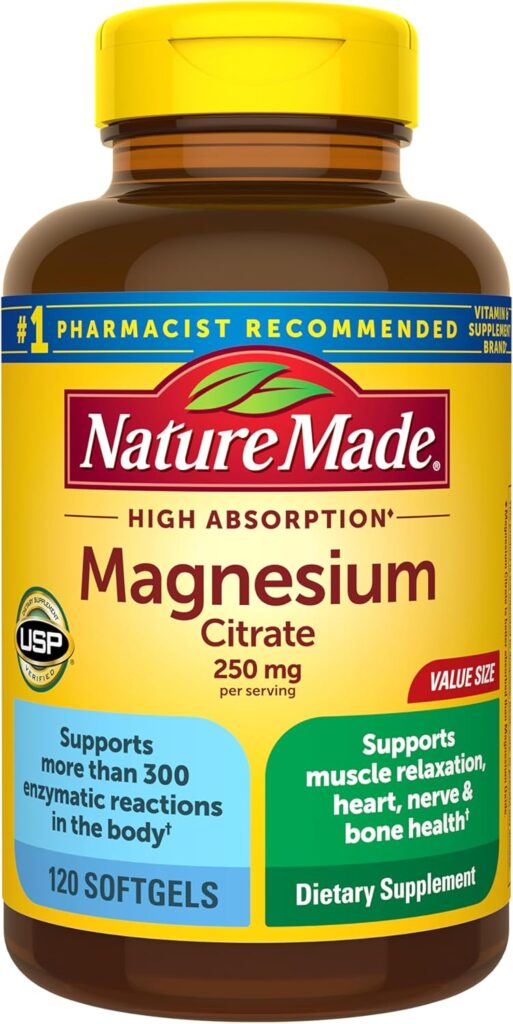
Nature Made is the #1 pharmacist-recommended vitamin and supplement brand, and their magnesium citrate softgels deliver a well-absorbed, gluten-free formula at 250mg per serving — a reasonable middle-ground dose for general repletion without immediately triggering the laxative effect that higher citrate doses can produce.
Which Form Should You Actually Choose?
| Your Goal | Better Choice |
|---|---|
| Sleep quality, anxiety, stress, muscle tension at night | Glycinate (Pure Encapsulations) |
| Occasional constipation alongside magnesium repletion | Citrate (Nature Made) |
| Sensitive stomach, history of loose stools with other magnesium forms | Glycinate (Pure Encapsulations) |
| General magnesium repletion, no specific digestive goal | Either — citrate is typically more affordable |
| Reduced stomach acid production (common in older adults, acid-suppressing medication users) | Citrate — less dependent on stomach acid for absorption |
Frequently Asked Questions
Which absorbs better, magnesium glycinate or citrate?
Both are considered high-bioavailability forms, meaningfully better absorbed than magnesium oxide. Citrate shows a faster rise in serum magnesium due to higher solubility. Glycinate is absorbed via a different pathway (amino acid transporters) that avoids the osmotic effect responsible for citrate’s laxative action. Neither is definitively “more absorbed” than the other in a head-to-head sense — no such trial has been published — they simply behave differently once absorbed.
Does magnesium glycinate cause diarrhea like citrate does?
Generally no — glycinate is essentially neutral on digestion at normal doses because it doesn’t pull water into the intestines the way citrate’s osmotic mechanism does. This is the main practical reason people with sensitive stomachs or a history of loose stools from other magnesium forms often switch to glycinate specifically.
Can I take magnesium citrate for sleep instead of glycinate?
You can, but glycinate has more specific reasoning and research behind it for sleep and anxiety specifically — the glycine component itself has calming, inhibitory neurotransmitter effects independent of the magnesium. Citrate will still contribute to overall magnesium repletion, which itself supports GABA receptor function, but it lacks glycine’s additional mechanism.
Why does my magnesium glycinate bottle have less “elemental magnesium” than my citrate bottle at the same total weight?
Because the glycine carrier molecules make up most of the tablet’s mass in glycinate — a 500mg glycinate tablet contains roughly 70mg of actual elemental magnesium, while a 500mg citrate tablet delivers more. Always check the elemental magnesium figure on the supplement facts panel rather than comparing products by their total compound weight.
Is it safe to take both magnesium glycinate and citrate together?
There’s no specific danger in combining sources, but be mindful of your total elemental magnesium intake across all sources combined, since excessive magnesium (particularly in people with kidney disease) can cause issues. Most people don’t need to combine forms — pick the one that matches your primary goal from the table above.
The Bottom Line
Glycinate and citrate are both well-absorbed, legitimate forms of magnesium — the choice comes down to what you’re actually trying to achieve, not which one is universally “better.” Glycinate’s gentleness and glycine-driven calming effect make it the sensible default for sleep, anxiety, and stress-related use, and Pure Encapsulations’ formula is a clean way to get it. Citrate’s dual repletion-plus-regularity effect makes it the practical choice when bowel movement support is part of the goal, and Nature Made’s citrate softgels are a reliable, affordable option. Whichever you choose, check the elemental magnesium figure on the label rather than assuming the product name tells the whole story.
For related content on magnesium’s role in specific conditions, see our guides on natural remedies for high blood pressure, natural remedies for insomnia, and natural remedies for anxiety.
This article is for informational purposes only. Always consult a qualified healthcare provider before starting any supplement, particularly if you have kidney disease or take medications that may interact with magnesium.