
This post contains affiliate links. If you buy through our links we may earn a small commission — at no extra cost to you. This never influences our recommendations.
Why Herbal Drinks Work for Sore Throats
When your throat hurts, the last thing you want is something complicated. Fortunately, the most effective herbal drinks for sore throat relief are also the simplest — and they work in ways that plain hot water simply can’t match.
Warm liquids alone already help: they reduce throat muscle spasm, thin mucus, keep the throat moist, and provide a small amount of pain relief through warmth. But herbal drinks go further.
Demulcent herbs — like slippery elm and marshmallow root — coat the throat in a soothing layer of mucilage that physically protects the irritated tissue. Anti-inflammatory herbs — like ginger and turmeric — reduce the swelling that makes swallowing painful. Antimicrobial herbs — like sage and thyme — help fight the bacteria or virus causing the infection. And raw honey ties it all together — it has genuine antimicrobial properties, coats and soothes the throat directly, and makes every herbal drink taste better.
Before we go further — see a doctor if:
- Your sore throat is severe and came on suddenly with a high fever
- You have difficulty swallowing or breathing
- You see white patches or pus on the tonsils
- Sore throat has lasted more than a week without improvement
- You have a rash alongside the sore throat
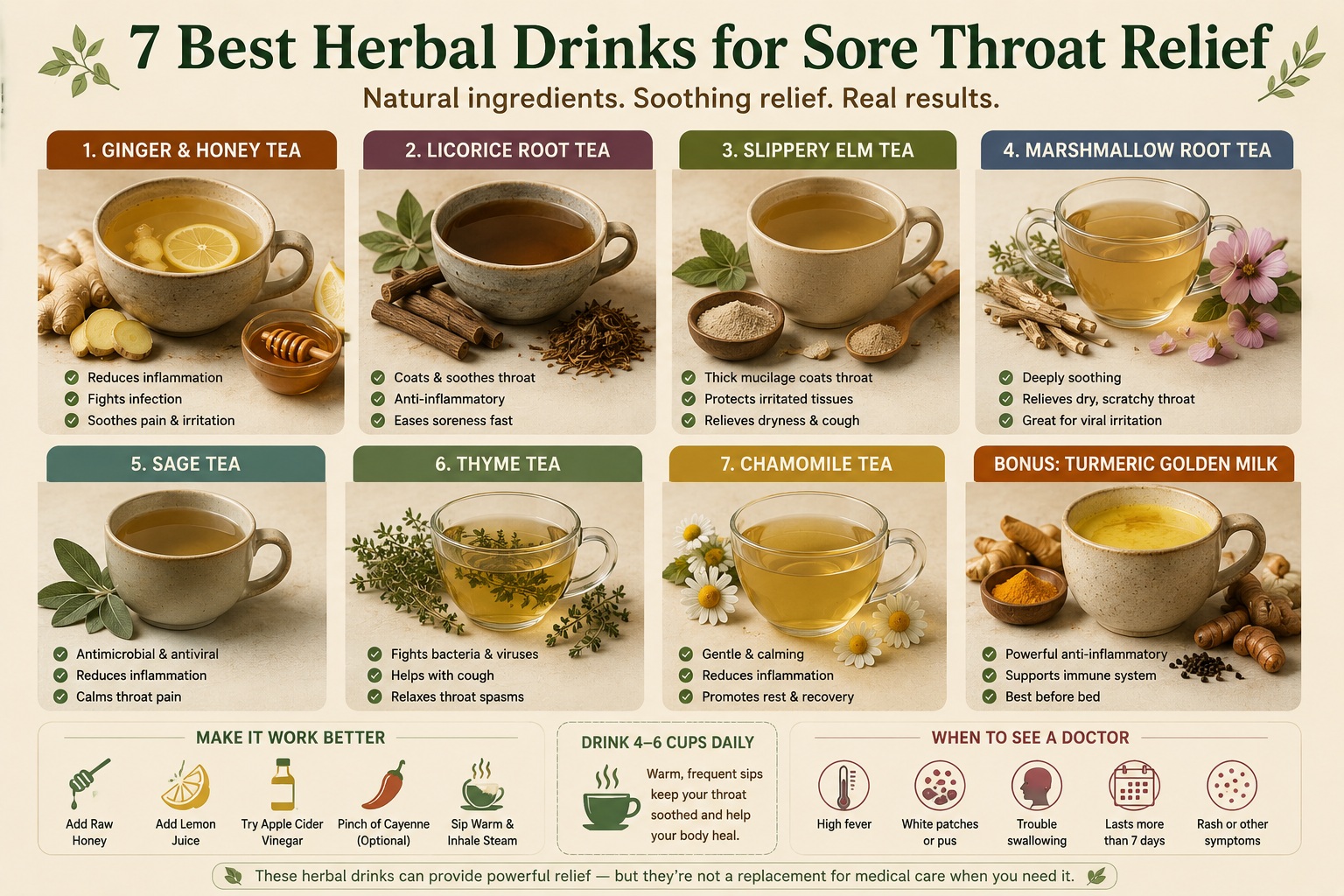
The Best Herbal Drinks for Sore Throat
Ginger and Honey Tea — Best Overall
If you only make one thing from this list, make this. Ginger and honey tea is the most universally effective sore throat drink — backed by clinical evidence for both ingredients and genuinely pleasant to drink when you feel awful.
Ginger’s gingerols and shogaols inhibit inflammatory prostaglandins and have direct antimicrobial activity. A study in the journal Microbiology and Immunology found ginger extract inhibited Streptococcus pyogenes — the bacteria behind strep throat. Raw honey has been shown in multiple clinical trials to reduce throat pain and irritation; a BMJ Evidence-Based Medicine review found honey more effective than usual care for upper respiratory tract symptoms including sore throat.
How to make it: Simmer 6–8 slices of fresh ginger in 2 cups of water for 10–15 minutes. Strain into a mug. Allow to cool slightly. Add 1–2 teaspoons of raw honey and the juice of half a lemon. Sip slowly. Drink 3–4 cups per day.
Licorice Root Tea — Best for Coating and Soothing
Licorice root does the most for a sore throat in the shortest time. Glycyrrhizin — its primary active compound — has documented antiviral and anti-inflammatory properties, and the root’s demulcent quality physically coats the throat on contact. A study published in Anesthesia & Analgesia found that gargling with a licorice root solution significantly reduced sore throat compared to placebo. It’s also the key ingredient in both Traditional Medicinals Throat Coat and Yogi Throat Comfort — the two best-selling herbal sore throat teas on Amazon — because it simply works.
How to make it: Simmer 1 teaspoon of dried licorice root in 2 cups of water for 10 minutes. Strain and add honey. Or use a pre-made tea bag — Traditional Medicinals Throat Coat is our top recommendation.
Safety: Don’t use for more than 4–6 weeks continuously. Avoid if you have high blood pressure, heart disease, or kidney problems. Not recommended during pregnancy.
Slippery Elm Tea — Best Demulcent
Slippery elm inner bark has the highest mucilage content of any common medicinal herb. When mixed with water, it forms a thick gel-like coating that physically covers and protects the entire throat lining — reducing irritation, reducing the urge to cough, and allowing inflamed tissue to heal. It’s one of the few herbs with FDA recognition as a safe and effective OTC demulcent for sore throat.
How to make it: Mix 1 teaspoon of slippery elm powder in a small amount of cold water to form a paste, then add hot water to make a full cup. Add honey and cinnamon. The thicker texture is intentional — that’s where the benefit comes from. Traditional Medicinals Throat Coat also contains slippery elm as a primary ingredient.
Safety: Very safe and gentle. May slow absorption of medications — take medications at least an hour before or after.
Marshmallow Root Tea — Best for Dry, Raw Throats
Marshmallow root works similarly to slippery elm — high mucilage, demulcent and soothing — but has a milder flavour and is particularly suited to the dry, scratchy throat that comes with viral infections and dry winter air. A study in Complementary Medicine Research found marshmallow root syrup provided rapid sore throat relief in 86% of patients within 15 minutes.
How to make it: Cold brew works best — add 1–2 tablespoons of dried marshmallow root to 1 litre of cold water and leave for 4–8 hours. Strain and sip throughout the day at room temperature or gently warmed. Cold extraction preserves more mucilage than hot brewing.
Safety: Very gentle and safe for most people including children and during pregnancy. Take an hour apart from medications.
Sage Tea — Best Antimicrobial Option
Sage is one of the most underrated sore throat remedies. A clinical trial published in the European Journal of Medical Research compared a sage and echinacea throat spray to a lidocaine-based spray — the sage combination worked as well as the pharmaceutical anaesthetic for pain relief. Sage has direct antimicrobial and antiviral activity, and its astringent tannins reduce inflammation in the throat tissue.
How to make it: Steep 1–2 teaspoons of dried sage leaves in boiling water for 10 minutes. Cover while steeping. Strain, add honey and lemon. Drink 3–4 cups per day, or use the cooled tea as a throat gargle for more direct contact.
Safety: Safe at normal tea doses. High-dose sage supplements should be avoided during pregnancy. Normal tea amounts are fine.
Thyme Tea — Best for Sore Throat with Cough
If your sore throat comes with a cough — and it usually does — thyme addresses both at once. Thymol and carvacrol have documented antimicrobial activity, and thyme is an antispasmodic that reduces bronchial spasm and cough frequency. Clinical trials have confirmed thyme extract as effective as conventional expectorant medications for respiratory infections. Our article on herbal supplements for bronchitis covers thyme’s cough-related evidence in more detail.
How to make it: Steep 1–2 teaspoons of dried thyme in boiling water for 10 minutes, covered to retain volatile oils. Strain, add raw honey. Drink 3 cups per day. Fresh thyme works even better — steep a large sprig for 15 minutes.
Safety: Safe for most adults at tea doses. Avoid high-dose supplements during pregnancy.
Chamomile Tea — Gentlest Option
Chamomile is the mildest herb on this list and the most accessible — most people already have it in the cupboard. Its flavonoids have mild anti-inflammatory and analgesic properties, and it promotes relaxation and sleep, which matters a lot when you’re sick. It won’t address a serious infection, but for mild throat irritation from a cold, dry air, or allergy-driven soreness, chamomile with honey is often enough. It’s also the best choice for children and during pregnancy.
How to make it: Steep 1–2 teaspoons of dried chamomile flowers in boiling water for 10 minutes. Strain and add raw honey. Drink as often as you like.
Safety: Avoid if allergic to ragweed or the daisy family. Generally safe during pregnancy and for young children.
Turmeric Golden Milk — Best Anti-Inflammatory Drink
For sore throats driven primarily by inflammation — common with allergies, acid reflux irritation, or straining the voice — turmeric golden milk is the most powerful anti-inflammatory drink in herbal medicine. Curcumin inhibits NF-κB, one of the primary transcription factors driving inflammatory gene expression, working on the same pathways as NSAIDs. Black pepper (piperine) increases curcumin absorption by up to 2,000% — always include it.
How to make it: Warm 1 cup of oat, almond, or coconut milk over medium heat. Whisk in 1 teaspoon ground turmeric, ½ teaspoon ground ginger, ¼ teaspoon black pepper, ¼ teaspoon cinnamon, and 1 teaspoon raw honey. Sip warm before bed.
Safety: Safe for most adults. Culinary amounts in golden milk are not a blood-thinning concern.
The Best Sore Throat Tea Recipes You Can Make at Home
Master Sore Throat Tea
The most complete recipe — covers inflammation, coating, and antimicrobial action in one cup. Simmer 1 teaspoon dried licorice root and ½ teaspoon dried ginger in 2 cups of water for 10 minutes. Remove from heat, add 1 teaspoon slippery elm powder, cover and steep 10 more minutes. Strain. Add 1 teaspoon raw honey and juice of ¼ lemon once cooled to drinking temperature. Drink 3–4 cups per day.
Ginger Lemon Honey Tea
The fastest and easiest — ideal when you feel terrible and want relief in under 15 minutes. Simmer 6–8 slices fresh ginger in 2 cups water for 10–15 minutes. Strain. Cool slightly. Add juice of ½ lemon and 1–2 teaspoons raw honey. Sip slowly.
Turmeric Golden Milk
Best before bed — anti-inflammatory and sleep-supporting. Warm 1 cup oat or coconut milk. Whisk in 1 tsp turmeric, ½ tsp ginger, ¼ tsp black pepper, ¼ tsp cinnamon, 1 tsp raw honey. Drink warm.
Honey — The Most Evidence-Backed Sore Throat Ingredient
Raw honey deserves its own section because it’s the one ingredient that should go in almost every herbal sore throat drink.
A 2020 systematic review in BMJ Evidence-Based Medicine analyzed 14 studies and found honey more effective than usual care — including antibiotics and antihistamines — for symptom frequency and severity in upper respiratory infections. Raw honey contains hydrogen peroxide, phenolic compounds, and defensin-1, all of which have documented antimicrobial activity. Manuka honey specifically contains methylglyoxal, giving it particularly strong antimicrobial properties.
Practical guidance:
- Use raw honey rather than processed honey — processing destroys many antimicrobial compounds
- Manuka honey (UMF 10+ or MGO 263+) is the premium option for serious antimicrobial effect
- Add honey after the tea has cooled slightly — temperatures above 40°C (104°F) degrade the antimicrobial compounds
- Never give honey to children under 12 months — risk of infant botulism
Best Store-Bought Herbal Teas for Sore Throat
When you’re sick, sometimes making tea from scratch isn’t realistic. These are the three best verified Amazon options:
Traditional Medicinals Organic Throat Coat — Best Overall
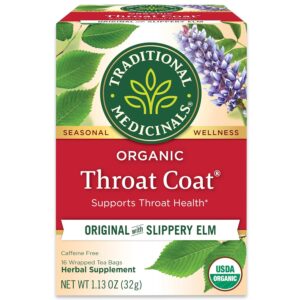
The most clinically formulated sore throat tea available. Contains licorice root, slippery elm bark, marshmallow root, wild cherry bark, and fennel — hitting every key mechanism (demulcent, anti-inflammatory, antimicrobial, antispasmodic) in one bag. USDA Organic, Non-GMO, Caffeine-Free. Traditional Medicinals recommends drinking 4–6 cups daily — steep 10–15 minutes covered and squeeze the bag for maximum benefit. The gold standard in herbal sore throat teas.
Yogi Tea Throat Comfort — Best for Daily Sipping
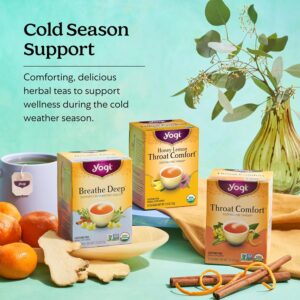
A slightly gentler formula than Throat Coat — licorice root, slippery elm, wild cherry bark, and ginger in a more pleasant-tasting blend that’s easier to drink throughout the day. Less medicinal-tasting than Traditional Medicinals, which makes it more practical for frequent sipping. Available in a 6-pack (96 bags) for serious sore throat season prep.
Yogi Tea Honey Lemon Throat Comfort — Best Flavour
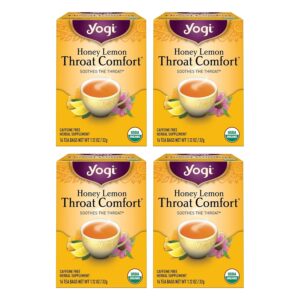
All the throat-soothing ingredients of Yogi Throat Comfort plus echinacea, peppermint, and lemongrass for immune support and a genuinely pleasant honey-lemon flavour. The best-tasting option on this list — easier to drink frequently, which matters when consistent sipping is part of the treatment.
What to Add to Any Herbal Drink to Make It Work Better
Raw honey — always. Coats the throat, antimicrobial, reduces cough. Add after the drink cools slightly.
Fresh lemon juice — vitamin C, astringent effect that reduces throat swelling, pleasant flavour that encourages drinking more.
Apple cider vinegar (1 teaspoon) — creates an acidic environment bacteria struggle to thrive in. Safe and widely reported to help.
A pinch of cayenne pepper — capsaicin depletes substance P (the pain-signalling compound in throat nerve endings), temporarily reducing pain. Start with ⅛ teaspoon in warm water with honey.
Steam as you sip — hold the cup under your nose as you drink and breathe the steam. It loosens mucus, opens airways, and adds direct soothing effect to the throat lining.
Herbal Drinks for Sore Throat — What to Avoid
Cold drinks. Cold constricts blood vessels and increases muscle spasm — the opposite of what an inflamed throat needs. Everything should be warm to hot but not scalding.
Undiluted citrus juice. Lemon in tea is fine. Straight orange juice or lemonade on a raw throat can irritate the lining further, especially if there’s any viral damage to the tissue.
Alcohol. Dehydrating, irritating to inflamed mucous membranes, and suppresses the immune response you need. Skip entirely when you have a sore throat.
Caffeinated drinks. Coffee, black tea, and energy drinks are diuretics — they increase fluid loss at a time when staying hydrated is one of the most important things you can do.
Dairy milk. Doesn’t cause more mucus (that’s a myth) but can thicken existing mucus in the throat for some people, making clearing more uncomfortable.
When a Sore Throat Needs More Than Herbal Drinks
Herbal teas are excellent for viral sore throats — the majority of sore throats most people experience. They’re not the right tool for bacterial infections that need antibiotics.
Signs you need to see a doctor:
- Sore throat with fever above 38.5°C (101.3°F)
- White patches, pus, or swollen spots on the tonsils
- Difficulty swallowing or breathing
- A rash alongside the sore throat
- Sore throat lasting more than 7 days without improvement
- Severely swollen lymph nodes in the neck
- Sore throat in a child under 3 years old
Strep throat is bacterial and needs antibiotics — untreated strep can progress to rheumatic fever and other serious complications. A quick throat swab at a doctor’s office or urgent care confirms it in minutes.
Frequently Asked Questions
What is the fastest herbal drink for sore throat relief?
Ginger and honey tea provides noticeable relief within 15–20 minutes of sipping. For even faster direct-contact relief, gargling with cooled sage tea before drinking your herbal tea gives an immediate anti-inflammatory effect right at the site of pain.
How often should I drink herbal tea for a sore throat?
4–6 cups per day is the standard recommendation — both Traditional Medicinals and Yogi Tea suggest this, and it’s backed by research. Frequent small sips maintain continuous contact between the therapeutic compounds and the throat lining. Sipping consistently throughout the day is far more effective than one big cup every few hours.
Does ginger tea help a sore throat?
Yes — and the evidence is solid. Ginger has documented antimicrobial activity against common throat pathogens, inhibits inflammatory prostaglandins that cause throat pain and swelling, and combined with honey creates one of the most effective natural sore throat remedies available. It works best at the first sign of throat irritation.
Is honey or lemon better for sore throat?
Both — and they work best together. Honey directly coats and soothes the throat with antimicrobial compounds and has the strongest clinical evidence of the two. Lemon provides vitamin C, a mild astringent effect that reduces inflammation, and acidity that makes the throat environment less hospitable for bacteria. Together in warm herbal tea they’re more effective than either alone.
Can herbal drinks cure a sore throat?
For viral sore throats, herbal drinks significantly reduce severity, duration, and discomfort while your immune system clears the infection. They won’t eliminate a virus, but they make recovery more manageable and may shorten symptom duration. For bacterial sore throats (strep), herbal drinks provide symptom relief but don’t replace the antibiotics needed to clear the infection safely.
Final Thoughts
A sore throat doesn’t have to mean suffering through it with nothing but paracetamol and willpower. The right herbal drink — warm, made with intention, and sipped frequently — provides genuine, evidence-backed relief that works from the first cup.
Start with ginger and honey tea the moment your throat starts feeling scratchy. Add licorice root or slippery elm if the soreness deepens. Reach for Traditional Medicinals Throat Coat when you want the most complete formula without the prep work. Drink 4–6 cups a day, keep warm fluids going constantly, and rest.
And if your throat isn’t improving after a week, or you develop a fever and white patches — put down the tea and call your doctor.
This article is for informational purposes only and does not constitute medical advice. Always consult a qualified healthcare provider if you have concerns about your symptoms or health condition.