Disclaimer: This article is for informational purposes only and does not constitute medical advice. If you have a sleep disorder or are taking medications, consult a qualified healthcare provider before using herbal remedies.
You’re lying there at 11pm, wide awake, and someone’s already suggested you “just try some sleepy tea.” Maybe you’ve dismissed it as wishful thinking. Maybe you’ve tried one and felt nothing.
Here’s the thing — not all herbal teas are equal, and most people pick the wrong one, brew it wrong, or expect it to work like a sedative. It doesn’t. But some of these herbs have real, studied mechanisms that calm your nervous system and ease you toward sleep. Done right, they’re worth your time.
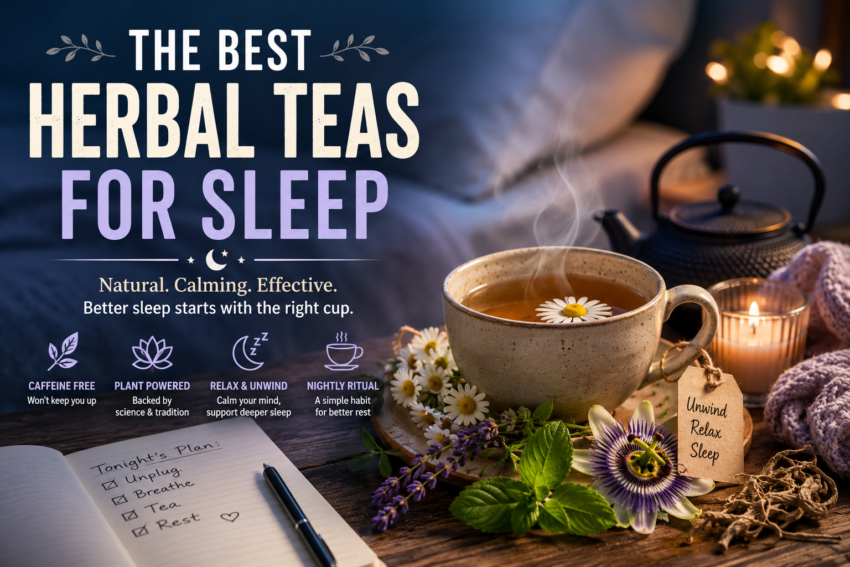
This guide breaks down the best herbal teas for sleep, what the evidence actually says, and how to get the most out of them tonight.
Why Herbal Tea Can Help You Sleep (The Short Version)
Most sleep-supporting herbs work through a few key pathways: boosting GABA activity (your brain’s “calm down” signal), lowering cortisol, or easing the physical tension that keeps you alert when you should be winding down.
They’re not sleeping pills. They work best when you’re mildly anxious, mentally wired, or stuck in that frustrating loop of being tired but unable to switch off. If you’re dealing with chronic, severe insomnia, herbs are a complement — not a cure — and you should talk to a doctor.
The other big advantage? Every option on this list is a caffeine-free herbal tea for sleep, meaning you’re not adding stimulants into the equation at the worst possible time.
The Best Herbal Teas for Sleep, Ranked by Evidence
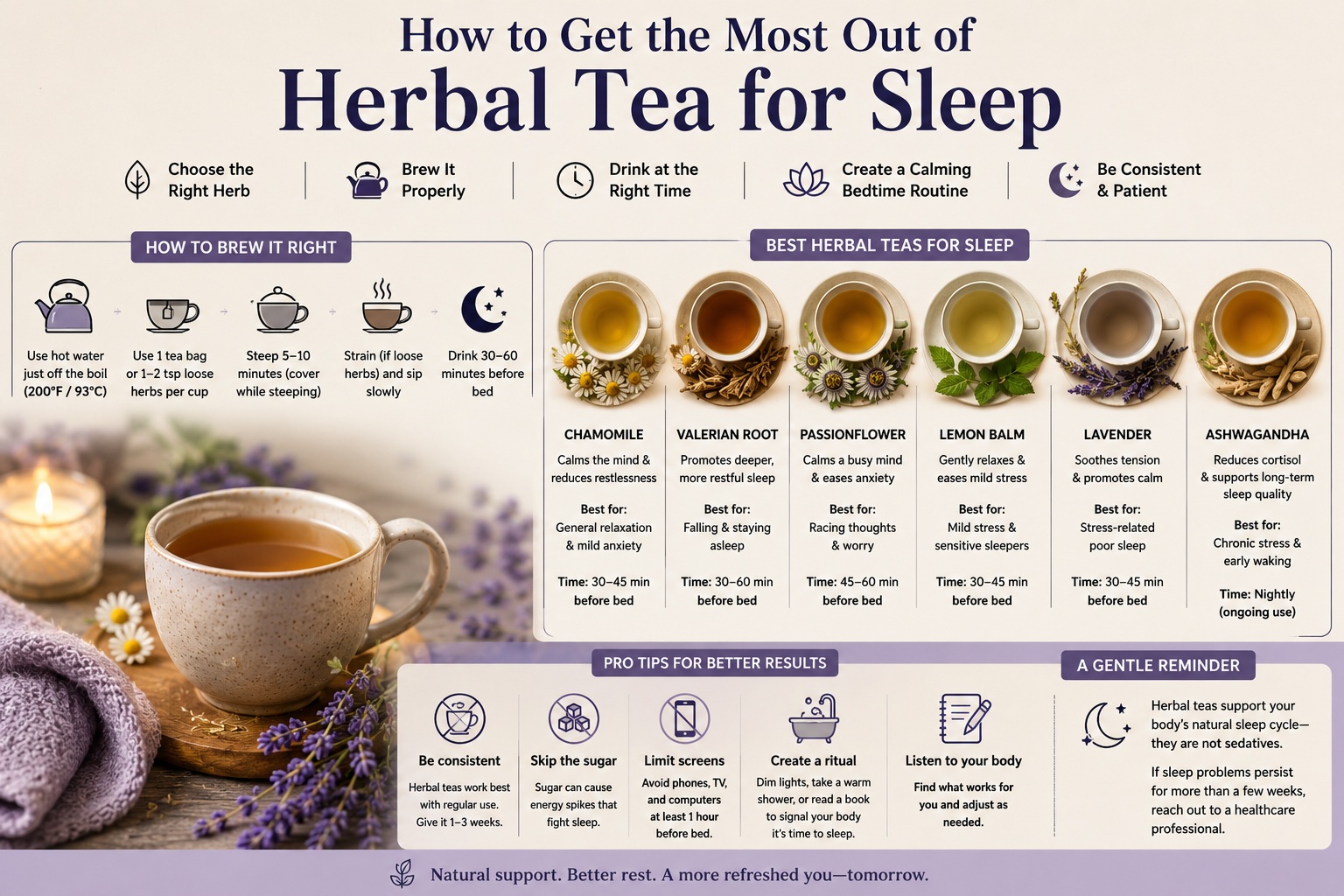
1. Chamomile — The Classic for Good Reason
Chamomile is the most studied sleep herb on this list. It contains apigenin, an antioxidant that binds to benzodiazepine receptors in the brain — the same receptors targeted by anti-anxiety medications, just far more gently.
A 2017 study published in PLOS ONE found that older adults who took chamomile extract saw significant improvements in sleep quality compared to a placebo group. A separate study on postnatal women found similar results. It won’t knock you out, but it reliably takes the edge off.
Best for: General restlessness, mild anxiety before bed, anyone new to sleep teas.
When to drink it: 30–45 minutes before bed.
A reliable option on Amazon: Celestial Seasonings Chamomile Herbal Tea — widely available, consistent quality, and no added ingredients you don’t need.
2. Valerian Root — The Heavy Hitter
Valerian root is the strongest natural sleep option on this list. It works by increasing GABA levels in the brain, reducing neurological activity, and helping your body enter a slower, calmer state.
The research is mixed but leaning positive — a meta-analysis in The American Journal of Medicine reviewed 16 studies and found valerian may improve sleep quality without notable side effects. The honest caveat: the effect size varies a lot between people. Some swear by it; others feel nothing.
Fair warning — it smells earthy and strong. Some people find it genuinely unpleasant. If that’s you, look for blends that pair it with peppermint or lemon balm.
Best for: People who have trouble falling asleep and staying asleep.
When to drink it: 30–60 minutes before bed. Give it 2–3 weeks of consistent use before judging results.
3. Passionflower — Best for a Busy, Anxious Mind
If your problem is a brain that won’t stop running through tomorrow’s to-do list, passionflower may be your herb. It increases GABA in the brain and has been shown in small clinical trials to reduce anxiety and improve subjective sleep quality.
A study published in Phytotherapy Research found that participants who drank passionflower tea for one week reported meaningfully better sleep than those drinking a placebo — particularly around sleep quality rather than just duration.
Best for: Anxiety-driven sleeplessness, racing thoughts at bedtime.
When to drink it: 45–60 minutes before bed.
4. Lemon Balm — Gentle Enough for Most People
Lemon balm (Melissa officinalis) is a mint-family herb with a light, citrusy taste and a calming effect that’s well-documented in combination with other herbs like valerian. On its own, it’s milder — but genuinely relaxing.
It works partly by inhibiting an enzyme that breaks down GABA, effectively keeping your brain in a calmer state for longer. Research published in Nutrients supports its use for reducing anxiety and improving mood-related sleep disruption.
Best for: Mild stress, people who find stronger herbs too heavy.
When to drink it: 30–45 minutes before bed.
5. Lavender Tea — More Than Just a Scent
Most people know lavender for aromatherapy, but drinking it as a tea also has research behind it. Lavender contains linalool and linalool acetate, compounds that interact with the nervous system to produce a calming effect.
A study in Phytomedicine using a standardized lavender oral preparation found significant improvements in anxiety and sleep — better than a placebo and comparable to low-dose lorazepam in some measures. Tea is a milder delivery method, but the effect is still real.
Best for: Stress-related poor sleep, people who respond well to lavender aromatherapy.
When to drink it: 30–45 minutes before bed. Use sparingly — strong lavender tea can cause nausea in some people.
6. Ashwagandha — The Stress-Sleep Connection
Ashwagandha works differently from the rest. It’s an adaptogen — it reduces cortisol over time, which addresses one of the core reasons many people can’t sleep: elevated stress hormones.
A 2019 study in PLOS ONE found that ashwagandha root extract significantly improved sleep quality, sleep onset, and morning alertness. It’s not a quick fix — it builds up over weeks — but if stress is the root cause of your sleep problems, this is a strong long-term choice.
Best for: Chronic stress, high-cortisol lifestyles, people who wake up in the early hours.
When to drink it: Consistently, nightly. Allow 4–6 weeks before assessing results.
Quick Comparison: Which Sleep Tea Is Right for You?
| Herb | Best For | Strength | Time Before Bed |
|---|---|---|---|
| Chamomile | General restlessness | Mild | 30–45 min |
| Valerian Root | Falling & staying asleep | Strong | 30–60 min |
| Passionflower | Racing mind / anxiety | Moderate | 45–60 min |
| Lemon Balm | Mild stress / gentle effect | Mild | 30–45 min |
| Lavender | Stress-linked poor sleep | Moderate | 30–45 min |
| Ashwagandha | Chronic stress / cortisol | Long-term | Nightly (ongoing) |
How to Brew Herbal Sleep Tea the Right Way
Most people under-steep their tea, and then wonder why it didn’t do anything. Herbal teas need more time than black or green tea to release their active compounds.
- Water temperature: Just off the boil (around 200°F / 93°C).
- Steep time: Minimum 5 minutes. For valerian or ashwagandha, aim for 8–10 minutes. Cover the cup while steeping to trap volatile compounds.
- Dosage: One tea bag or 1–2 teaspoons of loose leaf per cup. More isn’t always better — it can cause bitterness and in some cases nausea.
- Consistency matters: Most herbs work better with regular use. Don’t judge after one cup.
If you’re interested in the broader world of plant-based remedies, the same careful approach to sourcing and preparation applies — as covered in our look at herbal remedies for dry eyes and what separates effective options from ones that just sound good.
What About Pre-Made Herbal Sleep Blends?
Pre-made blends are a solid starting point. Most combine two or three complementary herbs — chamomile and lemon balm, or valerian and passionflower — to cover more bases than any single herb can.
Look for blends with no artificial flavors, no added sweeteners, and transparent ingredient lists. The Yogi Bedtime Tea (valerian, passionflower, and chamomile blend) is one of the better-known options and consistently well-reviewed.
Another strong choice is Traditional Medicinals Organic Nighty Night Tea — it uses passionflower and hops, with a clean formulation and third-party testing behind it.
Just remember: “herbal” doesn’t automatically mean safe for everyone. If you’re pregnant, nursing, or on medications — especially sedatives, blood thinners, or antidepressants — check with your doctor first. Some herbs, like valerian, can amplify the effects of certain medications.
This same careful thinking applies when exploring any herbal supplement, whether you’re looking at herbal supplements for bronchitis or herbs for any other health concern.
Herbs That Won’t Help With Sleep (Despite What You’ve Heard)
Not every herb marketed as “relaxing” has evidence behind it for sleep. A few common ones worth managing expectations around:
- Peppermint tea — great for digestion and sinuses (see our breakdown of herbs for sinus relief), but it’s mildly stimulating, not sedating.
- Ginger tea — warming and anti-nausea (excellent for morning sickness), but no meaningful sleep benefit.
- Echinacea — immune support herb, no sleep connection.
- Hibiscus tea — rich in antioxidants, mildly blood pressure-lowering, but not a sleep aid.
Drinking these won’t hurt you. But if sleep is the goal, stick to the ones that actually move the needle.
When to See a Doctor
Herbal teas are a reasonable first step for occasional sleeplessness. But some sleep problems signal something that needs proper medical attention.
Talk to a doctor if:
- You’ve had trouble sleeping consistently for more than 3 months.
- You wake up exhausted regardless of how long you slept.
- You snore loudly or your partner notices you stop breathing during sleep (possible sleep apnea).
- Your sleeplessness is paired with significant anxiety, depression, or unexplained physical symptoms.
- No herbal remedy or sleep hygiene change has made any difference over several weeks.
Chronic insomnia responds well to Cognitive Behavioral Therapy for Insomnia (CBT-I), which the American Academy of Sleep Medicine recommends as the first-line treatment — not supplements, not medication. A good sleep tea can support the process; it can’t replace it.
The Bottom Line on Herbal Tea for Sleep
The best herbal tea for sleep depends entirely on what’s keeping you awake. Chamomile is the safe, easy starting point. Passionflower wins for an anxious, busy mind. Valerian is your best option if you genuinely can’t fall or stay asleep. And if stress is the underlying driver, ashwagandha taken consistently over weeks can make a real difference.
None of these are magic. But paired with decent sleep habits — a consistent bedtime, a dark room, screens off an hour before bed — the right caffeine-free herbal tea for sleep can genuinely shift how quickly and easily you drift off.
Start with one herb, give it two weeks, and pay attention. That’s more useful than chasing every new blend on the shelf.
Frequently Asked Questions
What is the most effective herbal tea for sleep?
Chamomile and valerian root have the strongest evidence behind them. Chamomile is better for mild restlessness; valerian is more effective for significant trouble falling or staying asleep.
How long before bed should I drink herbal tea for sleep?
Most sleep teas work best when consumed 30–60 minutes before bed. This gives the active compounds time to absorb and also avoids the disruption of waking up to use the bathroom.
Can I drink herbal sleep tea every night?
For most healthy adults, yes — herbs like chamomile and lemon balm are considered safe for daily use. Valerian is generally fine long-term but take a break every few weeks. Always check with a healthcare provider if you’re on medications.
Does herbal tea for sleep actually work?
For mild to moderate sleep difficulties — especially anxiety-driven sleeplessness — yes, there’s genuine evidence for several herbs. They won’t work like a prescription sedative, but they can meaningfully calm your nervous system and support sleep onset.
Is chamomile tea safe during pregnancy?
Chamomile in small amounts (one cup occasionally) is generally considered low-risk, but high doses are not recommended during pregnancy. Valerian and passionflower should be avoided entirely during pregnancy. Always consult your OB or midwife before using any herbal tea while pregnant.
What herbal tea helps you stay asleep, not just fall asleep?
Valerian root is most commonly associated with both sleep onset and sleep maintenance. Ashwagandha, taken consistently, also helps with early-morning waking by lowering cortisol levels overnight.
This article is for informational purposes only. It is not a substitute for professional medical advice, diagnosis, or treatment. Always consult a qualified healthcare provider with questions about your health.