This post contains affiliate links. If you buy through our links we may earn a small commission — at no extra cost to you. This never influences our recommendations.
This article is for informational purposes only and does not constitute medical advice. Severe or persistent allergy symptoms should be evaluated by a qualified healthcare provider. Natural antihistamines are complementary approaches, not replacements for medical treatment where needed.
What Is a Natural Antihistamine — And Do They Actually Work?
A natural antihistamine is any naturally occurring compound that reduces or blocks the activity of histamine — the molecule your immune system releases in response to allergens, triggering the sneezing, itching, congestion, and watery eyes of an allergic reaction.
The appeal is genuine: pharmaceutical antihistamines (cetirizine, loratadine, diphenhydramine) work well but come with drawbacks — drowsiness, dry mouth, cognitive impairment in older adults, and dependency concerns with long-term daily use. Natural antihistamines work differently — and honestly, less potently. They don’t block histamine receptors as directly as pharmaceutical antihistamines. Instead, they work upstream: stabilising the mast cells that release histamine, inhibiting the enzymes that produce it, or breaking it down faster once released.
The result: generally slower onset, more modest effect, and far fewer side effects — appropriate for mild-to-moderate allergy symptoms or as a complement to conventional treatment. The evidence quality varies dramatically between natural antihistamines. This article ranks them honestly by that evidence.
How Histamine Works — The Mechanism Behind Allergy Symptoms
When your immune system detects an allergen, it triggers mast cells and basophils to release histamine. Histamine then binds to H1 receptors in the skin, nasal passages, eyes, and airways — producing vasodilation, increased vascular permeability, smooth muscle contraction, and nerve stimulation. The results: sneezing, runny nose, itchy eyes, skin rashes, and bronchospasm.
The mast cell is the key player. Natural antihistamines that stabilise mast cells — preventing histamine release before it happens — work at the most upstream point in this process. This is why compounds like quercetin that work this way can be genuinely effective as preventive rather than rescue treatments.
Natural Antihistamines Ranked by Evidence
1. Quercetin — The Most Evidence-Backed Natural Antihistamine
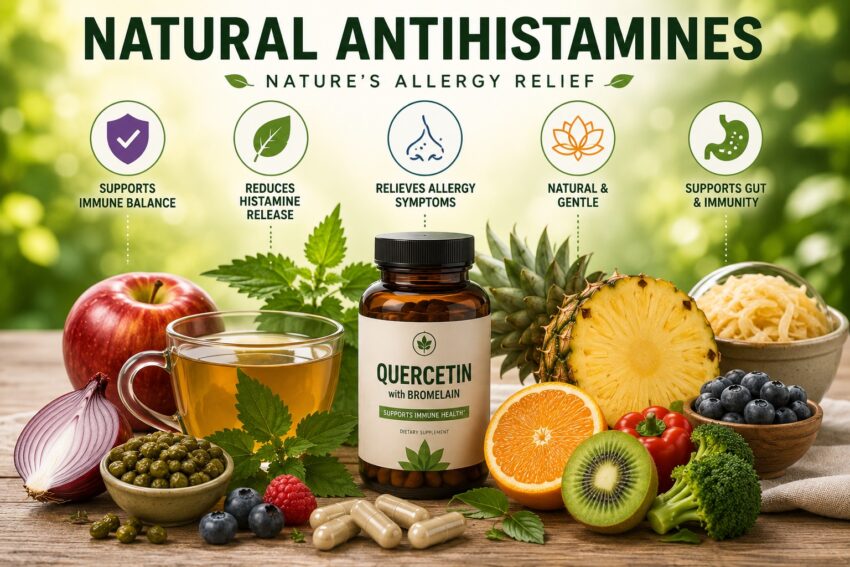
Quercetin is a flavonoid antioxidant found abundantly in apples, onions, berries, green tea, and capers. It is the most studied natural compound for antihistamine activity — with a well-characterised mechanism and growing clinical evidence. Quercetin inhibits the release of inflammatory chemicals that drive allergy symptoms, and is gaining well-deserved attention as a natural antihistamine.
The mechanism is the most important part: quercetin stabilises mast cells, diminishing the release of histamine before it triggers the allergic cascade. By working preventively — reducing how much histamine is released in the first place — it functions differently from pharmaceutical antihistamines, which block receptors after release has already occurred.
A 2022 study confirmed quercetin’s antihistamine activity and ability to effectively reduce allergy symptoms. Multiple in vitro and animal studies have confirmed its mast cell stabilising properties — and while human clinical trial evidence is still developing, the mechanistic case is exceptionally well-established.
Quercetin-rich foods to increase in your diet: capers (highest dietary source), red and yellow onions, kale and leafy greens, apples (especially with skin), blueberries and dark berries, green tea, broccoli.
The bioavailability challenge: Quercetin is poorly absorbed on its own — most passes through the GI tract without entering the bloodstream. Two solutions: take quercetin with bromelain (which acts as an absorption enhancer, increasing bioavailability by 20–50%), or use phytosome-form quercetin (bound to phospholipids for improved absorption).
Supplement dose: 500–1,000mg daily, ideally combined with bromelain. Start 2–4 weeks before allergy season for preventive benefit.
Safety: Generally well-tolerated. May interact with blood thinners and certain antibiotics (quinolones) at high supplemental doses — discuss with your doctor if on these medications. Avoid doses above 1,000mg daily during pregnancy. Food sources safe at any level.
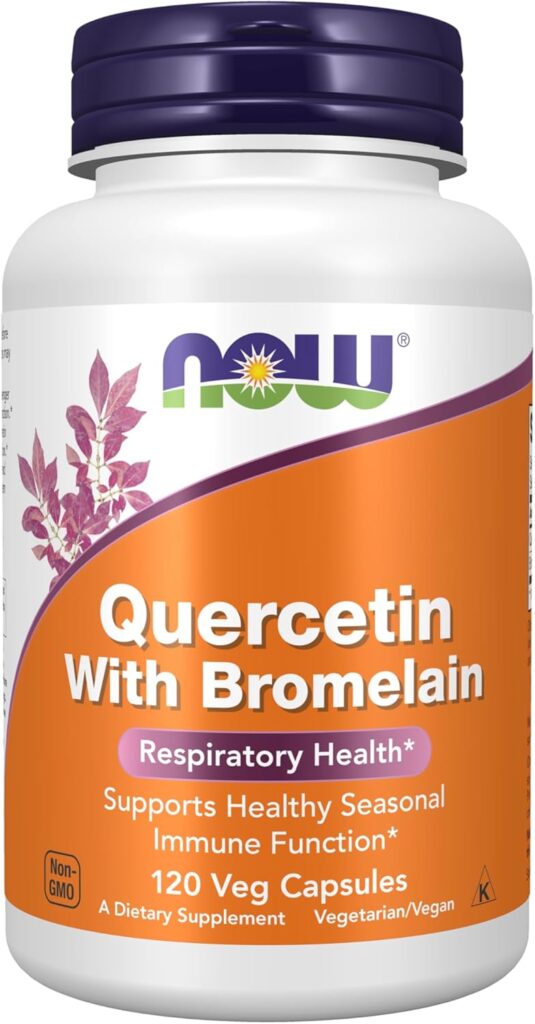
Recommended product: NOW Foods Quercetin with Bromelain — 400mg quercetin + 100mg bromelain per serving, Non-GMO verified, 120 veg capsules. The most trusted quercetin supplement on Amazon with the longest sales track record.
2. Stinging Nettle (Urtica dioica) — The Best-Evidenced Herbal Option
Stinging nettle has the most clinically validated antihistamine activity of any herbal remedy — specifically validated for allergic rhinitis in a randomised controlled trial. A double-blind, randomised controlled trial published in Planta Medica found freeze-dried stinging nettle leaf significantly reduced allergic rhinitis symptoms compared to placebo, with 58% of participants rating it moderately to highly effective.
Stinging nettles leaf controls mast-cell degranulation, prostaglandin formation, and histamine action — all contributing to a balanced inflammatory response. The active compounds include quercetin, coumaric acid, and lectins that inhibit multiple inflammatory pathways simultaneously.
Nettle leaf is uniquely positioned as both an antihistamine supplement and a tea — the freeze-dried supplement form has the strongest clinical evidence, but nettle tea provides meaningful therapeutic benefit alongside hydration. See our full tea for allergies guide for the complete brewing approach and tea-based allergy management protocol.
How to use:
- As tea: 1–2 teaspoons dried nettle leaf, steeped 5–10 minutes, 2–3 cups daily
- As supplement (freeze-dried leaf): 300–600mg 2–3 times daily
- Start 2–4 weeks before allergy season for preventive benefit
Safety: Avoid during pregnancy (may stimulate uterine contractions). May interact with diabetes medications and blood thinners. Not for children under 12 without medical guidance.
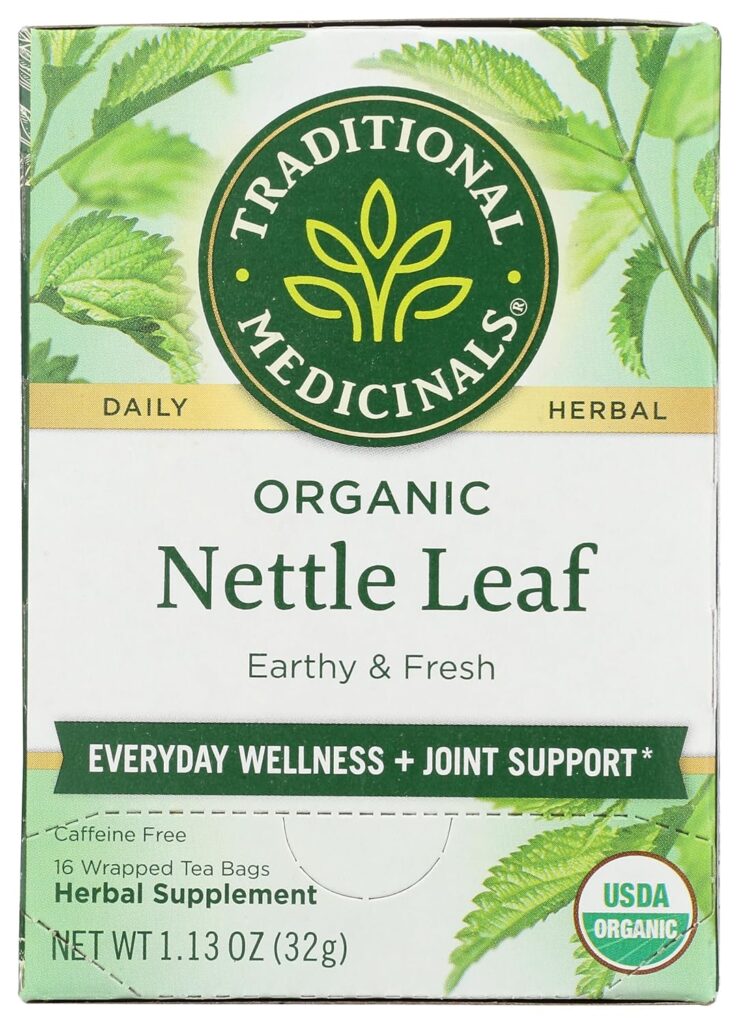
Recommended product: Traditional Medicinals Organic Nettle Leaf Tea — USDA Organic, Non-GMO Verified, Certified B Corp. For supplement form, ForestLeaf Quercetin with Bromelain includes 500mg stinging nettle per serving.
3. Bromelain — Synergistic Enzyme with Independent Activity
Bromelain is a proteolytic enzyme found in pineapple stems and fruit. It contributes to natural allergy management through two distinct pathways: its own anti-inflammatory and mucolytic activity, and its role as an absorption enhancer for quercetin.
Bromelain aids in the breakdown of large protein complexes including antigenic compounds, and has been shown to enhance the absorption of quercetin. It also reduces circulating allergenic protein complexes associated with hypersensitivity. A 2023 analysis found bromelain may be effective against sinusitis — the nasal passage inflammation caused by allergies or infection. Its mucolytic effect (breaking down mucus proteins) directly addresses the nasal congestion and thick post-nasal drip of allergic rhinitis.
How to use: 500–1,000mg daily, taken on an empty stomach (with food reduces its mucolytic activity). Best combined with quercetin in a single supplement for synergistic effect.
Safety: May increase effects of blood thinners — discuss with your doctor. Avoid before surgery. Those with pineapple allergy should not use bromelain supplements.
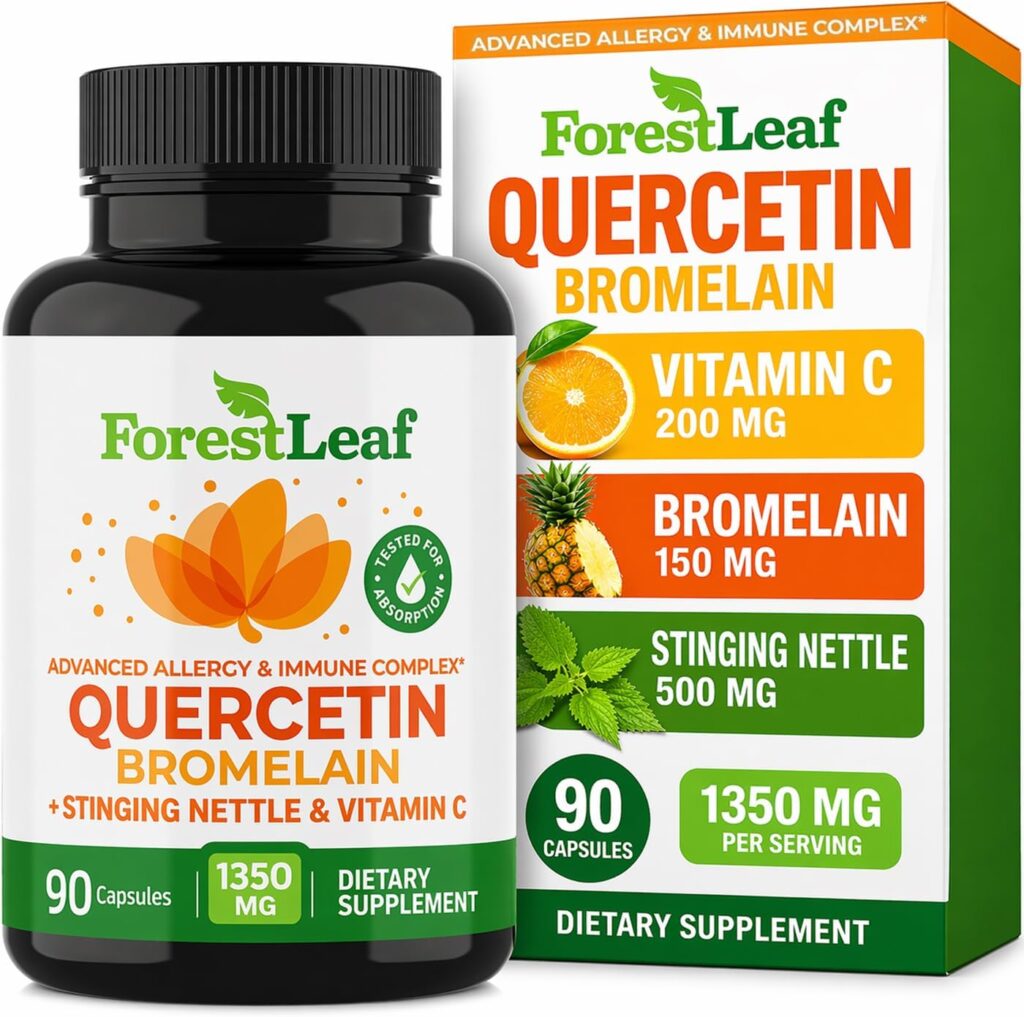
Recommended product: ForestLeaf Quercetin with Bromelain 1350mg — combines 500mg quercetin, bromelain, 500mg stinging nettle, and 200mg vitamin C in one capsule. USA-made, Non-GMO, gluten-free. The most comprehensive natural antihistamine formula in a single product.
4. Vitamin C — Histamine-Degrading Activity
Vitamin C takes a different approach from the mast cell stabilisers above — it works downstream, promoting the enzymatic breakdown of histamine that has already been released. Studies show that high doses of vitamin C can reduce histamine levels by up to 38%, acting as a powerful natural antihistamine by breaking down histamine faster in the body while also supporting immune function.
The mechanism: vitamin C activates diamine oxidase (DAO), the enzyme primarily responsible for breaking down histamine in the gut and plasma. Higher vitamin C levels increase DAO activity — accelerating histamine clearance and reducing circulating levels. Vitamin C also regenerates oxidised quercetin, extending quercetin’s activity and making the two compounds synergistic.
How to use: 500–2,000mg daily from food and/or supplements. Best food sources: bell peppers (highest), citrus fruits, kiwi, strawberries, broccoli. Supplement form: buffered or ester-C for gentler GI tolerance at higher doses.
Safety: Very safe up to 2,000mg daily. High doses above 3,000mg can cause GI distress — reduce dose if this occurs.
5. Butterbur (Petasites hybridus) — Strongest Evidence, Most Complex Safety Profile
Butterbur has the strongest clinical evidence of any natural antihistamine — including studies showing efficacy comparable to cetirizine (Zyrtec) for seasonal allergic rhinitis. Multiple well-designed randomised controlled trials, including a landmark study in the British Medical Journal, found butterbur extract as effective as cetirizine for allergic rhinitis without drowsiness. A systematic review of five controlled trials confirmed butterbur was superior to placebo and equivalent to standard antihistamines for seasonal allergy symptoms.
The active compounds — petasins — inhibit leukotriene synthesis, a separate inflammatory pathway from histamine that contributes to nasal congestion and bronchospasm. This different mechanism makes butterbur potentially additive with quercetin and nettle rather than redundant.
The critical safety issue: Raw butterbur contains pyrrolizidine alkaloids (PAs) — hepatotoxic (liver-damaging) compounds with regular use. Never use raw butterbur or preparations that haven’t been specifically processed to remove PAs. Only use products specifically labelled PA-free and standardised for petasin content. The Petadolex brand is the most extensively studied PA-free product.
How to use: 50–75mg of PA-free standardised butterbur extract twice daily. Only verified PA-free products. Allow 2 weeks for full effect. Consult your doctor before starting, particularly if you have any liver condition.
Safety: PA-free extracts are generally considered safe at recommended doses. Not recommended during pregnancy or breastfeeding. Not for long-term unsupervised use.
6. Probiotics — Gut-Immune Axis for Long-Term Allergy Modulation
Probiotics don’t block histamine directly but earn their place through the gut-immune axis — the well-established relationship between intestinal microbiome composition and systemic immune regulation, including allergic responses. Incorporating probiotic-rich foods like sauerkraut and yogurt could potentially reduce and prevent allergy symptoms by improving gut bacteria balance.
Multiple meta-analyses have found probiotic supplementation reduces the severity of allergic rhinitis symptoms and decreases markers of allergic inflammation. The specific strains with the most evidence include Lactobacillus acidophilus, Lactobacillus rhamnosus GG, and Bifidobacterium longum. Probiotics are most relevant as a preventive and foundational approach — they work over weeks to months, not hours, and complement the acute activity of quercetin and nettle.
Food sources: Live-culture yoghurt, kefir, kimchi, sauerkraut, miso, tempeh, kombucha. Supplement form: multi-strain products with at least 10 billion CFU, refrigerated.
Natural Antihistamines for Specific Allergy Types
Seasonal allergic rhinitis (hay fever from pollen): The combination with the strongest evidence — quercetin with bromelain (mast cell stabiliser, preventive) + stinging nettle (direct antihistamine and anti-inflammatory) + peppermint tea (decongestant for nasal symptoms). Start 2–4 weeks before pollen season. See our tea for allergies guide for the complete tea-based approach.
Histamine intolerance (food-related): Distinct from IgE-mediated food allergy. Vitamin C (promotes DAO enzyme activity) and a low-histamine diet are the primary approaches. Quercetin also reduces mast cell reactivity. Diamine oxidase (DAO) enzyme supplements taken before meals are the most directly targeted approach.
Skin reactions (hives, eczema from allergens): Quercetin and vitamin C address systemic histamine load. Topical approaches (colloidal oatmeal, aloe vera gel) manage local symptoms. Always see a dermatologist for persistent skin allergic reactions — some require professional diagnosis.
Allergic conjunctivitis (itchy eyes): Cold compress provides the most immediate topical relief. Systemic quercetin and nettle work for the underlying histamine load. See an ophthalmologist for persistent eye allergy symptoms.
How to Build a Natural Antihistamine Protocol
The most effective approach combines multiple natural antihistamines working through different pathways — rather than relying on a single compound at very high doses.
The foundational stack:
- Quercetin with bromelain: 500mg quercetin + 100–200mg bromelain, twice daily with meals
- Stinging nettle: 2–3 cups nettle tea daily, or 300mg freeze-dried capsule twice daily
- Vitamin C: 500–1,000mg daily from food and/or supplements
- Probiotics: daily from food sources or a multi-strain supplement
Start 2–4 weeks before allergy season — the mast cell stabilising effects of quercetin and nettle are cumulative and preventive, not acute-rescue treatments. Consistent use before and throughout allergy season delivers the best results.
For acute symptom relief while longer-acting compounds build up: peppermint tea for immediate nasal decongestion, vitamin C at 1,000–2,000mg for faster histamine breakdown, and cold compresses for localised skin or eye symptoms.
What Doesn’t Work — Saving You Time and Money
Lavender for allergy relief — genuine anxiolytic and sedative properties, but no clinical evidence specifically for histamine or allergic rhinitis. Not an antihistamine.
Apple cider vinegar as an antihistamine — no evidence. Histamine pathways don’t respond to dietary acidity in any documented way. A persistent natural health myth with no mechanistic basis.
Local honey for allergies — biologically plausible theory, clinically unproven. Pollen concentration in honey is generally too low, and it’s the wrong pollen type (entomophilous rather than the wind-borne pollen that causes hay fever). Not harmful in nettle tea — just not an antihistamine.
Frequently Asked Questions
What is the most effective natural antihistamine?
Quercetin has the strongest mechanistic evidence as a natural antihistamine — it stabilises mast cells and inhibits histamine release. Stinging nettle has the strongest clinical trial evidence in humans for allergic rhinitis specifically (58% of participants rated it moderately to highly effective vs placebo). Butterbur has the strongest overall evidence — including equivalence to pharmaceutical antihistamines — but requires verified PA-free products and more caution around safety. For most people, quercetin with bromelain and stinging nettle is the most evidence-backed and practical starting combination.
How long do natural antihistamines take to work?
Peppermint tea provides near-immediate decongestant relief from menthol within minutes. Vitamin C at higher doses begins increasing histamine clearance within hours. Quercetin and stinging nettle build their mast cell stabilising effects over 1–2 weeks of regular use — they are preventive and cumulative, not acute rescue treatments. For immediate rescue, pharmaceutical antihistamines remain faster and more reliably effective. Natural antihistamines are best used for ongoing daily management and prevention.
Can you take natural antihistamines with medication?
Most natural antihistamines at normal doses don’t significantly interact with second-generation antihistamines (cetirizine, loratadine). Key interactions: quercetin may increase effects of blood thinners and some antibiotics; butterbur may interact with cytochrome P450-metabolised drugs; stinging nettle may interact with diabetes medications. Always disclose supplement use to your doctor if on regular medication.
Are natural antihistamines safe during pregnancy?
Quercetin-rich foods and vitamin C from food are safe in pregnancy. Stinging nettle supplements should be avoided in pregnancy — though culinary amounts in food are fine. Butterbur is not recommended in pregnancy. Probiotics from food sources are generally safe. Always consult your OB or midwife before starting any supplement during pregnancy.
What foods act as natural antihistamines?
Foods with the strongest natural antihistamine activity: capers and red onions (highest quercetin content), apples, berries, and citrus (quercetin + vitamin C), green tea (quercetin + EGCG), pineapple (bromelain), and live-culture fermented foods (probiotics). The Mediterranean dietary pattern — high in these foods alongside anti-inflammatory olive oil and fish — is associated with lower allergy risk in epidemiological studies.
Is quercetin the same as an antihistamine?
Not exactly — quercetin works differently from pharmaceutical antihistamines. Pharmaceutical antihistamines (cetirizine, loratadine) block H1 histamine receptors after histamine has been released. Quercetin works upstream by stabilising mast cells to prevent histamine release in the first place. Both reduce the impact of histamine on the body but through different mechanisms — quercetin is primarily preventive (taken consistently) rather than a fast-acting rescue treatment.
Final Thoughts
Natural antihistamines are not a replacement for pharmaceutical antihistamines when symptoms are severe — pharmaceutical options remain faster, more reliable, and better characterised for moderate-to-severe allergy management. The honest case for natural antihistamines is as a complementary approach: reducing the overall histamine burden before it builds to symptomatic levels, managing mild symptoms without side effects, and supporting long-term immune tolerance.
The most evidence-backed combination: quercetin with bromelain (mast cell stabiliser, upstream prevention), stinging nettle (direct antihistamine and anti-inflammatory), and vitamin C (histamine degradation support). Begin 2–4 weeks before your allergy season. Maintain consistently throughout. Add peppermint tea for immediate nasal relief on symptomatic days.
For allergy symptoms that significantly affect quality of life and don’t respond to natural approaches after several weeks — immunotherapy (allergy shots or sublingual drops) remains the only treatment that addresses the underlying immune sensitisation rather than its symptoms.
This article is for informational purposes only and does not constitute medical advice. Always consult a qualified healthcare provider before starting any supplement, particularly if you have existing health conditions or are taking medications.