This post contains affiliate links. If you buy through our links we may earn a small commission — at no extra cost to you. This never influences our recommendations.
This article is for informational purposes only and does not constitute medical advice. Always consult a qualified healthcare provider before starting ashwagandha, particularly if you have a thyroid condition, liver condition, are pregnant or breastfeeding, or take medication for diabetes, blood pressure, or thyroid function.
Ashwagandha is genuinely one of the most-studied adaptogenic herbs available — more than 20 published clinical trials, multiple recent meta-analyses, and a mechanism of action (cortisol modulation) that’s well understood pharmacologically. It’s also, as of the past two years, the subject of a real and actively-studied safety signal that most marketing conveniently leaves out: documented case reports of liver injury and thyroid dysfunction, serious enough that a UK government food safety body has launched a formal review. This guide covers the genuine evidence for both sides honestly.
What Ashwagandha Actually Does — The Mechanism
Ashwagandha (Withania somnifera) is classified as an adaptogen — a category of herbs believed to help the body regulate its stress response rather than simply sedating or stimulating it. Its primary active compounds, withanolides, appear to modulate the hypothalamic-pituitary-adrenal (HPA) axis — the system governing cortisol release — which is the mechanistic basis for its most consistently replicated effect: lowering serum cortisol.
The Evidence — Ranked by Strength
1. Cortisol and Stress Reduction — The Strongest, Most Replicated Effect
This is where ashwagandha’s evidence base is genuinely robust. A 2025 meta-analysis of 15 randomized controlled trials (873 adults) confirmed statistically significant cortisol and anxiety reduction. A 2024 meta-analysis of 9 RCTs found significant reductions in perceived stress scores, anxiety scores, and serum cortisol compared to placebo. A landmark 2012 double-blind trial found 300mg of KSM-66 twice daily reduced cortisol by roughly 28% versus placebo, and a separate 2019 RCT using 600mg/day for eight weeks found approximately 25% cortisol reduction from baseline. This consistency across multiple independent research groups and years is what makes the cortisol effect the most credible finding in the ashwagandha literature.
Timeline: Mild relaxation can appear within the first week; full cortisol-lowering effects typically develop over 4-8 weeks of consistent use.
2. Anxiety — Provisionally Recommended by Clinical Bodies
A joint taskforce from the World Federation of Societies of Biological Psychiatry and the Canadian Network for Mood and Anxiety Treatments provisionally recommends ashwagandha root extract for generalized anxiety disorder — though they’re explicit that they can’t offer a stronger recommendation without more data. A 2022 meta-analysis of 12 RCTs (1,002 adults) found significant anxiety and stress reductions with favorable dose-response effects at 300-600mg/day.
3. Sleep — Modest, Not Dramatic
A 2021 systematic review and meta-analysis of five studies (372 adults) found ashwagandha produced a small but statistically significant improvement in sleep quality compared to placebo, with benefits more pronounced at 600mg/day and treatment durations of at least 8 weeks. Notably, in participants without diagnosed insomnia, ashwagandha improved reported sleep but did not measurably improve perceived anxiety or morning alertness — a useful, honest distinction between what the herb reliably does and what it doesn’t.
4. Testosterone and Physical Performance — Context-Dependent
A 2019 study in overweight men using 600mg of KSM-66 daily for eight weeks found a 15% testosterone increase, though this occurred alongside a broader weight loss and body composition intervention, making it hard to isolate ashwagandha’s independent contribution. A January 2026 trial in 56 sub-elite athletes found sex-specific recovery and cortisol benefits from 600mg/day over six weeks, with effects particularly pronounced in female athletes — an interesting, if early, finding given most testosterone-focused research has centered on men.
An Important Safety Signal — Read This Before Buying
This needs direct, clear treatment rather than a footnote. Ashwagandha has traditionally been described in the literature as remarkably safe and well-tolerated — and for most people, most of the time, that still appears true. But a real, growing body of case reports has emerged documenting genuine liver injury linked to ashwagandha use, serious enough that regulators have taken notice.
What the evidence shows: The NIH’s own LiverTox database — a clinical reference specifically tracking drug and supplement-induced liver injury — now includes ashwagandha, noting it “has been implicated in cases of clinically apparent liver injury.” Hepatologists at the University of Colorado reported observing patients with elevated liver enzymes and jaundice where ashwagandha was the only identifiable common factor, and noted more than 70 documented cases of ashwagandha-associated liver injury in the published literature, ranging from mild enzyme elevation to prolonged jaundice. Multiple individual peer-reviewed case reports describe the same pattern: liver injury developing days to weeks after starting ashwagandha, with recovery typically occurring within weeks to months after stopping.
Regulatory response: The UK’s Food Standards Agency, responding to a rising number of adverse event reports, formally asked the Committee on Toxicity of Chemicals in Food to review ashwagandha’s safety. The committee’s assessment found the liver toxicity pattern “consistent with an idiosyncratic response” — meaning it appears unpredictable and not clearly dose-dependent, which makes it harder to guard against by simply staying within a “safe” dose range. The same review flagged possible effects on thyroid function and blood glucose as areas of concern.
Thyroid effects specifically: Separate case reports describe thyrotoxicosis (an overactive thyroid) developing in women taking ashwagandha extract, with symptoms resolving after discontinuation in each case. Ashwagandha’s endocrine-modulating activity is the suspected mechanism.
An important caveat on causation: Because dietary supplements aren’t regulated by the FDA the way pharmaceuticals are, researchers can’t always rule out contamination or manufacturing inconsistency as a contributing factor rather than the ashwagandha itself. This uncertainty doesn’t erase the safety signal, but it’s an honest part of the picture.
Who Should Avoid or Use Extra Caution
- Anyone with a liver condition, or a history of liver injury from any cause
- Anyone with a thyroid condition or taking thyroid medication — ashwagandha can affect thyroid hormone levels
- Pregnant or breastfeeding women — insufficient safety data, and some animal studies suggest potential effects on fetal development
- Women with PCOS or elevated androgens — ashwagandha can raise testosterone and DHEA-S, potentially worsening symptoms
- Anyone on medication for diabetes, blood pressure, or thyroid function — ashwagandha can lower blood glucose and blood pressure and may require dose adjustments
- Anyone taking sedatives or thyroid hormone replacement — potential for interaction
If you take ashwagandha regularly, periodic liver function monitoring via your doctor is a reasonable precaution given the current evidence, particularly if you notice unusual fatigue, yellowing of skin or eyes, dark urine, or persistent nausea — stop taking it and seek medical attention if any of these occur.
Dosage and Cycling
The clinically supported dose range is 300-600mg daily of a standardized root extract (KSM-66, standardized to 5% withanolides, is the most researched form). Timing can be matched to your primary goal — morning for daytime stress and anxiety, evening for sleep support, or split between both.
Most experts recommend cycling: roughly 6-8 weeks on, followed by 1-2 weeks off. This isn’t universally required, but it’s a reasonable precaution given concerns about tolerance development and the possibility that chronic cortisol suppression could interfere with the body’s normal, healthy stress response over time.
Best Ashwagandha Supplements
Best Overall: NOW Foods KSM-66 Ashwagandha
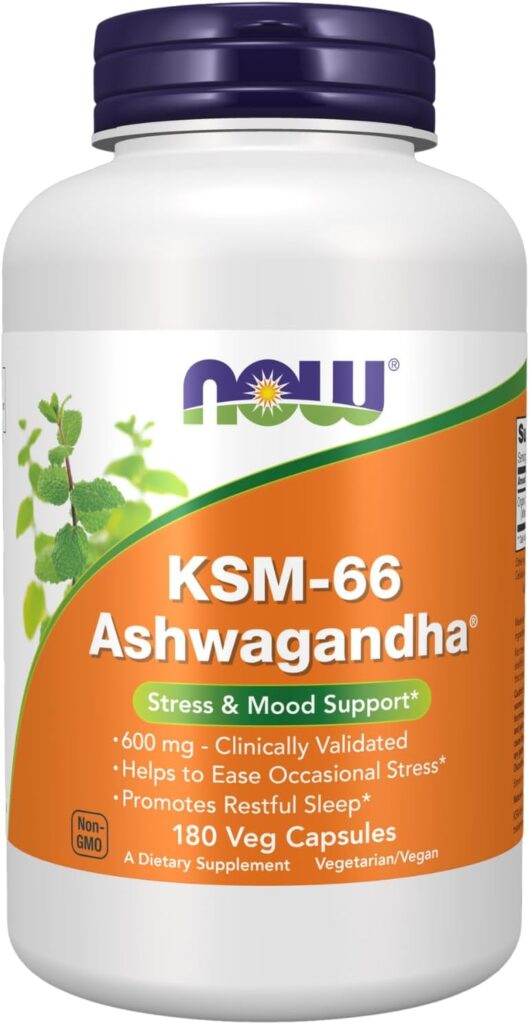
NOW is a 50+ year established, NPA A-rated GMP certified brand, and this formula uses genuine KSM-66 — the most clinically studied ashwagandha extract, standardized for consistent withanolide content. A dependable choice from a brand with a long quality track record in a category where product consistency genuinely varies.
Best Value: Nutricost KSM-66 Ashwagandha with BioPerine
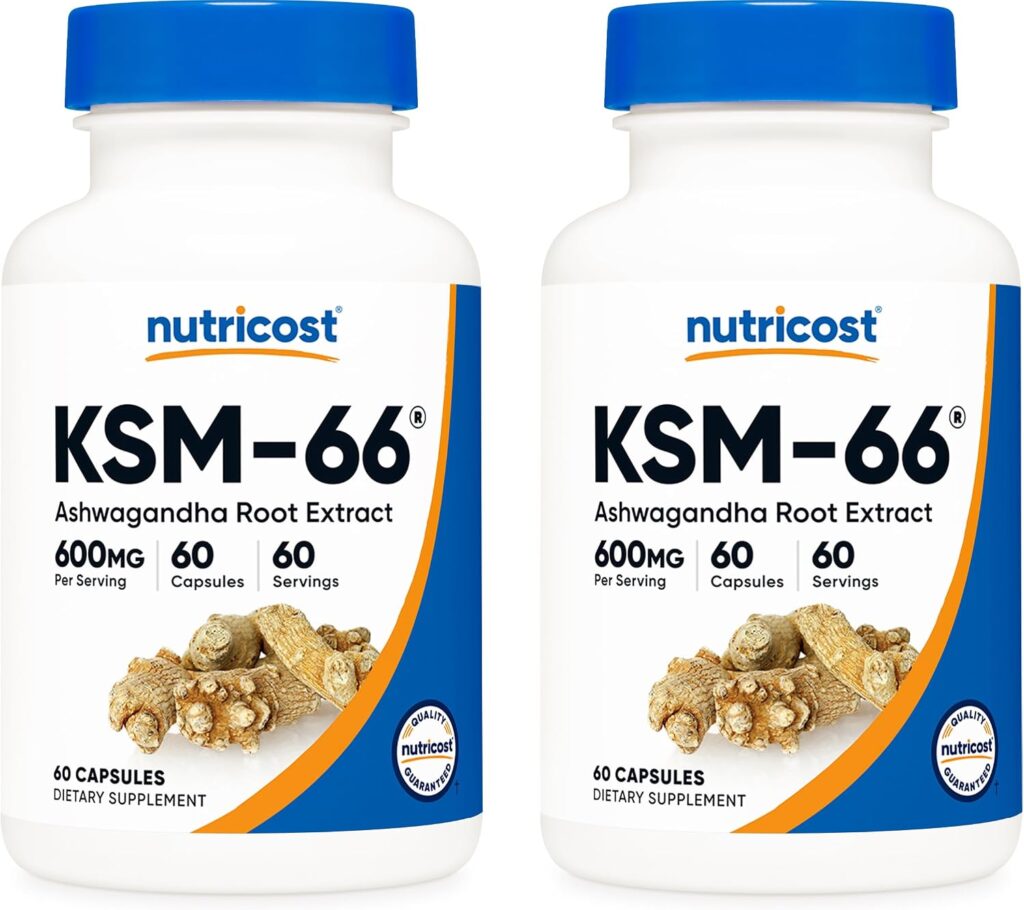
600mg of genuine KSM-66 standardized to 5% withanolides — matching the exact standardization used in most positive clinical trials — with BioPerine (black pepper extract) added for absorption support. Manufactured in an NSF-certified, GMP-compliant, FDA-registered facility with third-party lab testing per batch, addressing some of the quality-control concerns relevant to a supplement category without direct FDA oversight.
Frequently Asked Questions
Is ashwagandha actually safe to take?
For most healthy adults using standard doses (300-600mg/day of standardized extract) for limited periods, the evidence base is generally reassuring. That said, a real and growing number of documented liver injury and thyroid dysfunction case reports means it isn’t risk-free, and regulators are actively reviewing the evidence. If you have liver or thyroid conditions, are pregnant, or take relevant medications, talk to your doctor before starting.
How would I know if ashwagandha was affecting my liver?
Watch for unusual fatigue, yellowing of the skin or eyes (jaundice), dark urine, pale stools, persistent nausea, or upper right abdominal discomfort. If any of these appear after starting ashwagandha, stop taking it and see a doctor — most documented cases resolved after discontinuation, but should still be evaluated.
Should I take ashwagandha every day long-term?
Most experts recommend a cycling approach — roughly 6-8 weeks on, 1-2 weeks off — rather than continuous indefinite daily use, partly due to tolerance concerns and partly as a reasonable precaution given the emerging safety data on longer-term use.
Which is better, KSM-66 or Sensoril ashwagandha?
It depends on your goal. KSM-66 (a root-only extract) has the largest body of research behind it and is generally preferred for stress, cortisol, cognitive performance, and testosterone support. Sensoril (a root and leaf extract) has more evidence specifically for sleep and metabolic support at lower doses. Most consumer products, including both recommended above, use KSM-66.
Can women take ashwagandha safely?
Generally yes, for stress, sleep, and cognitive benefits, which apply to both sexes. Women should be aware of two specific considerations: potential thyroid-stimulating effects (documented in several case reports specifically in women), and increased testosterone/DHEA-S levels that could be relevant for women with PCOS or already-elevated androgens. Avoid during pregnancy and breastfeeding.
The Bottom Line
Ashwagandha has a genuinely strong evidence base for cortisol reduction and anxiety support — among the most replicated findings in adaptogen research, with a plausible, well-understood mechanism behind it. It also carries a real, actively-studied safety signal that responsible coverage shouldn’t omit: documented liver injury and thyroid dysfunction case reports serious enough to prompt a formal UK regulatory safety review. For most healthy adults without liver, thyroid, or relevant medication concerns, standard doses of a standardized extract like KSM-66 appear reasonably well-tolerated based on current evidence — but “reasonably well-tolerated” is a different, more honest claim than “completely safe,” and it’s worth going in with that distinction clear.
For related content on stress and its role in overall health, see our guides on natural remedies for anxiety, natural remedies for insomnia, and natural remedies for low energy and fatigue.
This article is for informational purposes only. Always consult a qualified healthcare provider before starting ashwagandha, particularly if you have a thyroid or liver condition, are pregnant or breastfeeding, or take medication that could interact with it.