
This post contains affiliate links. If you buy through our links we may earn a small commission — at no extra cost to you. This never influences our recommendations.
This article is for informational purposes only and does not constitute medical advice. Berberine can interact with several medications, including those for diabetes and blood pressure. Always consult a qualified healthcare provider before starting berberine, particularly if you take other medications or have a diagnosed metabolic condition.
“Nature’s Ozempic” is the label TikTok gave berberine, and it’s the reason a centuries-old plant compound suddenly became one of the most searched supplements of the past two years. The actual peer-reviewed evidence tells a much narrower story — not that berberine does nothing, but that the size of its effect and the size of a GLP-1 medication’s effect aren’t in the same category at all. Here’s what the specific numbers actually show.
The Comparison, By the Actual Numbers
The largest meta-analysis on berberine and body weight — Asbaghi et al., 2020, pooling 12 randomized controlled trials over roughly 12 weeks — found a mean weight loss of 2.07 kg (about 4.6 lbs) compared to placebo. That’s a real, statistically significant effect. It’s also roughly 7 to 10 times smaller than what’s been documented for GLP-1 medications in their own major trials: semaglutide produced 14.9% body weight loss in the STEP-1 trial, and tirzepatide produced 20.9% in SURMOUNT-1. For context, 14.9% of a 200 lb starting weight is roughly 30 lbs — compared to berberine’s roughly 4-5 lbs.
Equally important: no head-to-head randomized controlled trial has ever been published directly comparing berberine to a GLP-1 medication. Every comparison being made online — including this one — is comparing results from separate, differently-designed studies, not a single trial that tested both directly against each other under the same conditions.
Why the Effect Is So Much Smaller: Bioavailability and Mechanism
This is where the “nature’s Ozempic” framing breaks down mechanistically, not just statistically. GLP-1 medications work by mimicking a gut hormone that signals satiety directly to the brain and slows gastric emptying — a specific, targeted hormonal pathway. Berberine works through a completely different mechanism: it activates AMPK (AMP-activated protein kinase), an energy-regulating pathway inside cells — the same pathway metformin activates, which is why several head-to-head trials have found berberine produces blood sugar outcomes comparable to metformin specifically, not to GLP-1 drugs.
Compounding this, berberine has notably poor oral bioavailability — under 1% in the only published pharmacokinetic study identified. In plain terms, the vast majority of an oral dose never reaches meaningful concentration in the bloodstream at all, which helps explain why even a real, AMPK-activating compound produces such a modest whole-body effect compared to an injectable hormone analog engineered for maximum receptor targeting.
What Genuine Experts Say
Dana Ellis Hunnes, PhD, MPH, RD, a senior clinical dietitian at UCLA Health, put it directly: “There needs to be more gold-standard, randomized, controlled clinical trials to understand the true potential of berberine.” This isn’t a dismissal of the compound — it’s an honest statement that the current evidence base, while real, isn’t yet at the rigor level needed to make strong clinical claims either way.
Where Berberine Does Have Real, Modest Evidence
Blood sugar and A1c in type 2 diabetes: Smaller clinical trials — including a frequently cited 2008 trial by Yin et al. — found real, modest reductions in fasting glucose and HbA1c in people with type 2 diabetes, generally in the range comparable to standard-dose metformin rather than exceeding it.
Lipid profile and blood pressure: A 2025 systematic review and meta-analysis of randomized placebo-controlled trials found berberine produced beneficial effects on several components of metabolic syndrome, including blood pressure and lipid markers, alongside modulation of insulin sensitivity pathways — genuine findings, though the review’s own authors note that variation in study populations and designs limits how confidently these results generalize.
Modest weight loss: The 2.07 kg average from the Asbaghi meta-analysis is real and statistically significant — just not remotely comparable in scale to a GLP-1 medication.
Honest Safety Considerations
Gastrointestinal side effects — nausea, diarrhea, and constipation — are the most commonly reported issue with berberine and are frequently cited as the reason people discontinue it. Berberine also has documented interactions with several medication classes, including other diabetes medications (risk of additive blood-sugar-lowering effects) and certain blood pressure medications. It’s worth flagging directly: the broader supplement category, including berberine specifically, has documented issues with improper labeling and contamination in some lower-quality products, given the light-touch regulatory oversight dietary supplements receive compared to pharmaceuticals. This makes third-party testing and verified label accuracy a genuinely meaningful purchasing consideration for this specific compound, not just a nice-to-have.
Recommended Product
Thorne Berberine, 200mg
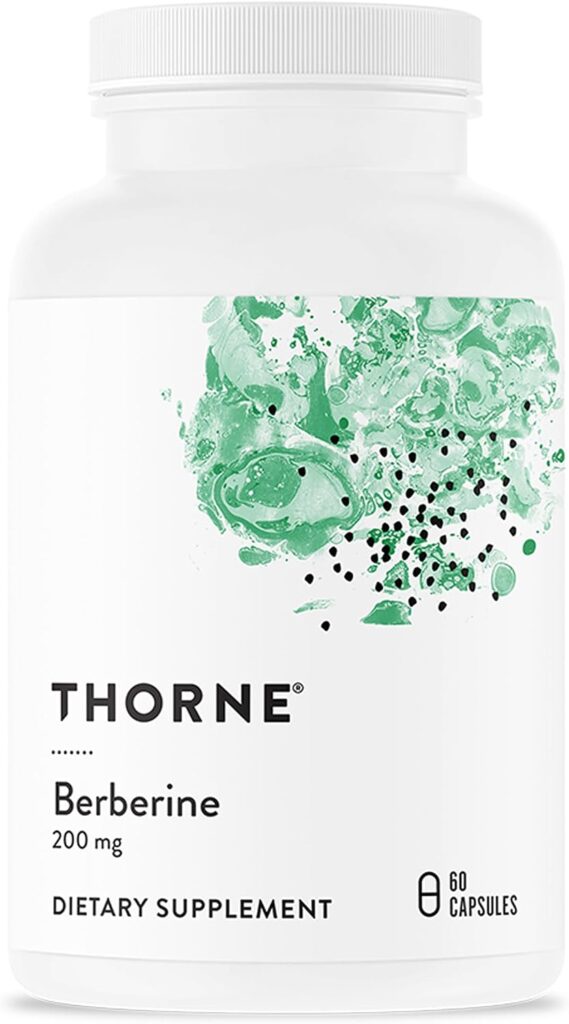
Given the documented labeling and contamination concerns across the broader berberine supplement category, third-party verification is a genuinely meaningful consideration here, not just a brand preference. Thorne’s berberine is NSF Contents Certified — independently tested to confirm the product actually contains what the label states, at the stated potency, with no unsafe contaminant levels. Thorne states it performs a minimum of four rounds of testing per manufactured batch, and the company is widely used by professional sports teams and healthcare practitioners specifically for this level of verification.
Frequently Asked Questions
Is berberine actually comparable to Ozempic for weight loss?
No — the best available evidence (a 2020 meta-analysis of 12 randomized controlled trials) found an average weight loss of 2.07 kg with berberine, compared to 14.9% body weight loss with semaglutide (Ozempic’s active compound, tested at the Wegovy dose in the STEP-1 trial) and 20.9% with tirzepatide. That’s roughly a 7-10x difference in magnitude, and no study has ever tested the two head-to-head directly.
How does berberine actually work?
Berberine activates AMPK, an energy-regulating pathway inside cells — the same pathway metformin activates, which is why several trials have found comparable blood sugar outcomes between the two. This is mechanistically distinct from GLP-1 medications, which mimic a satiety-signaling gut hormone through a different pathway entirely.
What are the real side effects of berberine?
Gastrointestinal issues — nausea, diarrhea, and constipation — are the most commonly reported side effects and frequently lead people to stop taking it. Berberine can also interact with diabetes and certain blood pressure medications, so discussing it with a doctor before starting is genuinely important if you take either.
Is berberine worth taking at all if it’s not like Ozempic?
It has real, modest evidence for blood sugar support (comparable to standard-dose metformin in some trials) and some beneficial effects on lipid profile and blood pressure, based on smaller clinical trials. It’s a reasonable low-cost adjunct for someone with mild glucose elevation who has discussed it with their doctor — not a substitute for a GLP-1 medication in anyone who would otherwise meet the clinical criteria for one.
Why is quality testing especially important for berberine specifically?
The broader supplement category has documented issues with improper labeling and contamination, and dietary supplements receive far less regulatory oversight than pharmaceuticals. Choosing a product with independent third-party certification (verifying both label accuracy and absence of contaminants) is a meaningful purchasing consideration for berberine specifically, not just a general nice-to-have.
The Bottom Line
The “nature’s Ozempic” label doesn’t survive contact with the actual data. Berberine’s best-documented weight loss effect — 2.07 kg across the largest available meta-analysis — is real but roughly 7 to 10 times smaller than what GLP-1 medications produce in their own major trials, and the two have never been tested against each other directly. Where berberine does have genuine, if modest, evidence is blood sugar support comparable to metformin and some benefit to lipid markers and blood pressure. It’s a reasonable low-cost supplement for mild metabolic support discussed with a doctor — not an equivalent alternative to a GLP-1 medication for anyone who actually needs one.
For related content on metabolic and cardiovascular health, see our guides on natural remedies for high blood pressure and natural remedies for low energy and fatigue.
This article is for informational purposes only. Berberine can interact with several medications. Always consult a qualified healthcare provider before starting berberine, particularly if you take diabetes or blood pressure medications.