This post contains affiliate links. If you purchase through them, we may earn a small commission at no extra cost to you.
This article is for informational purposes only and is not a substitute for professional medical advice. Talk to your doctor before starting any new supplement, especially if you have allergies to bees, bee products, or pollen.
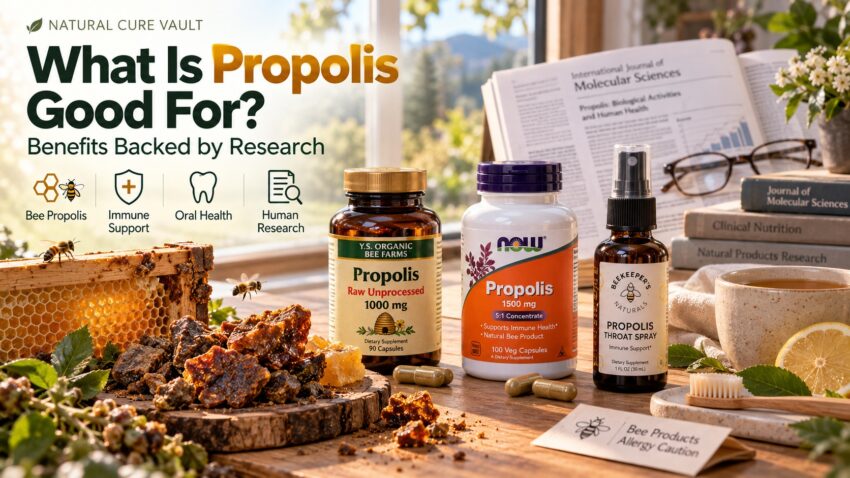
What Is Propolis Good For? Benefits Backed by Research
Bees don’t make propolis to be eaten — they make it to seal and disinfect the hive.
It’s a resin-like mixture of tree sap, beeswax, and bee saliva, and it turns out to be one of the more genuinely well-studied “bee products” for immune and oral health.
Unlike a lot of trendy supplements, propolis actually has human clinical trial data behind some of its claims — not just test-tube studies.
Here’s what holds up, what doesn’t, and which products are worth buying.
Propolis Supplements Compared
| Product | Format | Best For |
|---|---|---|
| Y.S. Organic Bee Farms Propolis-Raw Unprocessed 1000mg | Capsule (raw) | Minimally processed, budget-friendly daily use |
| NOW Foods Propolis 1500mg (5:1 Concentrate) | Capsule (concentrated) | Stronger daily dose in one capsule |
| Beekeeper’s Naturals Propolis Throat Spray | Spray | Targeted throat and oral use, fast onset |
Best Propolis Supplements — Verified Picks
Y.S. Organic Bee Farms Propolis-Raw Unprocessed 1000mg
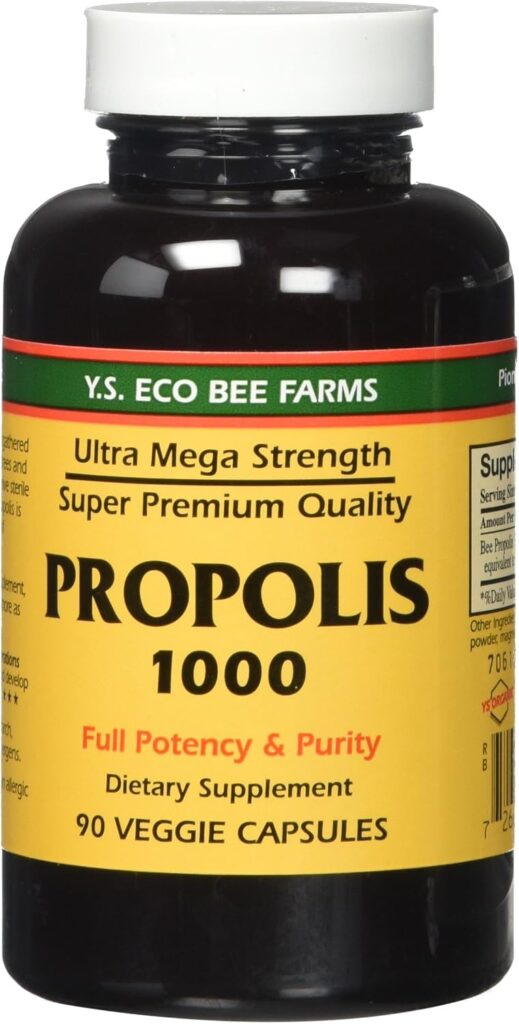
Pros: Minimally processed. Well-known, long-standing bee product brand. Affordable for a 90-capsule bottle.
Cons: “Raw unprocessed” means less standardization batch-to-batch than a concentrated extract.
Best for: Someone who wants a simple, minimally processed daily propolis capsule.
Buy it here: Y.S. Organic Bee Farms Propolis on Amazon
NOW Foods Propolis 1500mg (5:1 Concentrate)
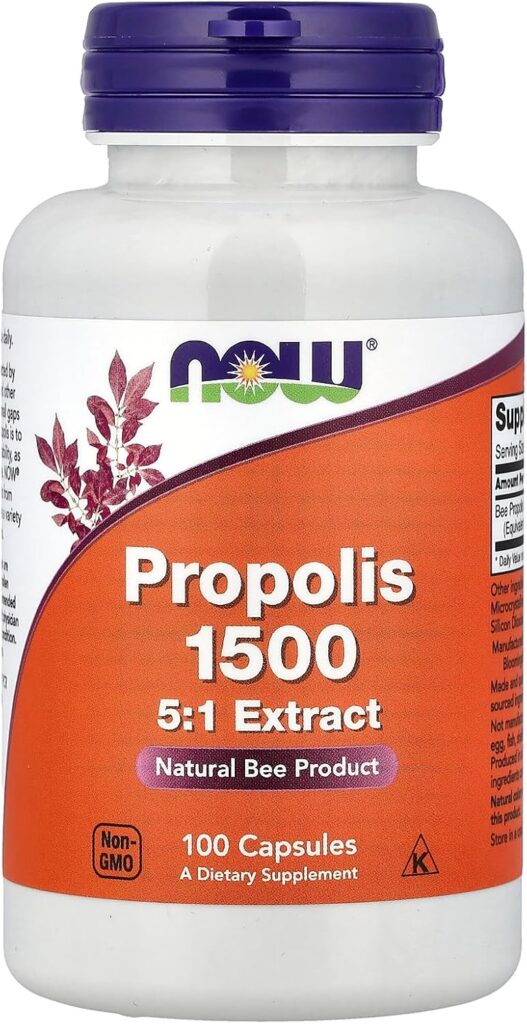
Pros: Concentrated 5:1 extract means a higher effective dose per capsule. Trusted, established supplement brand. Once-daily dosing.
Cons: Capsule form takes longer to act than a spray if you’re using it for an already-scratchy throat.
Best for: Daily, preventive immune support rather than acute sore-throat relief.
Buy it here: NOW Foods Propolis 1500mg on Amazon
Beekeeper’s Naturals Propolis Throat Spray
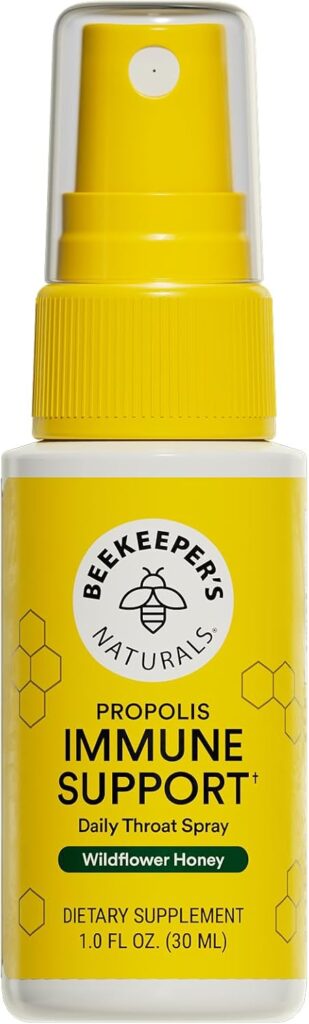
Pros: Fast, direct application right where you need it. 95% bee propolis extract. Easy to carry and use on the go.
Cons: Smaller total propolis amount per use than a daily capsule; more of a targeted, as-needed product.
Best for: Sore throats, scratchy voice, or on-the-go immune support during cold season.
Buy it here: Beekeeper’s Naturals Propolis Throat Spray on Amazon
What the Research Actually Shows
Propolis has more human clinical evidence than most bee-derived supplements, particularly in two areas: upper respiratory infections and oral health.
A 2025 review in the International Journal of Molecular Sciences by Martinotti, Bonsignore, and Ranzato summarized propolis’s antiviral, antibacterial, and immune-modulating properties across a large body of research.
Separately, a placebo-controlled clinical trial cited by researchers at Life Extension found that a standardized propolis extract reduced the risk of upper respiratory tract infections by 31% when taken daily during cold and flu season.
That’s a genuinely strong number for a supplement, though it’s worth noting it applies to a specific standardized extract, not “propolis” as a blanket category — results vary by product and concentration.
For oral health, a 2024–2025 review in PMC covering 22 studies found propolis useful for reducing dental plaque, fighting bacteria linked to cavities, and calming gum inflammation.
A separate clinical trial found a 2% propolis mouth rinse performed comparably to chlorhexidine, a standard antibacterial mouth rinse, for reducing cavity-causing bacteria.
The honest gap: a large 2025 study on propolis for colon cancer prevention found no benefit — and researchers flagged a potential negative effect on heart muscle tissue at the doses tested.
That doesn’t overturn the immune and oral-health evidence, but it’s a clear reminder that “natural” doesn’t mean “risk-free at any dose,” and propolis isn’t a universal cure-all despite how it’s sometimes marketed.
Safety, Side Effects, and Who Should Avoid It
The biggest risk with propolis is allergy — and it’s not rare.
Avoid propolis if you’re allergic to bees, bee stings, honey, bee pollen, or Balsam of Peru, since propolis shares allergens with all of these.
People with asthma should also be cautious, since some experts believe compounds in propolis may worsen asthma symptoms in sensitive individuals.
Other things to know:
People with bleeding disorders should use caution, since propolis may mildly slow blood clotting.
Propolis lozenges can occasionally cause mouth irritation or ulcers with frequent use.
There isn’t enough safety data for pregnancy or breastfeeding, so it’s best avoided during those times.
Propolis products aren’t standardized the same way medications are, so potency can vary between brands and even between batches.
Frequently Asked Questions
Is propolis the same as bee pollen or royal jelly?
No. They’re all bee-derived, but propolis is a resin bees use to seal the hive, bee pollen is collected plant pollen, and royal jelly is a secretion fed to the queen bee. They have different compositions and different allergy risks, though people allergic to one bee product often react to the others too.
Can propolis actually cure a cold once I already have one?
The clinical evidence is stronger for prevention (taken daily before you’re sick) than for treating an active infection, though a propolis spray may help soothe an already-sore throat.
Is raw propolis safer than an extract?
Not necessarily “safer” — just less processed and less standardized. An extract gives you a more consistent, known dose.
How is propolis usually dosed?
Products vary widely, from 300mg extract capsules to 1,500mg+ raw propolis capsules. Follow the label of whichever product you choose rather than assuming doses are interchangeable across brands.
Can children take propolis?
Products containing honey (including many propolis capsules and sprays) aren’t recommended for children under two. Check with a pediatrician before giving any propolis product to a child.
Final Verdict
| Your Situation | Best Pick |
|---|---|
| Want a simple, minimally processed daily capsule | Y.S. Organic Bee Farms Propolis-Raw Unprocessed |
| Want a stronger, more concentrated daily dose | NOW Foods Propolis 1500mg |
| Dealing with a scratchy or sore throat right now | Beekeeper’s Naturals Propolis Throat Spray |
Propolis is one of the rare “natural remedy” ingredients with genuine human trial data behind it, not just animal studies or tradition.
The immune and oral-health benefits look real for a standardized extract — but the allergy risk is also real, and worth taking seriously if you have any history of bee-related reactions.
This article is for informational purposes only and is not a substitute for professional medical advice. Talk to your doctor before starting any new supplement, especially if you have allergies to bees, bee products, or pollen.