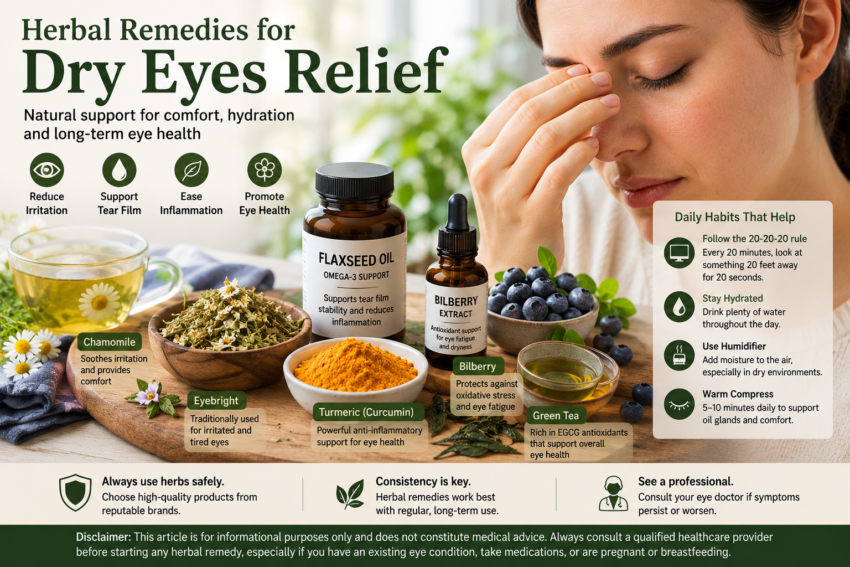
Medical Disclaimer: This article is for informational purposes only and does not constitute medical advice. Always consult a qualified healthcare provider before starting any herbal remedy, especially if you have an existing eye condition, take medications, or are pregnant or breastfeeding.
That Dry, Gritty Feeling in Your Eyes Has a Lot of People Looking for Answers
You wake up and your eyes feel like sandpaper. By afternoon, they’re burning. By evening, you’re squinting at a screen wondering if there’s something — anything — that doesn’t involve a tiny bottle of artificial tears you forget to use.
Dry eye disease affects an estimated 16 million Americans, according to the American Academy of Ophthalmology. It’s one of the most common reasons people visit an eye doctor. And a growing number of people are asking whether herbal remedies can actually help.
The honest answer? Some can — in the right context. Others are overhyped, understudied, or potentially risky if you use them wrong. This article breaks it all down so you know what’s worth trying and what to leave on the shelf.
What’s Actually Causing Your Dry Eyes
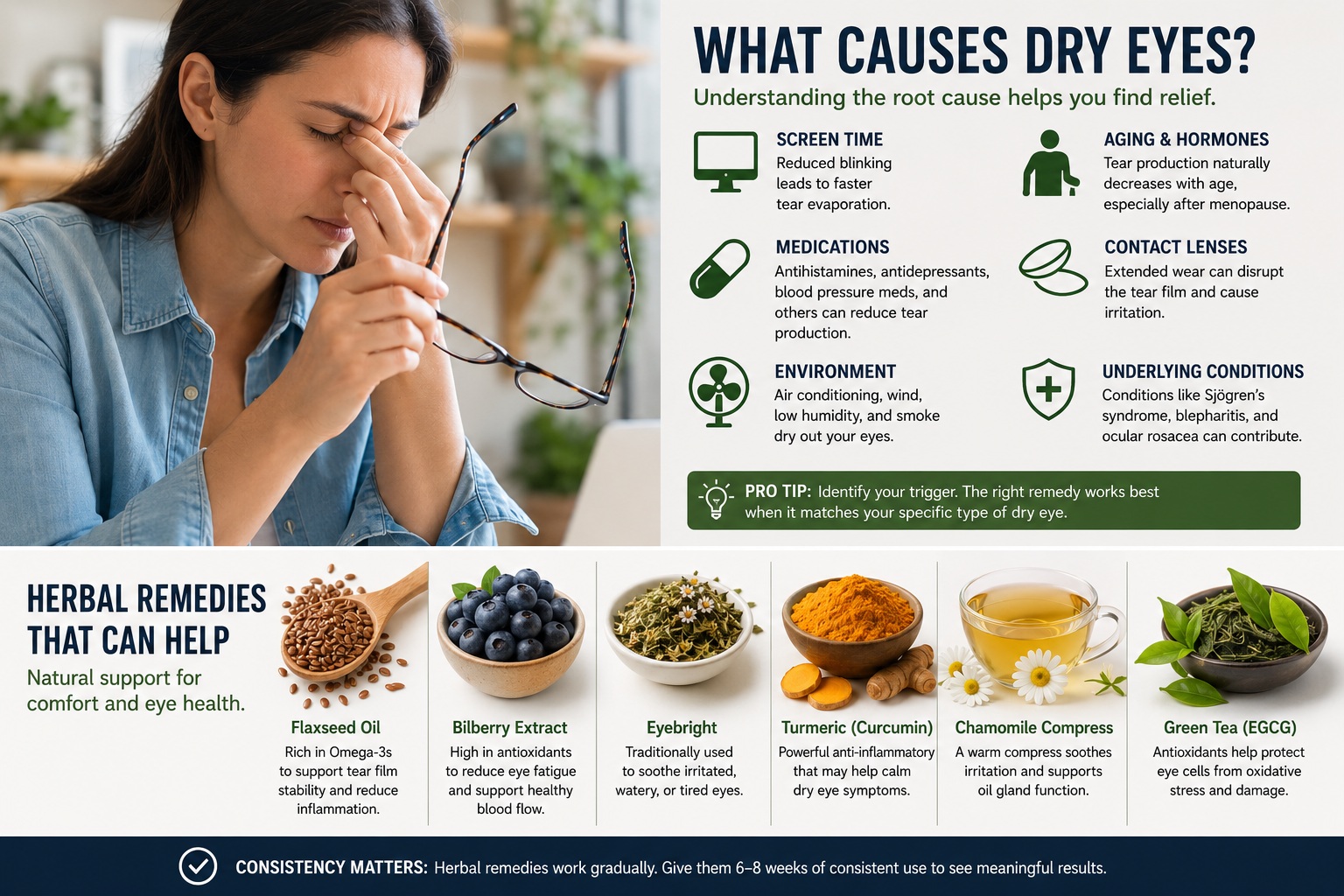
Before reaching for any remedy, it helps to understand what’s happening. Dry eyes occur when your tear film is unstable — either you’re not producing enough tears, or the tears you do produce evaporate too fast.
The most common triggers include:
- Screen time (reduced blinking = faster evaporation)
- Aging, especially after menopause
- Certain medications (antihistamines, antidepressants, blood pressure drugs)
- Environmental factors like air conditioning, wind, or low humidity
- Contact lens wear
- Underlying conditions like Sjögren’s syndrome or blepharitis
Why does this matter? Because some herbal remedies target inflammation, some support oil gland function, and some work on tear production. Knowing your trigger helps you pick the right approach.
Herbal Remedies for Dry Eyes Worth Knowing About
Omega-3 Fatty Acids (Flaxseed & Fish Oil)
Omega-3s are probably the most researched natural approach to dry eye relief. They’re not herbs in the traditional sense, but flaxseed — one of the richest plant-based sources — absolutely qualifies as an herbal remedy.
Omega-3s work by reducing inflammation in the meibomian glands (the tiny oil glands along your eyelid margins). When these glands work properly, they produce the oily layer of the tear film that stops tears from evaporating. When they’re inflamed or blocked, that layer breaks down fast.
A 2018 randomized controlled trial published in the New England Journal of Medicine found that high-dose omega-3 supplementation didn’t outperform olive oil placebo in one large study — which caused some controversy. But multiple smaller studies, including a meta-analysis in Contact Lens and Anterior Eye, found measurable improvements in tear film stability and dry eye symptoms with omega-3 use.
The consensus among ophthalmologists leans toward omega-3s being genuinely helpful for evaporative dry eye specifically — particularly flaxseed oil for people who prefer a plant-based option.
Products like Nature Made Flaxseed Oil 1000mg softgels are a popular, accessible starting point.
Eyebright (Euphrasia officinalis)
Eyebright has been used in European herbal medicine for centuries, specifically for eye irritation, redness, and watery or dry eyes. Its name alone tells you its traditional purpose.
It contains compounds called iridoid glycosides and flavonoids, which have demonstrated anti-inflammatory and antioxidant properties in lab studies. Some herbalists recommend it as a tea compress applied to closed eyelids — not as eye drops.
Here’s the important caveat: do not put herbal preparations directly into your eyes unless they are commercially sterile and specifically formulated for ophthalmic use. Introducing non-sterile liquid to the eye carries a real infection risk. Use eyebright as a warm compress over closed lids, or as an oral supplement.
Evidence is still largely traditional rather than clinical. The European Medicines Agency (EMA) acknowledges eyebright’s traditional use for mild eye discomfort, but notes that robust clinical trials are lacking.
Bilberry (Vaccinium myrtillus)
Bilberry is one of the better-studied herbs for eye health overall. It’s packed with anthocyanins — powerful antioxidants that support microcirculation and reduce oxidative stress in eye tissue.
A Japanese study published in the Journal of Ophthalmology found that bilberry extract supplementation significantly improved visual fatigue and dry eye symptoms in people who worked at computer screens for extended hours. Participants reported less burning, less foreign-body sensation, and better tear film stability.
Bilberry won’t fix structural tear gland problems, but for screen-related or fatigue-driven dry eye, it’s one of the more credible herbal options. Look for standardized extracts with 25% anthocyanins for consistent potency.
Nature’s Answer Bilberry Extract is a well-regarded standardized option available on Amazon.
Turmeric (Curcumin)
Turmeric’s active compound, curcumin, is one of the most studied anti-inflammatory plant compounds in existence. And since a significant component of dry eye disease is inflammatory — particularly in the conjunctival tissue — it makes sense that researchers have looked at it for eye health.
Early studies, including research published in Molecular Vision, suggest curcumin may reduce inflammatory markers associated with dry eye. It’s not a direct tear-production booster, but it may help calm the underlying inflammation that worsens the condition.
The challenge with turmeric is bioavailability — plain turmeric powder absorbs poorly. Look for formulations with piperine (black pepper extract) or liposomal delivery for meaningful absorption. You can read more about how plant compounds work systemically in our article on what yarrow is actually good for and how herbal compounds deliver medicinal benefits.
Chamomile (Matricaria chamomilla)
Chamomile is one of the most practical herbs for soothing dry, irritated eyes — not because it fixes the underlying problem, but because a warm chamomile compress genuinely helps in the moment.
Warm compresses are actually recommended by mainstream ophthalmology to loosen meibomian gland secretions and improve the oily layer of the tear film. Chamomile adds mild anti-inflammatory and soothing properties on top of the mechanical benefit of the warmth.
Brew a strong chamomile tea, let it cool to a comfortably warm temperature, soak a clean cloth or cotton pads, and apply over closed eyelids for 5–10 minutes. Never use boiling liquid near your eyes.
One caution: if you have a ragweed allergy, chamomile may trigger a cross-reaction. Skip it if that applies to you.
Green Tea
Green tea contains EGCG (epigallocatechin gallate), one of the most studied antioxidant compounds in plant medicine. Research from Hallym University in South Korea showed that EGCG helped protect corneal cells from oxidative damage and had a measurable protective effect on dry eye models.
Drinking green tea daily won’t instantly cure dry eyes, but as part of an anti-inflammatory diet and lifestyle approach, it supports overall eye health. It’s also an easy, low-risk addition to your routine.
What Doesn’t Hold Up
Not everything marketed for dry eye relief belongs in your cabinet. A few things to be skeptical of:
- Unsterile herbal eye drops or “natural” eye washes sold without proper pharmaceutical manufacturing standards. These carry genuine infection risk.
- Essential oil application near the eyes. Some wellness content suggests using diluted essential oils around the eye area. Don’t. Essential oils are potent enough to damage corneal tissue even in small amounts.
- Aloe vera in the eye. Topical aloe is beneficial on skin, but putting it in or around the eye without a proper ophthalmic formulation is asking for irritation or worse.
The rule is simple: if it’s going near your eye, it needs to be sterile and ophthalmologist-approved.
Building a Practical Herbal Approach to Dry Eyes
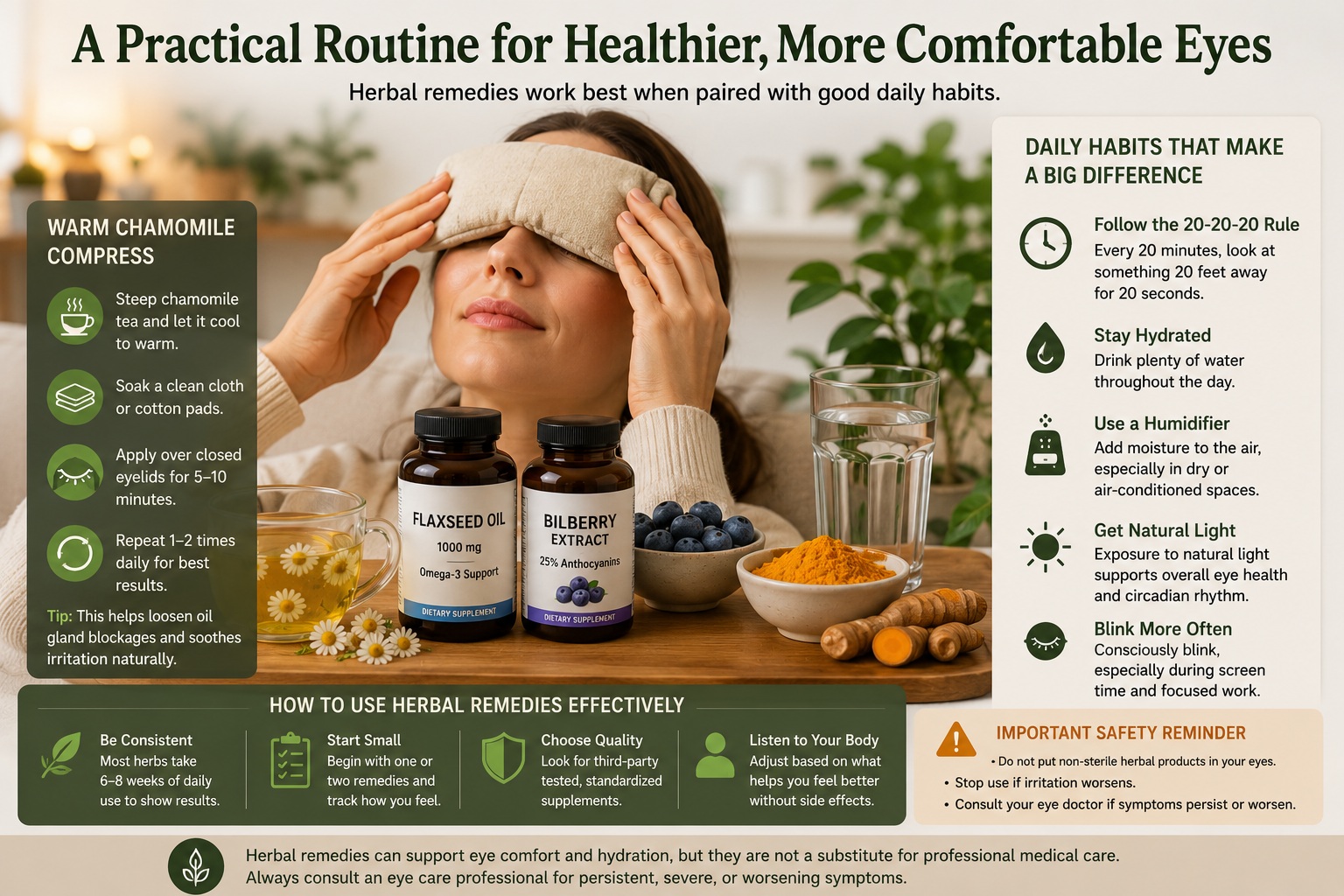
No single herb is going to replace the tear film your eyes need. But combining a few evidence-leaning approaches alongside good eye hygiene can make a real difference. Here’s what a sensible herbal-supported routine might look like:
| Remedy | Form | Best For | Evidence Level |
|---|---|---|---|
| Flaxseed oil (Omega-3) | Oral supplement | Evaporative dry eye, oil gland health | Moderate (multiple RCTs) |
| Bilberry extract | Oral supplement | Screen fatigue, oxidative stress | Moderate (clinical studies) |
| Chamomile compress | Warm compress | Immediate soothing, meibomian glands | Traditional + mechanical benefit |
| Turmeric (curcumin) | Oral supplement | Inflammatory dry eye | Emerging (lab + early clinical) |
| Eyebright | Oral or compress | General eye irritation | Traditional (limited clinical data) |
| Green tea (EGCG) | Dietary / oral | Antioxidant protection | Preclinical (promising) |
Pair whatever you choose with common sense: take regular screen breaks using the 20-20-20 rule (every 20 minutes, look at something 20 feet away for 20 seconds), stay hydrated, and consider a humidifier if your home runs dry in winter.
If you’re exploring herbal approaches for other conditions at the same time, it’s worth understanding how herbs interact with medications — particularly if you’re taking anything that affects inflammation or blood clotting. Our breakdown of herbal supplements and what to avoid covers this interaction risk clearly.
When to See a Doctor
Herbal remedies work best for mild, chronic, lifestyle-related dry eye. They’re not appropriate as the sole treatment if any of the following apply:
- Your vision is changing or blurring
- You have significant eye pain, not just discomfort
- You notice discharge, swelling, or redness that isn’t improving
- Your symptoms came on suddenly or after an eye injury
- You’ve been using OTC drops for weeks without relief
- You’ve been diagnosed with Sjögren’s syndrome, lupus, or another autoimmune condition
- You wear contact lenses and your eyes feel worse, not better
An ophthalmologist can identify whether you have aqueous-deficient dry eye, evaporative dry eye, or a combination — and that distinction matters for treatment. The American Academy of Ophthalmology recommends anyone with persistent dry eye symptoms get a proper evaluation before self-managing long-term.
Similarly, if you’re pregnant or breastfeeding, discuss any supplement with your OB or midwife first. Some herbs that are fine for general adults aren’t appropriate during pregnancy. Our guide to natural remedies and pregnancy safety gives helpful context on why this matters.
A Few Things Worth Knowing Before You Buy
The supplement industry in the US is not regulated the same way pharmaceuticals are. The FDA does not approve herbal supplements for safety or efficacy before they hit shelves. That means quality varies enormously between brands.
When choosing any supplement for dry eye support, look for:
- Third-party testing — look for USP, NSF, or Informed Sport certification marks
- Standardized extracts — so you know what dose you’re actually getting
- Transparent ingredient labels — no proprietary blends that hide individual doses
This applies whether you’re buying flaxseed oil, bilberry, or any other herbal product. It’s the same principle that applies to any herbal supplement you’d use for internal health — quality control is everything. The same thinking behind choosing reliable herbal products for sinus relief applies here too.
The Bottom Line on Dry Eyes and Herbal Remedies
There’s no magic herb that replaces your tear film overnight. But dry eyes herbal remedy options like flaxseed oil, bilberry, and chamomile compresses have real, if modest, evidence behind them — and they’re low risk when used sensibly.
The smartest approach is to use them as part of a broader strategy: address the root cause (screen habits, humidity, diet, medications), give your eyes proper breaks, and see an eye doctor if things aren’t improving. Herbal support works best when it’s part of the picture, not the whole plan.
Start with one or two evidence-supported options, give them 6–8 weeks, and pay attention to what actually changes. That’s more useful than chasing every trending supplement on the market.
Frequently Asked Questions
Can herbal remedies cure dry eyes permanently?
No herbal remedy cures dry eye disease permanently, especially if there’s an underlying cause like meibomian gland dysfunction or an autoimmune condition. Some remedies — particularly omega-3s from flaxseed — can meaningfully improve symptoms over time, but they work best alongside lifestyle adjustments and proper medical care.
Is eyebright safe to put directly in your eyes?
Only if it’s a commercially prepared, sterile ophthalmic formulation. Homemade herbal eye washes carry a serious infection risk. Use eyebright as a warm compress over closed eyelids or as an oral supplement instead.
How long does it take for flaxseed oil to help dry eyes?
Most studies that found benefit used supplementation for 3–6 months. Don’t expect results in a week. Consistent daily use over several months is typically what’s needed to influence tear film stability.
Are there any herbs I should avoid if I have dry eyes?
Antihistamine herbs like butterbur can actually worsen dry eye symptoms in some people by reducing secretions. Diuretic herbs (dandelion, horsetail) may contribute to dehydration, which can affect tear production. Always tell your doctor about any herbs you’re using.
Can I use a chamomile tea bag as an eye compress?
Yes — it’s a popular home remedy. Steep a chamomile tea bag, squeeze out excess liquid, let it cool to a comfortably warm temperature, and place it over your closed eyelid for 5–10 minutes. Never use a hot bag directly on the eye. And if you have ragweed allergies, skip chamomile entirely.
Does drinking more water help dry eyes?
Yes, to a degree. Dehydration can affect tear volume. The AAO recommends staying well-hydrated as a basic part of managing dry eye symptoms. It won’t fix gland dysfunction, but it’s a free and sensible starting point.
Medical Disclaimer: The information in this article is intended for general informational purposes only and is not a substitute for professional medical advice, diagnosis, or treatment. Always seek the guidance of a qualified healthcare professional regarding any medical condition or before starting any new supplement or herbal remedy. Never disregard professional advice or delay seeking it because of something you have read here.