This post contains affiliate links. If you buy through our links we may earn a small commission — at no extra cost to you. This never influences our recommendations.
This article is for informational purposes only and does not constitute medical advice. Chronic insomnia is a medical condition that benefits from professional evaluation. Always consult a qualified healthcare provider before starting any supplement, particularly if you are taking medications or have underlying health conditions.
When Insomnia Needs Professional Help — Check This First
Occasional difficulty sleeping is normal. Chronic insomnia — difficulty falling asleep, staying asleep, or waking too early three or more nights per week for three or more months, with real daytime consequences — is different.
Seek professional evaluation if:
- Insomnia has lasted more than three months despite consistent sleep hygiene effort
- You are using alcohol to fall asleep
- You regularly wake gasping, snore heavily, or have morning headaches (possible sleep apnoea — requires diagnosis)
- Insomnia is accompanied by persistent low mood, anxiety, or thoughts of self-harm
- Prescription sleep medication has been used for more than 2–4 weeks
- Insomnia is affecting your safety — driving while fatigued, errors at work
The gold-standard treatment for chronic insomnia is Cognitive Behavioural Therapy for Insomnia (CBT-I) — a structured programme confirmed by multiple meta-analyses to be more effective than sleep medication for long-term insomnia. Natural remedies work best as supportive measures alongside good sleep habits and, where needed, CBT-I — not as replacements for professional care.
Why Sleep Is So Hard — Understanding What’s Actually Happening
Insomnia is rarely just a problem with the night. It almost always involves a self-perpetuating cycle: poor sleep increases cortisol and sympathetic nervous system activity, making the next night harder. Worry about not sleeping activates the same stress pathways. The bedroom becomes associated with wakefulness rather than rest. This cycle is what CBT-I directly targets — and it’s what the most effective natural remedies address, each through different pathways.
Two systems govern sleep:
Sleep pressure (adenosine) — a chemical that builds throughout wakefulness and drives the urge to sleep. Caffeine works by blocking adenosine receptors. Napping depletes adenosine and reduces sleep pressure, which is why late naps worsen nighttime sleep.
Circadian rhythm (melatonin + light) — the body’s internal 24-hour clock, primarily regulated by light. Darkness triggers melatonin release from the pineal gland, signalling it’s time to sleep. Blue light from screens suppresses melatonin production for up to 3 hours, directly disrupting this signal.
Natural remedies that work most effectively either support GABA activity (the brain’s calming neurotransmitter), reduce cortisol and sympathetic arousal, or support circadian signalling. Knowing which is which helps you match the remedy to your specific insomnia pattern.
Natural Remedies for Insomnia — Ranked by Evidence
1. Melatonin — The Most Evidence-Backed Natural Sleep Aid
Melatonin dominates the natural sleep supplement evidence base with over 400 published studies — consistently showing it reduces sleep onset time by 7–12 minutes and improves overall sleep quality. It works by supplementing the body’s natural melatonin signal — most useful for insomnia driven by circadian disruption: jet lag, shift work, irregular schedules, and screen-suppressed melatonin production.
The most important and most misunderstood fact about melatonin: more is not better. Research consistently shows 0.5–3mg is often as effective as higher doses, with fewer side effects. Most commercial products sell 5mg, 10mg, or 20mg — pharmacological doses that override rather than support the natural circadian signal, causing next-day grogginess and potential tolerance. Start at 0.5mg and increase only if needed.
What melatonin is good for: Circadian disruption insomnia — difficulty falling asleep at your intended bedtime, jet lag, shift work. Reduces sleep onset time but does not significantly improve sleep quality once asleep or reduce nighttime awakenings.
What melatonin is not good for: Maintenance insomnia (waking in the night), stress-driven insomnia, or insomnia where the core problem is hyperarousal rather than circadian disruption.
How to use: 0.5–1mg, taken 30–60 minutes before your desired sleep time, at the same time each night. Dim all lights after taking. Your body’s natural melatonin production peaks between 9–11 PM and can be suppressed for up to 3 hours by bright screen exposure — combine with light management for best effect.
Safety: Safe for short-term use. Long-term daily high-dose use is not well-studied and not recommended without medical guidance. Not recommended during pregnancy without supervision.
2. Magnesium Glycinate — The Foundation of Deep Sleep
Magnesium is directly involved in the regulation of GABA receptors — the brain’s primary inhibitory signalling system that enables the transition from wakefulness to sleep. Magnesium glycinate ranks second in the natural sleep supplement evidence base, with solid evidence from randomised trials showing improvements in sleep efficiency and reduced nighttime awakenings.
As covered in our natural remedies for anxiety guide, approximately 45–68% of US adults are magnesium deficient — directly impairing GABA function and increasing cortisol reactivity. Correcting this deficiency often produces rapid, significant improvements in sleep quality. Magnesium glycinate at 200–400mg offers the best absorption and least digestive upset of any magnesium form. The glycine component itself has additional sleep-promoting properties — it reduces core body temperature, a key physiological trigger for sleep onset.
How to use: 200–400mg magnesium glycinate taken 30–60 minutes before bed. Evening dosing is ideal.
Safety: Very safe at doses up to 350mg/day from supplements. Doses above 400mg can cause loose stools. Avoid in kidney disease without medical supervision.
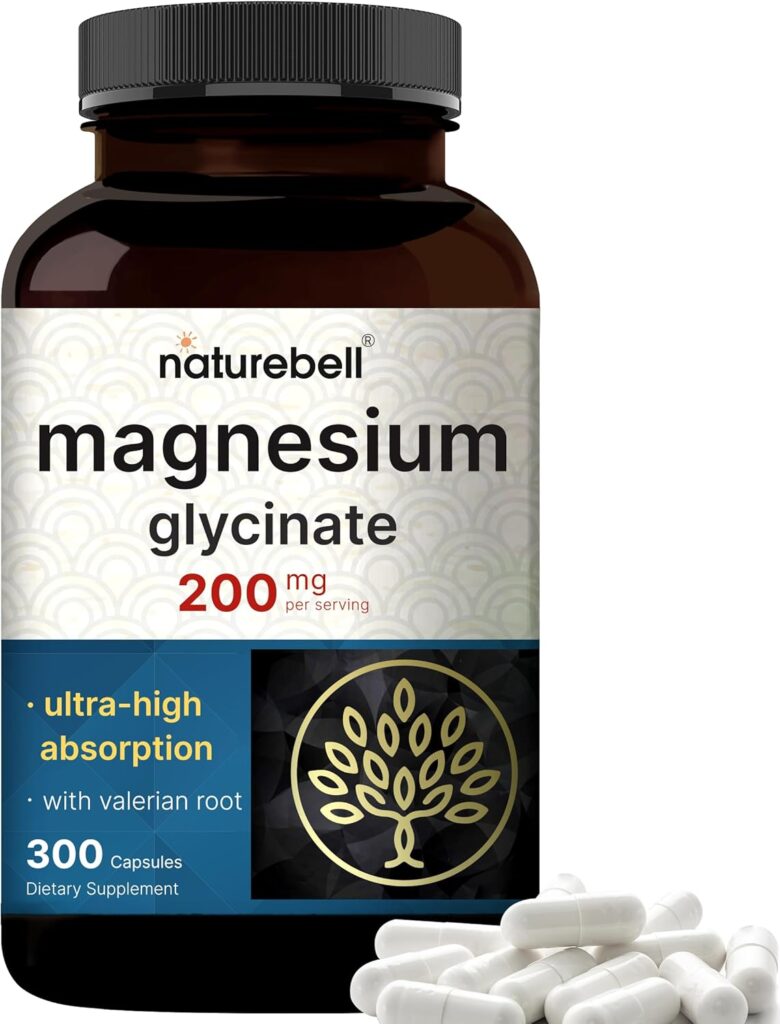
Recommended product: NatureBell Magnesium Glycinate with Valerian Root — 200mg chelated magnesium glycinate combined with valerian root, 300-capsule supply, 3rd-party tested, Non-GMO, gluten-free. Addresses two sleep pathways in one product.
3. Valerian Root — Best Herbal Sleep Aid for Falling Asleep
Valerian root (Valeriana officinalis) is one of the oldest herbal sleep remedies in Western medicine. Clinical trials suggest 300–600mg of standardised valerian extract, taken 1–2 hours before bedtime, can be effective for mild to moderate insomnia — with a systematic review and meta-analysis in The American Journal of Medicine concluding that valerian may improve sleep quality without producing side effects. Valerian works by increasing GABA availability in the brain — similar mechanism to benzodiazepines, but through upstream enhancement rather than direct receptor binding.
Valerian is particularly well-suited for sleep-onset insomnia — taking too long to fall asleep — rather than maintenance insomnia (waking during the night).
The 2–4 week timeline: Valerian root often requires 2–4 weeks of consistent use to reach maximum effectiveness — unlike melatonin which works acutely. Most people try it once or twice, experience minimal effect, and conclude it doesn’t work — when it needed a consistent month-long trial.
The vivid dreams note: Some people report unusually vivid dreams with valerian root — a known, harmless side effect of enhanced GABA activity during REM sleep. Worth knowing in advance.
How to use: 300–600mg of standardised valerian root extract (0.8% valerenic acid), taken 1–2 hours before bed. Combines synergistically with passionflower and lemon balm.
Safety: Generally safe for adults for short to medium-term use. May cause morning grogginess at higher doses. Avoid during pregnancy. May interact with sedative medications — avoid combining with benzodiazepines or alcohol. Not before driving.
Recommended products:
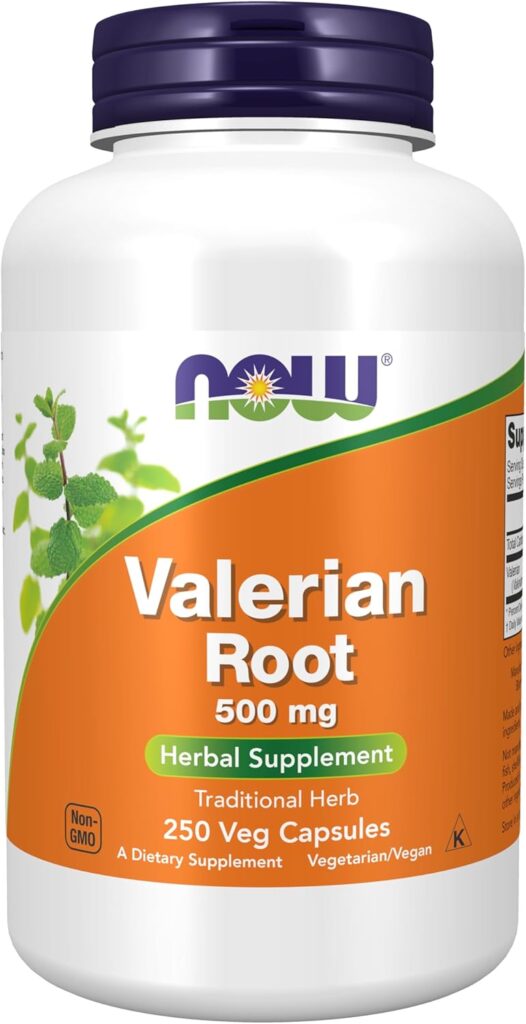
- NOW Foods Valerian Root 500mg (250 veg capsules) — pure standardised valerian at a clinical dose, Non-GMO, high-value supply for consistent nightly use
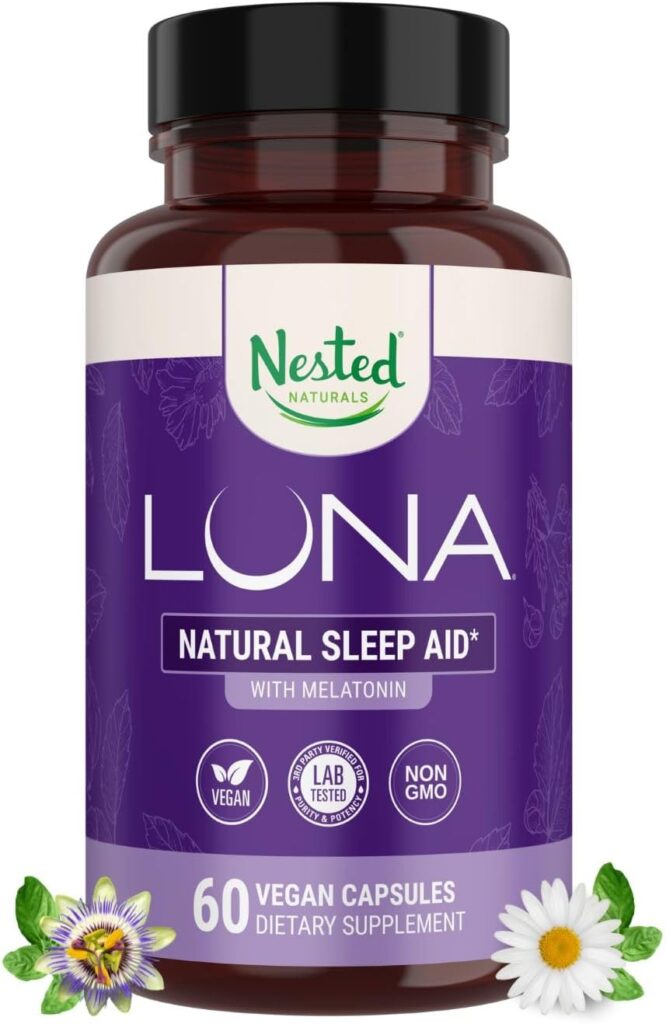
- Nested Naturals Luna Sleep Aid — combines valerian root with low-dose melatonin, chamomile, and lemon balm for a multi-mechanism formula. Non-habit forming, 60 vegan capsules, consistent Amazon bestseller
4. L-Theanine — The Quiet Mind Solution
L-theanine is the amino acid from green tea that produces calm-but-alert focus — the reason tea doesn’t produce coffee’s anxious jitteriness despite containing caffeine. For sleep, L-theanine is particularly valuable for one specific and very common insomnia pattern: the inability to sleep because the mind won’t stop. Rather than forcing sedation, it quiets cognitive hyperarousal — reducing intrusive thoughts, mental looping, and anxiety about sleep that prevent sleep onset.
L-theanine increases alpha brain waves (the relaxed-alert state of meditation) and reduces sympathetic nervous system activity. It pairs particularly well with magnesium glycinate for anxiety-driven insomnia — the combination addresses both the nutritional GABA foundation and the acute cognitive hyperarousal that often prevents sleep onset.
How to use: 200mg, taken 30–60 minutes before bed. Safe to use nightly without tolerance buildup. Pairs well with a chamomile or valerian tea ritual.
Safety: Excellent safety profile. Well-tolerated at up to 400mg/day. No significant drug interactions at typical doses.
5. Passionflower — Gentle GABA Support for Staying Asleep
Passionflower (Passiflora incarnata) distinguishes itself from valerian root in one important practical way: it is more gentle with less sedating effects — good for those who need sleep help but are concerned about daytime grogginess. Passionflower tea consumed 30 minutes before bedtime can reduce sleep latency by an average of 15 minutes. A randomised controlled trial in Phytotherapy Research found that one cup of passionflower tea daily for a week significantly improved sleep quality scores compared to placebo.
For maintenance insomnia (waking in the night), passionflower’s GABA-enhancing properties help sustain sleep continuity — a different application from melatonin (onset) or valerian (stronger sedation at onset).
How to use: As tea — steep 1–2 teaspoons of dried passionflower (or one tea bag) in boiling water for 10 minutes, drunk 30 minutes before bed. As supplement — 250–400mg standardised extract. See our herbal tea for sleep guide for the complete tea-based sleep protocol.
Safety: Generally safe and well-tolerated. Milder than valerian. Not recommended during pregnancy.
6. Chamomile — The Gentle Wind-Down
Chamomile’s active compound apigenin binds to benzodiazepine receptors in the brain, producing genuine (if mild) anxiolytic and sedative effects. A randomised controlled trial in the Journal of Advanced Nursing found chamomile tea significantly improved sleep quality in postnatal women. Chamomile is not a powerful sedative on its own — its value is in the wind-down ritual, the mild cortisol reduction, and the gentle preparation of the nervous system for sleep.
A ragweed allergy note: chamomile is in the Asteraceae plant family, and people with ragweed allergy have a cross-reactivity risk. See our tea for allergies guide for this detail in full.
7. Glycine — The Underrated Sleep Amino Acid
Glycine is a non-essential amino acid with a specific, well-documented effect on sleep: it reduces core body temperature by dilating peripheral blood vessels, mimicking the natural body temperature drop that triggers sleep onset. A study in Sleep and Biological Rhythms found 3g of glycine before bed significantly improved subjective sleep quality, reduced daytime sleepiness, and improved next-day cognitive performance. A Frontiers in Neurology study confirmed improvements in sleep efficiency. Particularly useful for people who sleep sufficient hours but still wake unrefreshed — poor quality rather than insufficient duration.
How to use: 3g dissolved in water, taken 30 minutes before bed. Tasteless (slightly sweet), mixes easily. Combines well with magnesium glycinate and L-theanine.
Sleep Hygiene — The Foundation Everything Builds On
Natural supplements produce their best results on a well-designed sleep foundation. Without these, even the most evidence-backed supplements underperform.
Consistent sleep and wake times — the single most powerful intervention for insomnia. Same time every day, including weekends. Irregular sleep timing is one of the most common and underappreciated causes of chronic insomnia.
The bedroom is for sleep only — no screens, no working, no watching television in bed. The brain forms associations between environments and behaviours. Restricting the bedroom to sleep retrains this association.
Light management — dim lights 1–2 hours before bed, eliminate blue light from screens, keep the bedroom completely dark during sleep. Morning bright light exposure (10–15 minutes within an hour of waking) anchors the circadian clock and improves the following night’s sleep.
Temperature — keep the bedroom at 65–68°F (18–20°C). Core body temperature naturally drops at sleep onset — a warm room fights this process; a cool room facilitates it.
Caffeine cutoff — caffeine has a half-life of 5–7 hours. A 3 PM coffee still has half its caffeine active at 8–10 PM. A noon cutoff meaningfully improves sleep for many people. Switch to green tea (L-theanine buffers its caffeine) or herbal alternatives in the afternoon.
A Sample Evening Routine
8:00 PM — Brew chamomile, passionflower, or lemon balm tea. Sip slowly. Begin dimming lights and putting screens away.
8:30 PM — Take your supplement stack: magnesium glycinate (200–400mg) + L-theanine (200mg) + valerian root (300–600mg) if using. Low-dose melatonin (0.5–1mg) if circadian disruption is a factor.
9:00 PM — Light reading, gentle stretching, or a warm bath. No screens. Diffuse lavender essential oil if desired.
9:30 PM — 4-7-8 breathing (inhale 4, hold 7, exhale 8) or a 10-minute body scan meditation.
10:00 PM — Lights out. Bedroom at 65–68°F, completely dark, quiet.
What Doesn’t Work — Saving You Time and Money
High-dose melatonin (5mg, 10mg, 20mg) — genuinely counterproductive for most users. High doses cause next-day grogginess, build tolerance, and can suppress the body’s own melatonin production. Start at 0.5–1mg. The product label may say 10mg; that doesn’t mean you need 10mg.
Alcohol as a sleep aid — alcohol reduces the time to fall asleep but significantly disrupts sleep architecture: suppressing REM sleep, causing earlier wakening as alcohol is metabolised, and increasing sleep fragmentation. The short-term sedation is real; the sleep quality damage is also real.
Diphenhydramine (Benadryl, ZzzQuil, Unisom SleepTabs) — builds tolerance within 3–4 nights, leaving people needing it to sleep without it actually working. Causes significant morning grogginess and cognitive impairment — particularly concerning in older adults. Not recommended for regular use.
Frequently Asked Questions
What is the most effective natural remedy for insomnia?
It depends on your insomnia pattern. For difficulty falling asleep due to circadian disruption: melatonin (0.5–1mg) consistently timed. For difficulty falling asleep due to an overactive mind: L-theanine (200mg) + magnesium glycinate (200–400mg). For general sleep quality improvement: magnesium glycinate has the most consistent randomised trial evidence. For herbal support: valerian root (300–600mg) with 2–4 weeks of consistent use. Most people benefit most from combining 2–3 approaches targeting different mechanisms.
How long before bed should I take natural sleep remedies?
Most sleep supplements work best taken 1–2 hours before your desired bedtime, allowing time for absorption and onset. Melatonin should be taken at the same time each night to help regulate the circadian rhythm. Valerian is most effective 1–2 hours before bed; L-theanine and passionflower work within 30–60 minutes; magnesium glycinate works best as a consistent nightly supplement.
Can I take multiple natural sleep supplements together?
Many combinations are safe and synergistic — magnesium glycinate + L-theanine + valerian root is a well-established safe stack. Start with one or two supplements and add gradually to identify what provides the most benefit for your specific pattern. Avoid combining herbal sedatives (valerian, passionflower) with pharmaceutical sedatives or alcohol.
Are natural sleep remedies habit-forming?
Unlike benzodiazepines and Z-drugs (zolpidem/Ambien), most natural sleep remedies do not cause physical dependence or withdrawal. Melatonin does not cause dependence but can suppress natural production with long-term high-dose use. Valerian root, magnesium, and L-theanine are not habit-forming at typical doses.
What’s the difference between valerian root and melatonin for sleep?
They work through completely different mechanisms. Melatonin supplements the circadian sleep signal — useful for timing and onset, particularly for circadian disruption. Valerian root enhances GABA — the brain’s calming neurotransmitter — reducing hyperarousal. Melatonin acts within 30–60 minutes; valerian takes 2–4 weeks for full effect. For most insomnia (which is more hyperarousal than circadian disruption), valerian and magnesium are more mechanistically appropriate.
Should I talk to a doctor before taking natural sleep supplements?
Yes — particularly if you are on regular medications, have underlying health conditions, are pregnant, or have been experiencing insomnia for more than a few months. Natural does not mean interaction-free: valerian interacts with sedative medications, melatonin interacts with some blood pressure medications, and magnesium interacts with certain antibiotics. Chronic insomnia also deserves proper evaluation — sleep apnoea, restless legs syndrome, and mood disorders all cause insomnia and require specific treatment beyond supplements.
Final Thoughts
Natural remedies for insomnia work — within honest parameters. The best-evidenced approaches (melatonin, magnesium glycinate, valerian root, L-theanine) provide meaningful support for mild to moderate insomnia, with side effect profiles far superior to pharmaceutical alternatives for most people.
But the most powerful sleep intervention isn’t in a capsule. Consistent sleep and wake times, a cool dark bedroom, light management in the evening, and addressing the anxiety around sleep that perpetuates insomnia — these are the foundations that supplements build on. Without them, even the best supplement stack produces partial results.
For insomnia that persists despite natural remedies and sleep hygiene, please seek professional evaluation. CBT-I delivered by a trained therapist (or through validated apps like Sleepio) resolves chronic insomnia more effectively and durably than any supplement, natural or pharmaceutical.
This article is for informational purposes only and does not constitute medical advice. If insomnia is significantly affecting your daily function or is accompanied by mood disturbance or thoughts of self-harm, please consult a qualified healthcare provider promptly.