
This post contains affiliate links. If you buy through our links we may earn a small commission — at no extra cost to you. This never influences our recommendations.
This article is for informational purposes only and does not constitute medical advice. Joint pain can have many underlying causes, some requiring medical diagnosis and treatment. Always consult a qualified healthcare provider before starting any supplement, particularly if you take blood thinners, have a shellfish allergy, are scheduled for surgery, or have an existing health condition.
When to See a Doctor First
Natural remedies work best as part of a broader joint health strategy — not as a substitute for proper diagnosis. See a doctor if:
- Joint pain is sudden, severe, or accompanied by swelling, redness, or warmth
- Pain follows an injury or trauma
- You have fever alongside joint pain — this can indicate infection
- Pain significantly limits daily activity or has persisted for more than a few weeks
- You’re considering supplements alongside blood thinners or have a scheduled surgery — several joint supplements need to be stopped beforehand
What Actually Causes Joint Pain
Most chronic joint pain — particularly in the knees, hips, and hands — stems from osteoarthritis: the gradual breakdown of cartilage, the smooth tissue that cushions bone-on-bone contact within a joint. As cartilage thins, joints lose shock absorption and lubrication, leading to pain, stiffness, and reduced range of motion. Chronic low-grade inflammation and oxidative stress accelerate this breakdown.
This is why the most evidence-backed natural remedies target one of two things: providing raw materials the body uses to maintain cartilage and connective tissue, or reducing the inflammatory processes that damage joints over time. Understanding which mechanism a given supplement targets helps set realistic expectations for what it can and can’t do.
Natural Remedies for Joint Pain — Ranked by Evidence
1. Undenatured Type II Collagen (UC-II) — The Strongest Recent Evidence
UC-II works differently from most joint supplements — instead of supplying raw building blocks for cartilage, it works through the immune system. Small amounts of undenatured (unheated) type II collagen interact with immune tissue in the gut, triggering a tolerance response that reduces the immune system’s attack on the body’s own joint cartilage — a process called oral tolerization.
A 2025 analysis published in the Annals of Medicine reviewed 12 studies on UC-II and found consistent improvements reported across all of them. Comparative research has found UC-II may provide roughly twice the improvement in joint comfort and mobility compared to standard glucosamine-chondroitin at a fraction of the dose — just 40mg daily versus 1,500mg+ for glucosamine formulas. The Arthritis Foundation specifically recommends looking for “UC-II” clearly labeled, since the undenatured form is what the research is based on — heat-processed (denatured) collagen doesn’t work through the same mechanism.
Dose: 40mg of UC-II daily, typically taken on an empty stomach. Most studies show benefits within 4–12 weeks of consistent use.
Safety: Well-tolerated in clinical trials. As with other joint supplements, discontinue 1–2 weeks before scheduled surgery per Arthritis Foundation guidance.
2. Boswellia Serrata — Best for Direct Anti-Inflammatory Action
Boswellia’s boswellic acids — particularly AKBA — inhibit the 5-LOX enzyme pathway, which produces leukotrienes, inflammatory molecules that drive joint pain through a mechanism most NSAIDs don’t address. A landmark trial found that 100mg of AKBA-standardized boswellia daily produced a 32% reduction in knee osteoarthritis pain versus placebo after 90 days.
A 2025 meta-analysis of joint supplements for knee osteoarthritis found that a boswellia-based combination product (Aflapin) was the most effective supplement studied for pain reduction, and ranked among the top three for relieving stiffness. For a deeper look at boswellia’s broader anti-inflammatory evidence, see our herbs for inflammation guide.
Dose: 300–500mg daily of extract standardized to at least 65% boswellic acids, or 100mg of AKBA-standardized extract. Allow 4–8 weeks for full effect.
3. Omega-3 Fatty Acids — Modest but Genuine Anti-Inflammatory Support
Omega-3s (EPA and DHA) reduce systemic inflammation through multiple pathways, including suppression of inflammatory cytokines and competitive inhibition of pro-inflammatory arachidonic acid metabolism. Research findings show a small but statistically significant benefit for joint pain and mobility with adequate omega-3 intake.
The effect size is smaller than boswellia or UC-II individually, but omega-3s offer broader health benefits — cardiovascular, cognitive — that make them worth including as part of a comprehensive approach rather than a standalone joint pain treatment. A minimum of 1,000mg combined EPA and DHA daily is the threshold used in positive studies.
Dose: At least 1,000mg combined EPA/DHA daily, taken with food to improve absorption and reduce digestive discomfort.
Safety: Consult a doctor before use if taking blood thinners or if allergic to iodine or shellfish-derived products (most fish oil is not shellfish-derived, but cross-contamination concerns exist for some manufacturing facilities).
4. Glucosamine and Chondroitin — Mixed but Not Dismissible
Glucosamine and chondroitin are natural components of cartilage itself, and the theory behind supplementing with them is straightforward: provide the raw materials cartilage needs to maintain itself. The evidence, however, is genuinely mixed. A 2025 systematic review analyzing 146 studies found over 90% of efficacy studies reported positive outcomes with minimal safety concerns. A separate 2022 meta-analysis found a moderate effect size for pain and functional improvement — comparable to collagen’s effect size. Yet other large, high-quality trials have found no significant benefit beyond placebo for mild-to-moderate osteoarthritis, with modest benefit appearing mainly in moderate-to-severe cases.
The honest takeaway: glucosamine-chondroitin won’t rebuild lost cartilage, and results vary significantly between individuals. For people with moderate-to-severe joint pain, particularly in the knee, it remains a reasonable option worth a genuine 8–12 week trial — but expectations should be realistic given the inconsistent research picture.
Dose: Typically 1,500mg glucosamine + 1,200mg chondroitin daily, in divided doses with food.
Safety: Most glucosamine is derived from shellfish — avoid if allergic. The Arthritis Foundation recommends stopping glucosamine and chondroitin 1–2 weeks before surgery due to bleeding risk considerations.
5. MSM (Methylsulfonylmethane) — Promising But Needs More Research
MSM is a sulfur-containing compound involved in connective tissue formation and has documented anti-inflammatory and antioxidant properties. A 2023 randomized, double-blind study involving 88 healthy participants found daily MSM use for 12 weeks produced noticeable improvements in knee discomfort compared to placebo. Combination research has found MSM paired with glucosamine and chondroitin improved joint health more effectively than the glucosamine-chondroitin combination alone.
Larger, more rigorous trials are still needed to confirm MSM’s standalone effectiveness, but the existing literature is consistently promising rather than contradictory — a different research pattern than glucosamine-chondroitin’s mixed results.
Dose: 2–3 grams daily, the range used in positive studies.
Safety: Generally well-tolerated. Consult a doctor if taking blood thinners.
Best Joint Pain Supplements — Verified Picks
Best Overall: Doctor’s Best Glucosamine Chondroitin MSM + UC-II
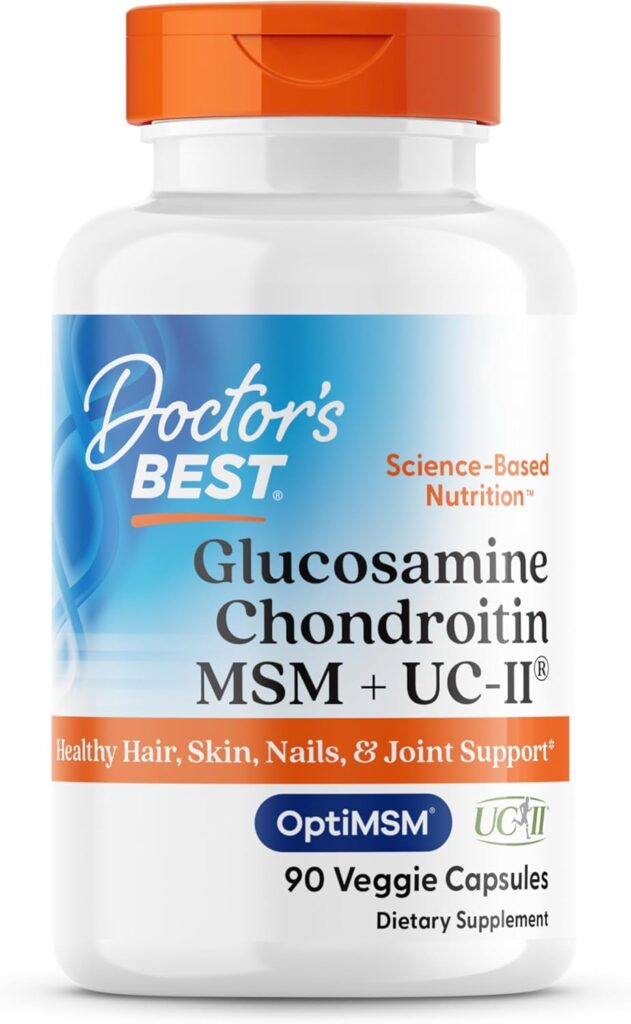
This formula combines all four of the most evidence-supported joint ingredients in one product — glucosamine, chondroitin, MSM, and UC-II — rather than requiring separate purchases. Each daily serving delivers 450mg glucosamine, 320mg chondroitin, 300mg MSM, and 40mg UC-II, matching the dose used in positive UC-II clinical trials. Doctor’s Best has over 35 years in the supplement industry with a strong reputation for rigorous testing.
For anyone who wants comprehensive coverage across multiple joint pain mechanisms without managing four separate bottles, this is the most efficient starting point. Non-GMO, gluten-free, and manufactured to a documented quality standard.
Best UC-II Forward Formula: Durable Joints with UC-II + OptiMSM
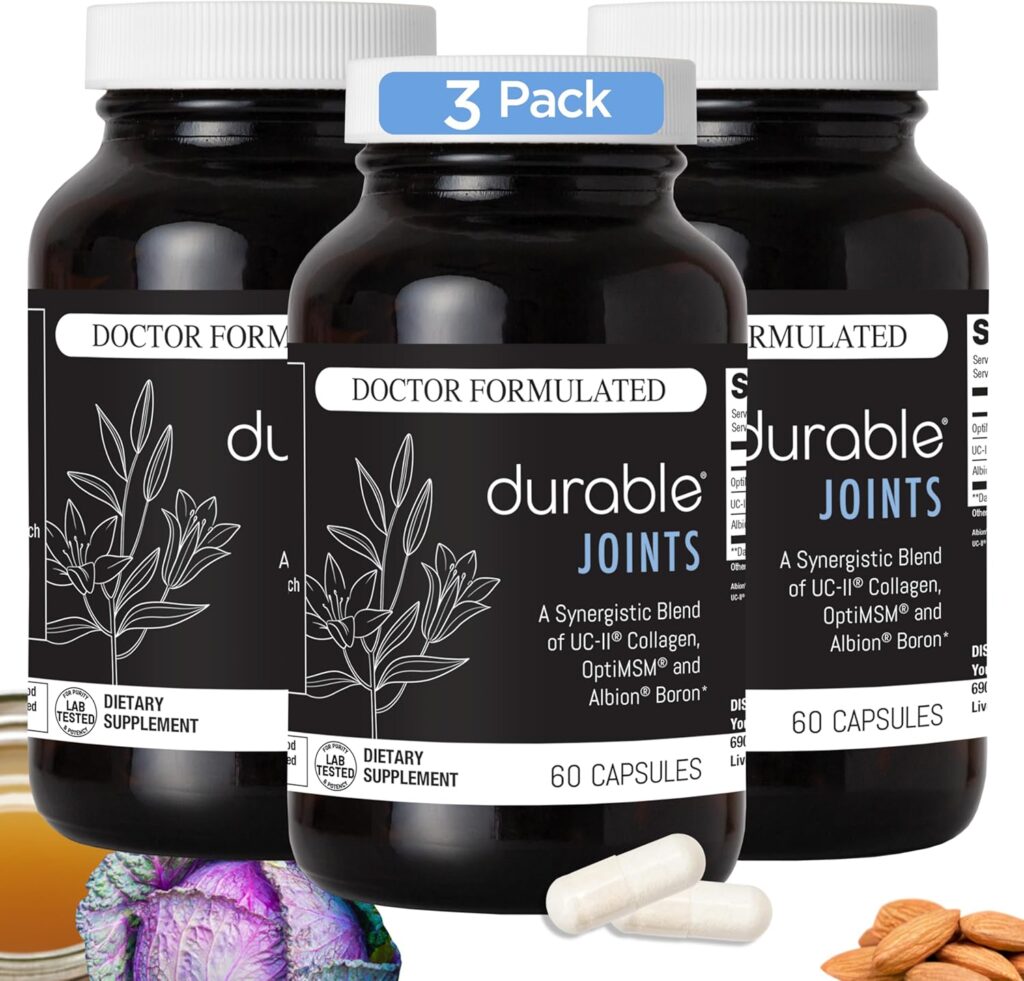
For those who want to prioritize the strongest recent evidence specifically, Durable Joints delivers 40mg of UC-II — the exact dose used in clinical research — alongside 1,500mg of OptiMSM, a highly purified, USA-manufactured form of MSM. The product is explicitly positioned around UC-II’s mechanism (working through immune pathways rather than raw cartilage building blocks) and is doctor-formulated and made in the USA.
This is the pick for anyone who wants to lead with the most promising research rather than a broad-spectrum approach, or who has tried standard glucosamine-chondroitin without meaningful results and wants to try a different mechanism.
Best Anti-Inflammatory: Zazzee Boswellia 65% Boswellic Acid
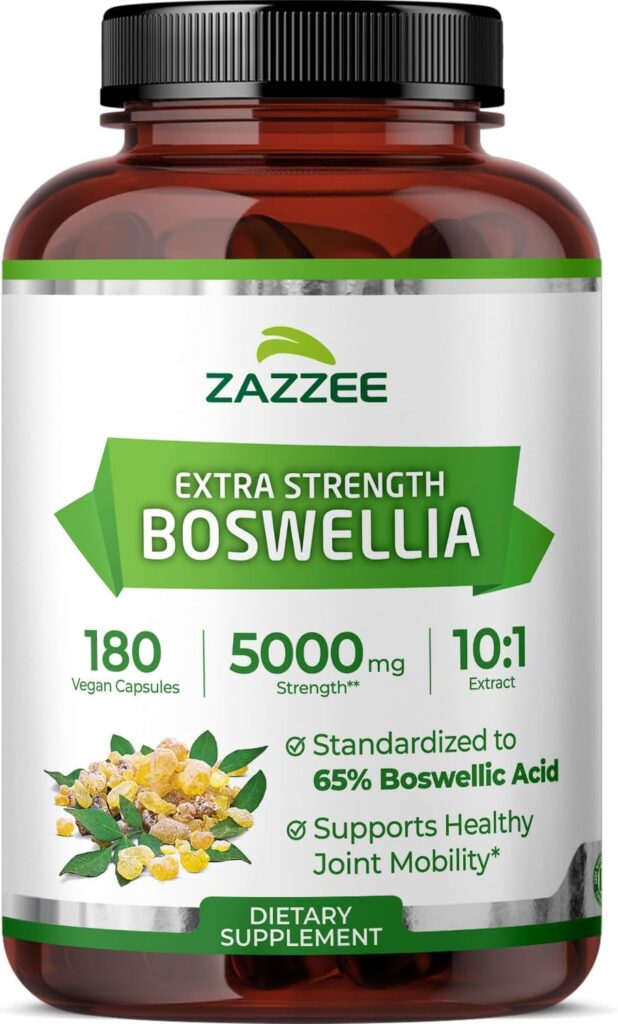
Standardized to 65% boswellic acid across 180 capsules (a 6-month supply at typical dosing), this is the concentrated, properly standardized boswellia extract that the clinical research is built around. USA-manufactured and non-GMO. For anyone whose joint pain has a strong inflammatory component, or who wants to pair boswellia’s 5-LOX mechanism alongside glucosamine-chondroitin or UC-II for broader coverage, this is the standalone option worth adding.
Best Omega-3: Nordic Naturals Ultimate Omega
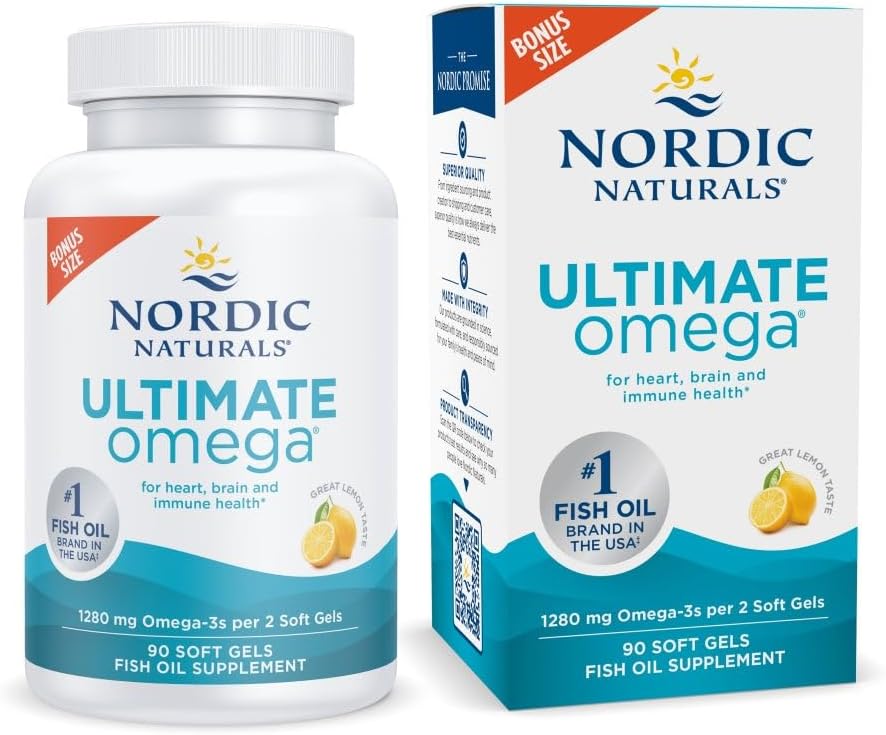
The #1 selling omega-3 brand in the US, delivering 1,280mg of omega-3s per serving in the triglyceride form — the molecular structure naturally found in fish, associated with better absorption than the cheaper ethyl ester form used in many budget fish oils. Third-party tested, sourced from wild-caught fish, and formulated to avoid the “fishy burps” that make many people abandon fish oil supplementation.
For anyone building a comprehensive joint health approach, omega-3s are a reasonable and broadly beneficial addition alongside more joint-specific supplements like UC-II or boswellia.
Lifestyle Factors That Matter as Much as Any Supplement
Weight management: Every pound of excess body weight adds roughly four pounds of pressure on the knees during walking. Modest weight loss produces measurable reductions in knee osteoarthritis pain — a well-established finding independent of any supplement.
Low-impact exercise: Swimming, cycling, and walking strengthen the muscles supporting affected joints without adding excessive impact stress. Movement — done appropriately — supports joint health rather than accelerating damage, a common misconception.
Anti-inflammatory diet: A Mediterranean-style eating pattern rich in vegetables, fatty fish, and olive oil, with reduced processed food and added sugar, supports the same anti-inflammatory goals as many joint supplements. See our herbs for inflammation guide for the full dietary approach.
Strength training: Building muscle around affected joints — particularly the quadriceps for knee pain — provides mechanical support that reduces load on the joint itself.
Frequently Asked Questions
How long do joint supplements take to work?
Most joint supplements require 4–12 weeks of consistent daily use before meaningful improvement is apparent — this isn’t a fast-acting pain reliever category. UC-II and boswellia trials commonly show benefit within 4–8 weeks; glucosamine-chondroitin combinations are typically evaluated over 8–12 weeks or longer. Give any single supplement a genuine trial period before concluding it isn’t working.
Can I take glucosamine, chondroitin, MSM, and UC-II all together?
Yes — many combination products, including the Doctor’s Best formula above, combine all four specifically because they work through different mechanisms. There’s no known negative interaction between them. If building your own stack from individual supplements, watch for cumulative dosing across products to avoid unnecessary excess.
Do I need to stop joint supplements before surgery?
The Arthritis Foundation specifically recommends stopping glucosamine, chondroitin, fish oil, and vitamin E 1–2 weeks before any surgical procedure due to bleeding risk, resuming only after anticoagulant medications have cleared post-surgery. Always inform your surgeon about all supplements you’re taking well before a scheduled procedure.
Is UC-II better than glucosamine and chondroitin?
Comparative research suggests UC-II may provide roughly twice the improvement in joint comfort compared to standard glucosamine-chondroitin, at a much lower daily dose (40mg vs. 1,500mg+). However, glucosamine-chondroitin has decades more research behind it and works through an entirely different mechanism. Rather than choosing one over the other, many people find value in formulas that include both.
Can natural joint supplements reverse cartilage damage?
No current natural supplement has been shown to reverse cartilage loss that has already occurred. The realistic goal for supplements in this category is reducing pain, improving function, and potentially slowing further progression — not regenerating cartilage that’s already been lost. Combined with weight management and appropriate exercise, this can meaningfully improve quality of life even without reversing underlying joint damage.
Final Thoughts
Joint pain supplements have a genuinely more solid evidence base than many wellness categories — but the research is honest about being mixed rather than universally supportive, and that nuance matters for setting realistic expectations. UC-II has the most compelling recent evidence at a remarkably low dose. Boswellia offers the clearest anti-inflammatory mechanism, validated in a 2025 meta-analysis as among the most effective single interventions studied. Glucosamine-chondroitin remains reasonable despite mixed results, particularly for moderate-to-severe pain. And omega-3s provide modest joint benefit alongside broader health support.
For most people, a combination formula like Doctor’s Best Glucosamine Chondroitin MSM + UC-II offers the most efficient way to cover multiple mechanisms at once. Pair any supplement approach with weight management, low-impact exercise, and an anti-inflammatory diet — the combination consistently outperforms any single intervention alone.
For related evidence-based content, see our guides on herbs for inflammation and natural remedies for eczema for other conditions where inflammation plays a central role.
This article is for informational purposes only and does not constitute medical advice. Always consult a qualified healthcare provider before starting any supplement, particularly if you take blood thinners, have a shellfish allergy, or have a surgery scheduled.