Medical Disclaimer: This article is for informational purposes only and is not a substitute for professional medical advice, diagnosis, or treatment. Always consult a qualified healthcare provider before starting any new remedy, especially if you are pregnant, immunocompromised, or managing a chronic condition.
Disclosure: This article contains affiliate links. If you purchase through these links, we may earn a small commission at no extra cost to you. We only recommend products we genuinely believe in.
You Have the Flu. Now What?
The flu hits fast. One afternoon you’re fine; the next morning your whole body aches, you have a 101°F fever, and getting off the couch feels impossible. Unlike a common cold, influenza is genuinely brutal — and most people want relief now, not in a week.
Natural flu remedies won’t cure the virus. Nothing over-the-counter will. But the right ones can shorten your misery, reduce symptom severity, and support your immune system while your body does the actual work. The wrong ones are just expensive placebos.
This guide cuts through the noise. Every remedy below is graded on real evidence — not folklore and not hype.
How to Tell It’s Actually the Flu (Not a Cold)
This matters because the approach is slightly different. The flu comes on suddenly, not gradually. Key markers according to the CDC include:
- Fever of 100°F–104°F (though not everyone runs a fever)
- Severe body aches and chills
- Extreme fatigue — “hit by a truck” exhaustion
- Dry cough and headache
- Less runny nose than a cold
If you’re within 48 hours of symptom onset, prescription antivirals like oseltamivir (Tamiflu) are worth asking your doctor about — they can shorten the illness by 1–2 days. Natural remedies work best alongside that window, not instead of it.
Natural Flu Remedies Ranked by Evidence
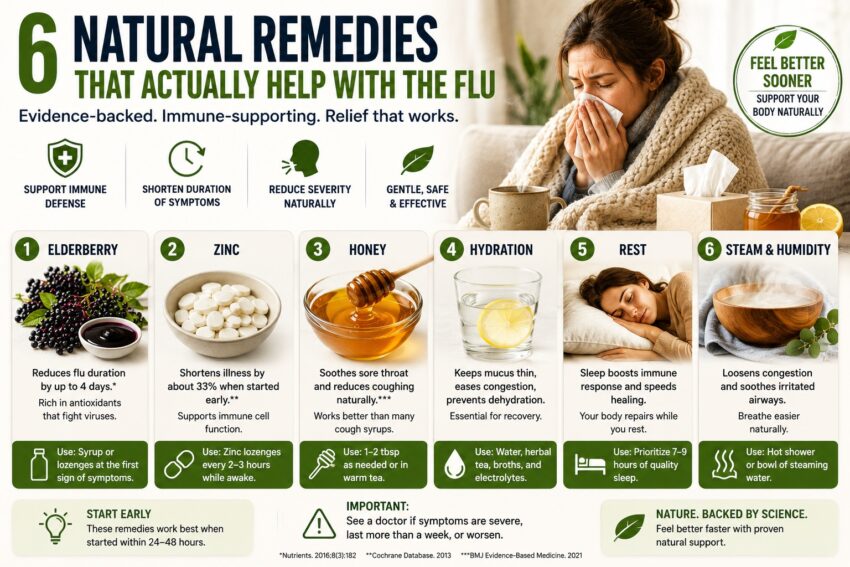
1. Elderberry (Sambucus nigra)
Elderberry is the most evidence-backed natural remedy for flu currently available. A 2016 randomized controlled trial published in Nutrients found that elderberry supplementation reduced flu duration by an average of four days compared to placebo. A 2019 meta-analysis in Complementary Therapies in Medicine confirmed it substantially reduces upper respiratory symptoms.
The active compounds — anthocyanins and flavonoids — appear to inhibit viral replication and modulate immune response. It won’t stop you getting the flu, but it can get you through it faster.
How to use it: Elderberry syrup or lozenges at the first sign of symptoms. Standard doses in studies range from 15ml syrup four times daily for adults. Look for standardized products rather than random herbal blends.
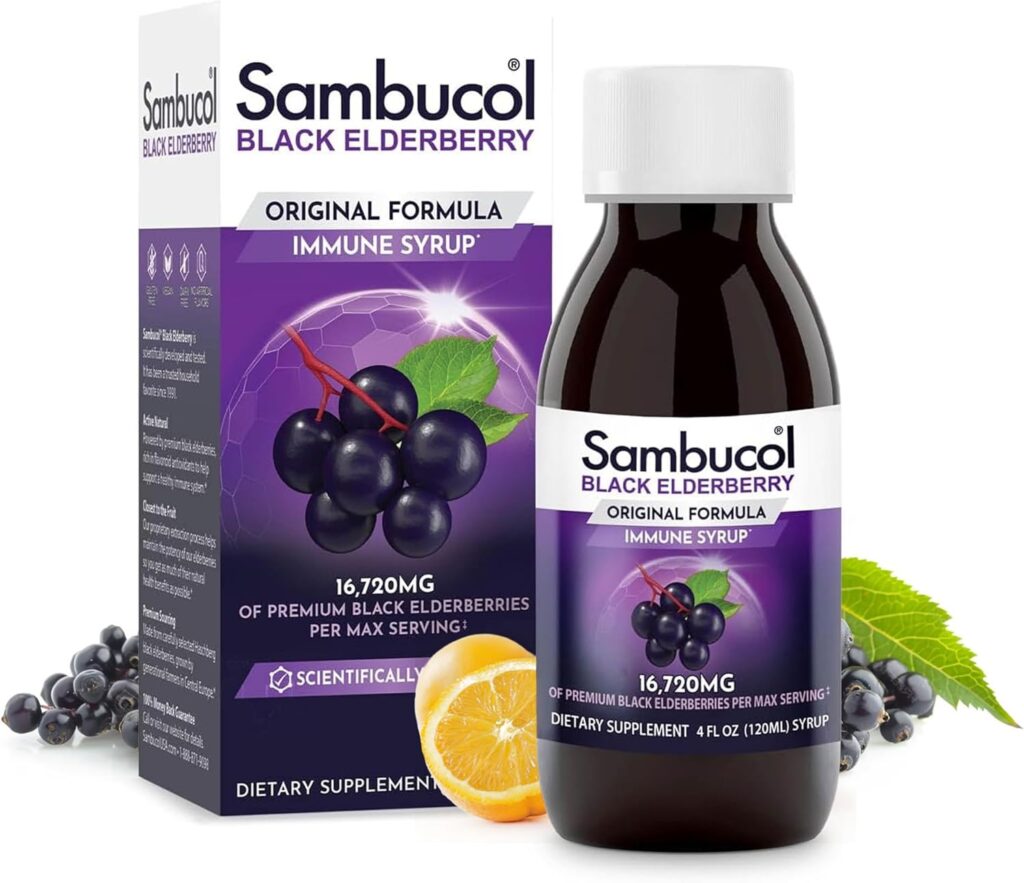
A well-reviewed option is Sambucol Black Elderberry Syrup, which uses the same strain studied in clinical trials.
2. Zinc
Zinc is one of the few supplements with consistent clinical trial support for respiratory illness. A Cochrane review found that zinc lozenges or syrup started within 24 hours of symptom onset reduced cold and flu duration by about 33%. The key is the form — zinc acetate and zinc gluconate lozenges work. Zinc sulfate capsules have weaker evidence for acute illness.
Don’t overdo it. The NIH’s upper tolerable intake for adults is 40mg/day. More than that long-term can deplete copper and cause nausea.
How to use it: Zinc lozenges every 2–3 hours while awake for the first few days. Not for use in children under 1 year. Don’t use zinc nasal sprays — the FDA warned against these due to reports of permanent smell loss.
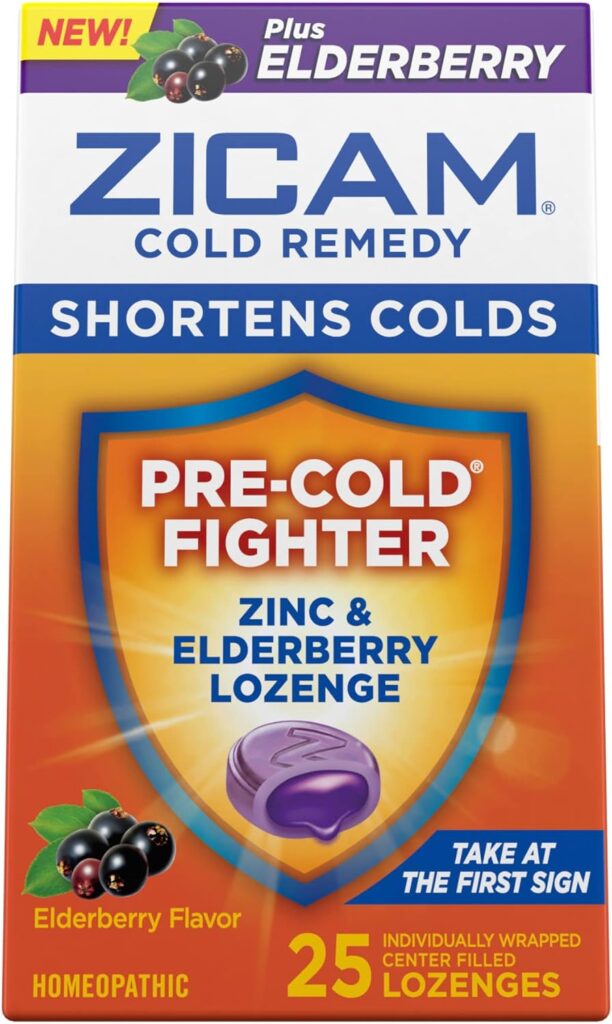
Zicam Zinc Lozenges with Elderberry combines both top-tier remedies in one convenient product.
3. Honey
Raw honey has solid evidence for soothing sore throats and suppressing cough — two of the flu’s most miserable symptoms. A 2021 meta-analysis in BMJ Evidence-Based Medicine found honey was more effective than usual care (including antihistamines and dextromethorphan) for upper respiratory symptoms.
Manuka honey has antimicrobial properties due to its high methylglyoxal content, but regular raw honey works too. The mechanism involves coating the throat and stimulating saliva production, which eases irritation.
How to use it: One to two tablespoons straight or stirred into warm water or herbal tea. Do not give honey to children under 12 months — risk of infant botulism. If you’re looking for herbal teas that pair well with honey, check out our guide to herbal drinks for sore throat.
4. Hydration (Seriously — This One Matters Most)
This sounds obvious, but most people don’t drink nearly enough when they’re sick. Dehydration makes every flu symptom worse — it thickens mucus, increases headache severity, and slows immune function.
The flu causes fever (which increases fluid loss through sweating) and often reduces appetite and thirst. The result: you’re losing more fluid and replacing less.
What to drink:
- Plain water — the baseline
- Warm broths (chicken broth in particular has anti-inflammatory compounds per a study in Chest)
- Herbal teas with honey
- Diluted electrolyte drinks if you’ve been sweating heavily
- Avoid alcohol and caffeine — both are dehydrating
5. Rest (Your Immune System’s Most Powerful Tool)
Sleep is when your immune system does its best work. During sleep, your body produces and releases cytokines — proteins that target infection and inflammation. Cutting sleep short impairs this process directly.
A study published in Archives of Internal Medicine found that people who slept fewer than seven hours per night were nearly three times more likely to develop a cold after viral exposure than those who slept eight or more hours. With the flu, you’re already infected — but rest determines how fast you recover.
Stay home, stay in bed, and don’t try to power through. It extends illness, not shortens it.
6. Steam and Humidity
Breathing warm, moist air temporarily relieves congestion and soothes inflamed airways. It doesn’t kill the virus, but it makes breathing easier and helps drain mucus, reducing pressure headaches and sinus pain.
Options include a hot shower, a bowl of steaming water with a towel over your head (breathe carefully — don’t get too close), or a cool-mist humidifier in your room. The CDC recommends maintaining indoor humidity between 40–60% during respiratory illness.
Adding a few drops of eucalyptus essential oil to steam can provide additional airway-opening relief — eucalyptol is a real bronchodilator compound. Just don’t use eucalyptus products directly on children under 2.
7. Ginger
Ginger has genuine anti-nausea and anti-inflammatory properties backed by clinical research. For flu sufferers who experience nausea, vomiting, or stomach upset alongside respiratory symptoms, ginger tea is genuinely useful.
Gingerols and shogaols — the active compounds — have demonstrated antiviral activity in lab studies, though clinical trials on flu specifically are limited. Where ginger truly earns its place is symptom management: nausea relief is well-established. Our full guide on natural remedies for nausea goes deeper if that’s your main symptom.
How to use it: Fresh ginger root steeped in hot water for 10 minutes, with honey and lemon. Two to three cups per day. Ginger supplements (250–500mg capsules) are an alternative if the taste isn’t for you.
8. Vitamin C
Here’s the honest truth: vitamin C doesn’t prevent the flu or dramatically shorten it in most people. The Cochrane Collaboration has reviewed dozens of trials and found that supplementation reduces duration by about 8% in adults — roughly half a day on a week-long illness.
That said, people who are severely deficient in vitamin C do benefit more, and it’s essential for immune function. Getting it from food (citrus, bell peppers, broccoli, kiwi) is the smart play. Megadosing above 2,000mg/day causes GI distress and doesn’t add extra benefit.
9. Garlic
Garlic contains allicin, a compound with demonstrated antiviral and antimicrobial properties in lab settings. A 2001 RCT published in Advances in Therapy found that daily allicin supplementation reduced cold incidence significantly — but flu-specific clinical trials are sparse.
The practical problem: allicin is unstable and largely destroyed by cooking or processing. Raw garlic is the most potent form, though aged garlic extract supplements preserve some activity. Adding raw garlic to broth or eating it raw with food is a reasonable (if pungent) addition to your flu recovery plan.
10. Echinacea
The evidence here is genuinely mixed. Some trials show modest benefit for reducing flu duration; others show no effect. A 2015 Cochrane review of 24 trials concluded that some preparations “may reduce the incidence and duration” of the common cold — but results varied significantly by preparation type and study design.
If you use it, start at the first sign of symptoms and use a standardized extract (Echinacea purpurea aerial parts or root). Don’t use continuously for more than 10 days. People with autoimmune conditions should check with their doctor first.
Quick Comparison: How the Top Remedies Stack Up
| Remedy | Evidence Strength | Best For | Start Time |
|---|---|---|---|
| Elderberry | Strong (RCTs + meta-analysis) | Shortening duration | First 24–48 hrs |
| Zinc lozenges | Strong (Cochrane review) | Shortening duration | First 24 hrs |
| Honey | Good (RCTs for cough/sore throat) | Cough, sore throat | Anytime |
| Hydration | Fundamental (physiological) | All symptoms | Immediately |
| Rest/sleep | Fundamental (immunological) | Recovery speed | Immediately |
| Steam/humidity | Moderate (symptom relief) | Congestion, breathing | Anytime |
| Ginger | Good for nausea; moderate for flu | Nausea, inflammation | Anytime |
| Vitamin C | Weak for flu specifically | General immune support | Anytime |
| Garlic | Moderate (lab + some trials) | General antiviral support | Anytime |
| Echinacea | Mixed | Early-stage illness | First 24 hrs |
What Doesn’t Work (Skip These)
Antibiotics: The flu is a virus. Antibiotics do nothing against viruses. Using them unnecessarily contributes to antibiotic resistance — a serious public health problem. Doctors should not prescribe them for flu, and you shouldn’t ask for them.
Oscillococcinum: This is a homeopathic product sold widely in US pharmacies. A Cochrane review found it had no reliable evidence for preventing or treating flu beyond placebo. Save your money.
Vitamin D megadosing: Maintaining adequate vitamin D levels year-round supports immune function. Taking huge doses when you’re already sick doesn’t. Toxicity risk at very high doses is real.
Alcohol-based “hot toddies”: Folklore. Alcohol impairs immune function, disrupts sleep quality, and dehydrates you. The honey and lemon in a hot toddy are doing what little work exists. Skip the whiskey.
Building a Natural Flu Recovery Routine
The best approach stacks the evidence-backed remedies together rather than relying on any single one. Here’s a simple day-one protocol when flu hits:
- Get tested if possible — knowing it’s flu (not COVID or strep) helps guide decisions
- Call your doctor within 48 hours to discuss antivirals if high-risk
- Start elderberry syrup immediately — 15ml four times daily
- Use zinc lozenges every 2–3 hours while awake
- Hydrate aggressively — aim for 8–10 cups of fluids daily
- Rest fully — no “working from bed”
- Add ginger-honey tea two to three times daily for comfort
- Run a humidifier in your bedroom overnight
For sinus-related symptoms that often linger after the main flu has passed, our guide on herbs for sinus relief covers what’s worth trying. And if a persistent cough develops into something that feels chest-based, take a look at herbal supplements for bronchitis for targeted options.
Natural Flu Remedies for Kids: What’s Safe
Children need adjusted guidance. The AAP (American Academy of Pediatrics) has specific warnings for flu management in kids:
- No aspirin for children or teenagers with flu — risk of Reye’s syndrome, a rare but serious condition
- No honey for infants under 12 months
- No zinc nasal sprays at any age
- Elderberry is generally considered safe for children over 1 year, but consult your pediatrician first
- Hydration and rest apply the same as adults
- Children under 5, especially under 2, should see a doctor promptly with flu symptoms
When to See a Doctor
Natural remedies are supportive care — not a replacement for medical treatment when it’s needed. Seek immediate medical attention if you or someone in your care experiences any of the following:
- Difficulty breathing or shortness of breath
- Persistent chest pain or pressure
- Confusion or altered mental status
- Severe or persistent vomiting preventing fluid intake
- Fever above 103°F that doesn’t respond to medication
- Symptoms that improve then return with fever and worsening cough (can signal secondary bacterial pneumonia)
- No improvement after 7–10 days
- In children: fast or labored breathing, bluish lips, extreme irritability, not waking or interacting
High-risk groups — adults over 65, pregnant women, people with asthma, diabetes, heart disease, or compromised immune systems — should contact a doctor early, not wait to see if natural remedies are enough. The CDC recommends antiviral treatment for these groups regardless of symptom severity.
Frequently Asked Questions
Can natural remedies actually cure the flu?
No. Nothing cures the flu — your immune system clears it. Natural remedies can shorten duration, relieve specific symptoms, and support immune function. Elderberry and zinc have the strongest evidence for reducing how long you’re sick.
How quickly does elderberry work for flu?
Clinical studies show elderberry taken within the first 24–48 hours of symptoms reduces duration by an average of 4 days. It works best when started early — don’t wait until day three to begin.
Is chicken soup actually medicine?
Surprisingly, there’s something to it. A 2000 study in the journal Chest found chicken soup inhibited neutrophil migration, which may reduce upper respiratory inflammation. It’s also hot broth — which hydrates, soothes, and delivers sodium. It’s not a cure, but it’s genuinely helpful comfort food.
Does vitamin C prevent the flu?
Not really. Multiple large meta-analyses show it doesn’t prevent flu in the general population and only modestly shortens it. Where it helps more is in people who are severely deficient or under intense physical stress (like marathon runners). Focus on dietary sources rather than high-dose supplements.
Can I use multiple natural remedies together?
Most of the remedies above are safe to combine — elderberry, zinc, honey, hydration, rest, and ginger tea are all compatible. The exceptions: don’t exceed zinc’s upper limit (40mg/day for adults), and check with your doctor if you’re on immunosuppressants before taking elderberry or echinacea.
How long does the flu usually last?
According to the CDC, most healthy adults recover in 5–7 days, though cough and fatigue can linger for up to two weeks. Fever and body aches typically resolve within 3–5 days. Starting the right remedies early — especially elderberry and zinc — can push recovery toward the shorter end of that range.
Summary: The Natural Flu Remedy Playbook
When the flu hits, your two most powerful natural flu remedies are the ones most people undervalue: rest and hydration. They’re not sexy, but they’re the foundation everything else builds on.
Layer on elderberry syrup and zinc lozenges in the first 24–48 hours. Add ginger-honey tea for comfort. Run a humidifier. Eat warm broth. Skip the antibiotics, the homeopathic products, and the whiskey.
If you’re high-risk — older adult, pregnant, immunocompromised, or managing a chronic illness — call your doctor early. Antivirals work. Natural remedies are a complement to good care, not a substitute for it. The flu is genuinely dangerous for some people, and recognizing that line matters.
For related support, our guides on natural remedies for nausea and herbal drinks for sore throat cover specific flu symptoms in more depth if those are hitting hardest.
Medical Disclaimer: The information in this article is intended for general educational purposes only. It is not a substitute for professional medical advice, diagnosis, or treatment. If you are experiencing severe symptoms or belong to a high-risk group, seek medical care promptly. Always consult your healthcare provider before starting any supplement, especially if you are pregnant, nursing, or taking medications.