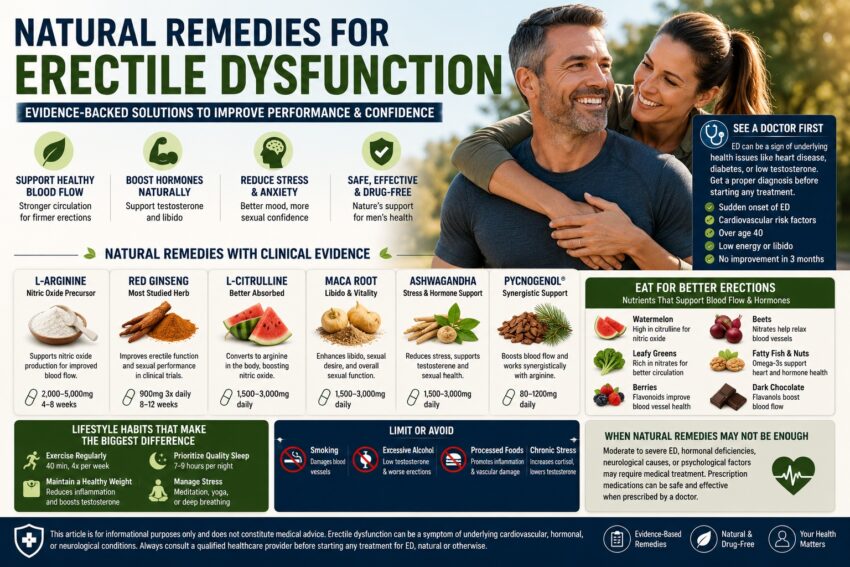
This article is for informational purposes only and does not constitute medical advice. Erectile dysfunction can be a symptom of underlying cardiovascular, hormonal, or neurological conditions. Always consult a qualified healthcare provider — ideally a urologist or men’s health specialist — before starting any treatment for ED, natural or otherwise.
See a Doctor First — ED Is Often a Warning Sign
Erectile dysfunction is the most common sexual health complaint in men — and also one of the most clinically informative symptoms a doctor can receive. That’s because ED and cardiovascular disease share the same underlying mechanism: impaired endothelial function and reduced blood flow. ED frequently precedes heart disease by 2–5 years in men with shared risk factors, making it a genuine early warning sign of vascular health, not just a bedroom inconvenience.
The Massachusetts Male Aging Study — the largest epidemiological study of ED — found that men with ED had significantly higher rates of cardiovascular disease, hypertension, and diabetes than age-matched controls. This doesn’t mean every man with ED has heart disease. It means ED warrants medical evaluation before self-treating, not after.
See a doctor if:
- ED developed suddenly (suggests psychological or acute hormonal cause)
- You haven’t had a cardiovascular risk assessment in the past year
- You have risk factors for heart disease (smoking, hypertension, diabetes, high cholesterol, obesity, family history)
- You’re over 40 and haven’t discussed ED with a physician
- Natural remedies haven’t improved things after 3 months of consistent use
- ED is accompanied by low energy, loss of libido, or depression (possible hypogonadism)
Natural remedies have genuine value for ED — they work through the same mechanisms as some pharmaceutical approaches, just less potently. They’re worth using. But they work best alongside medical evaluation, not instead of it.
What Causes ED? Understanding the Mechanism
Erection is primarily a vascular event. Sexual arousal triggers the release of nitric oxide (NO) in penile tissue, which causes smooth muscle to relax and allows blood to flow in. Any disruption to this pathway — reduced NO production, poor vascular function, nerve damage, hormonal insufficiency — can cause or worsen ED.
Vascular (most common — 50–70% of cases): Atherosclerosis, hypertension, diabetes, and metabolic syndrome all damage endothelial function and reduce NO production and blood flow. This is where natural vascular-supportive remedies (arginine, citrulline, pycnogenol) have the most direct relevance.
Hormonal: Low testosterone reduces libido and can impair erectile function. Thyroid dysfunction and elevated prolactin can also cause ED. These require blood tests and, if confirmed, medical treatment — herbal adaptogens may support hormonal function but don’t replace medical management of true hypogonadism.
Neurological: Diabetes, spinal cord injury, prostate surgery, and multiple sclerosis can damage the nerves controlling erectile function. Natural remedies have limited effectiveness for neurogenic ED.
Psychological: Anxiety, depression, relationship stress, and performance anxiety are significant contributors — particularly in younger men. Natural remedies that reduce anxiety (ashwagandha, exercise, sleep) address this pathway directly.
Medication-induced: SSRIs, beta-blockers, diuretics, and several other medication classes commonly cause ED as a side effect. If this is the cause, the solution starts with the prescribing doctor, not the supplement aisle.
Most cases of ED in men over 40 involve multiple factors simultaneously — vascular and psychological being the most common combination.
Natural Remedies for ED With Real Evidence
L-Arginine — Nitric Oxide Precursor
L-arginine is the direct precursor to nitric oxide — the molecule that triggers smooth muscle relaxation and blood flow in penile tissue. This isn’t theoretical: the mechanism directly supports erectile function, and clinical evidence backs it up.
A meta-analysis published in the Journal of Sexual Medicine reviewed 10 randomised controlled trials and found that L-arginine supplementation significantly improved erectile function scores compared to placebo, with stronger effects at higher doses (3,000mg+ daily). The improvement was most pronounced in men with mild to moderate ED and vascular risk factors — exactly the population where NO production is most compromised.
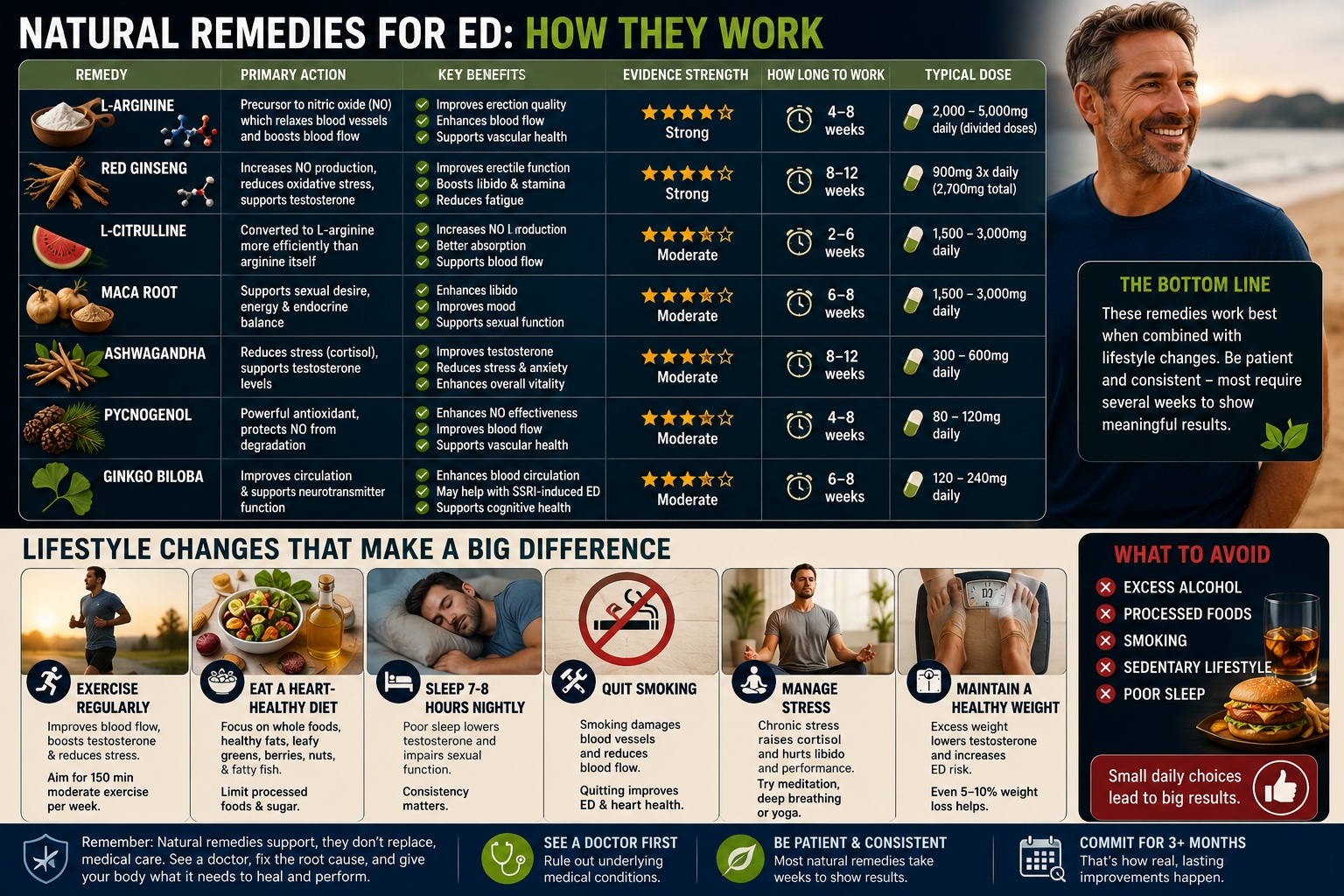
How to use: 2,000–5,000mg daily in divided doses. Takes 4–8 weeks for meaningful effects. Works significantly better when combined with pycnogenol (see below).
Safety: Avoid if you have herpes simplex virus (arginine may promote replication). Not recommended alongside PDE5 inhibitors (sildenafil, tadalafil) or nitrate medications without medical guidance — both act on similar pathways and the combination may cause excessive blood pressure drop.
Red Ginseng (Korean Ginseng / Panax ginseng) — Most Studied Herb
Panax ginseng (Korean/red ginseng) has the most robust clinical evidence of any herb for erectile dysfunction. A systematic review published in the British Journal of Clinical Pharmacology identified seven randomised controlled trials and concluded that red ginseng significantly improved International Index of Erectile Function (IIEF) scores compared to placebo — with a meaningful effect size across multiple studies.
The active ginsenosides promote nitric oxide synthesis in endothelial cells, reduce oxidative stress in penile tissue, and have mild testosterone-supporting properties. Red ginseng specifically (the heat-processed form) appears more effective than white ginseng for ED.
How to use: Standardised extract at 900mg three times daily (2,700mg total), or 1,000–3,000mg daily of standardised red ginseng root. Allow 8–12 weeks for full effect. Cycle use — 6 weeks on, 2 weeks off.
Safety: Stimulating — can cause insomnia and irritability in some people. Not recommended with blood thinners, diabetes medications, or MAO inhibitors without medical guidance. Avoid in hypertension without medical supervision.
L-Citrulline — Better Absorbed Than Arginine
L-citrulline is an amino acid found abundantly in watermelon. In the body, it’s converted to L-arginine, which then produces nitric oxide. The key advantage over taking arginine directly: citrulline survives first-pass metabolism through the gut and liver more completely, resulting in higher blood arginine levels from the same dose.
A 2011 pilot study published in Urology found that L-citrulline supplementation (1,500mg daily) significantly improved erection hardness scores in men with mild ED compared to placebo — with 50% of participants moving from mild to normal erectile function.
How to use: 1,500–3,000mg daily. Can be taken in a single dose. Citrulline malate (a common supplement form) is equivalent.
Safety: Excellent safety profile. No significant drug interactions at standard doses. One of the safer ED supplements — a reasonable starting point for men who want to try a natural approach first.
Maca Root — Libido and Sexual Function
Maca (Lepidium meyenii) is a Peruvian root vegetable with a long traditional history as an aphrodisiac and fertility tonic. Its primary effects appear to be on libido, sexual desire, and psychological aspects of sexual function rather than the vascular mechanics of erection itself.
A systematic review in BMC Complementary Medicine and Therapies found that maca significantly improved sexual dysfunction and sexual desire in men compared to placebo. Importantly, one trial found maca specifically improved sexual dysfunction in men taking SSRIs — addressing one of the most common causes of medication-induced ED.
How to use: 1,500–3,000mg daily of gelatinised maca powder. Allow 6–8 weeks.
Safety: Maca is food — it’s eaten as a vegetable in Peru. Generally well-tolerated with no significant known drug interactions. Men with thyroid conditions should use caution — maca contains glucosinolates that may affect thyroid function.
Ashwagandha — Stress-Related and Hormonal ED
Ashwagandha (Withania somnifera) is the most studied adaptogen for male hormonal and sexual health. Its relevance to ED is threefold: it reduces cortisol (chronic stress suppresses testosterone and impairs erectile function), it has demonstrated testosterone-supporting effects in clinical trials, and it directly reduces anxiety — the primary driver of psychogenic ED.
A double-blind, randomised controlled trial published in the American Journal of Men’s Health found that men taking 600mg of ashwagandha root extract daily experienced significantly higher testosterone levels, improved sperm quality, and reduced stress hormones compared to placebo over 8 weeks.
How to use: 300–600mg of standardised extract (5% withanolides) daily. Takes 8–12 weeks for meaningful hormonal effects. Take with food.
Safety: Avoid during pregnancy. May interact with thyroid medications, immunosuppressants, and sedatives. Not recommended in autoimmune conditions without medical guidance.
Pycnogenol — Synergistic with L-Arginine
Pycnogenol is a standardised extract from French maritime pine bark with potent antioxidant and endothelial-protective properties. On its own, its effect on ED is modest. Combined with L-arginine, the synergy is clinically significant.
A randomised controlled trial in the Journal of Sex and Marital Therapy found that combining pycnogenol (80mg twice daily) with L-arginine (3g daily) produced significant improvements in erectile function — 92.5% of participants experienced normal erections after 3 months. The combination appears to work by protecting the nitric oxide produced by arginine from oxidative degradation.
How to use: 80–120mg daily, most effectively combined with L-arginine (3g daily) or L-citrulline (1.5g daily). Allow 3 months for full effect.
Safety: Well-tolerated. May reduce blood pressure modestly — monitor if on antihypertensives. Avoid with immunosuppressants.
Ginkgo Biloba — Blood Flow and Medication-Induced ED
Ginkgo biloba improves peripheral blood flow and has mild phosphodiesterase-inhibiting properties. Its primary relevance for ED is in medication-induced cases — particularly SSRI-induced sexual dysfunction, where ginkgo has shown meaningful benefit in several clinical trials. A study in the Journal of Sex and Marital Therapy found ginkgo biloba improved sexual function in both men and women on SSRIs.
How to use: 120–240mg daily of standardised extract (24% ginkgo flavonoglycosides). Allow 6–8 weeks.
Safety: Anticoagulant properties — avoid with blood thinners (warfarin, aspirin at high doses, clopidogrel). Avoid if history of epilepsy. Discontinue 2 weeks before surgery.
Dietary Approaches That Support Erectile Function
The Mediterranean diet has the strongest dietary evidence for ED. A prospective study in the Journal of Sexual Medicine found that adherence to a Mediterranean diet significantly reduced ED risk in men with metabolic syndrome. The diet’s anti-inflammatory, vascular-protective effects — olive oil, fish, nuts, vegetables — directly support endothelial function and NO production.
Flavonoid-rich foods — berries (blueberries, strawberries), citrus, dark chocolate, and leafy greens — are consistently associated with reduced ED risk in large epidemiological studies. A Harvard study of over 25,000 men found that men with the highest flavonoid intake had a 19% lower risk of ED than those with the lowest.
Watermelon is the richest dietary source of citrulline — 150–200mg per cup of flesh. Less than therapeutic supplement doses but meaningful as a dietary contribution.
Leafy greens and beets are high in dietary nitrates, which the body converts to NO via a different pathway than arginine — providing complementary vascular support. Arugula, spinach, celery, and beets are the highest-nitrate foods.
Limit: Processed foods, refined carbohydrates, excessive alcohol, and saturated fat. Each promotes inflammation, endothelial dysfunction, and metabolic syndrome — the primary vascular drivers of ED.
Lifestyle Changes With the Strongest Evidence
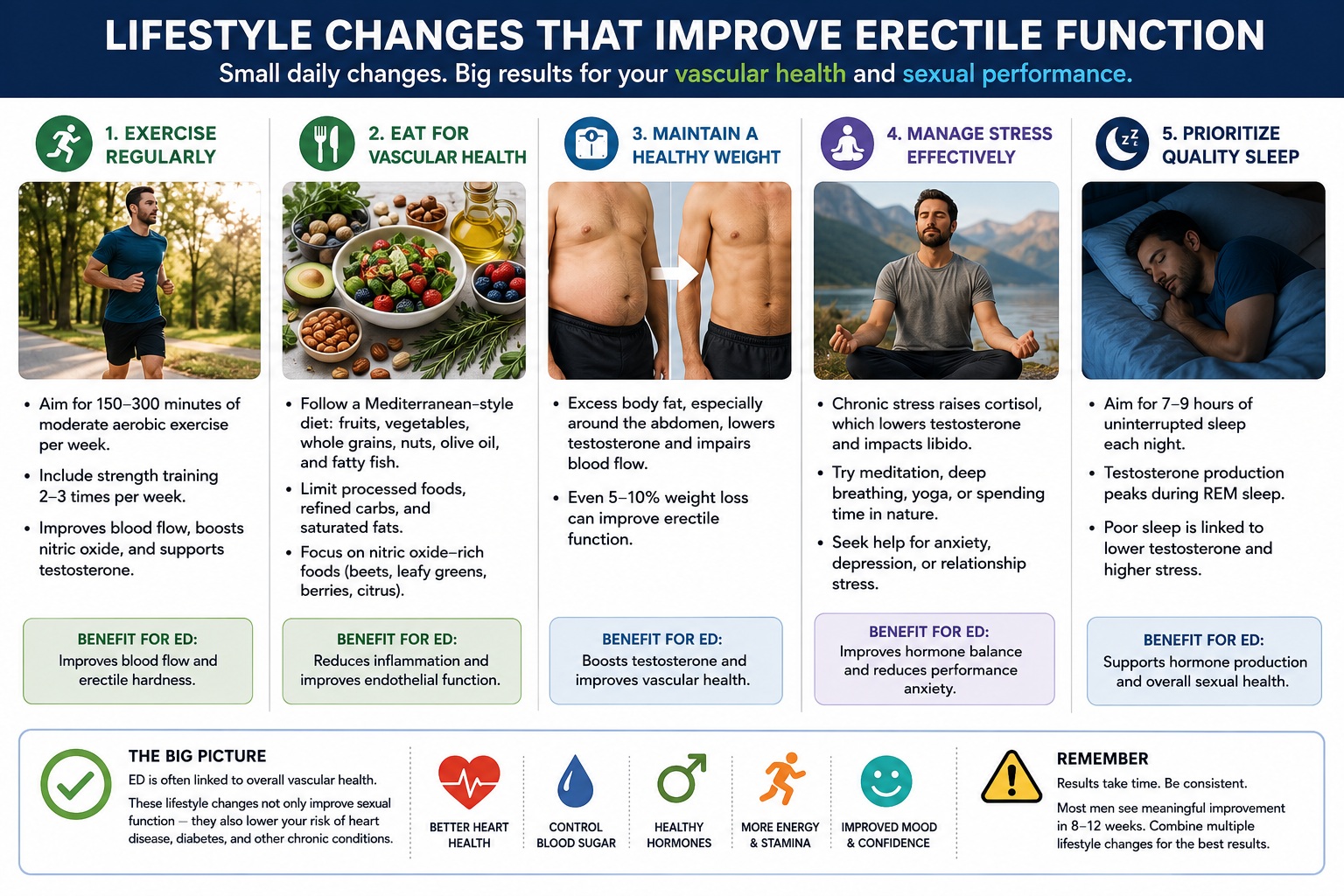
Exercise is the single most evidence-backed natural intervention for ED. A meta-analysis in the Journal of Sexual Medicine found that aerobic exercise significantly improved erectile function — with effects comparable to sildenafil in men with mild to moderate vascular ED. 40 minutes of moderate-intensity aerobic exercise four times per week produced meaningful improvements in IIEF scores within 6 months.
Weight loss has dramatic effects if applicable. A randomised controlled trial in JAMA found that obese men who lost weight through diet and exercise experienced a 31% improvement in sexual function compared to no improvement in the control group. Visceral adiposity suppresses testosterone and promotes inflammation directly relevant to erectile function.
Sleep. Testosterone production peaks during sleep; men sleeping fewer than 6 hours per night have measurably lower testosterone than those sleeping 7–9 hours. Addressing sleep apnea specifically has been shown to improve ED in men with both conditions.
Smoking cessation directly improves vascular endothelial function and blood flow. Men who quit smoking show measurable improvements in erectile function within months — the vascular damage from smoking is partially reversible, particularly in younger men.
Alcohol reduction. Heavy alcohol use is a direct suppressant of erectile function and testosterone. Reducing to moderate intake (1–2 drinks/day maximum) or below is one of the faster-acting lifestyle interventions.
Stress management — particularly for psychogenic ED — meaningfully improves erectile function. Mindfulness-based stress reduction, cognitive behavioural therapy, and regular meditation have clinical evidence for improving sexual function in men where psychological factors contribute significantly.
Natural Remedies to Approach With Caution
DHEA supplementation is sometimes recommended for ED related to low DHEA levels, but it’s a hormone precursor that can convert to oestrogen as well as testosterone. Don’t use it without a baseline blood test confirming deficiency, and consider medical supervision.
Yohimbe (yohimbine) has FDA-supported evidence for ED but comes with a significant safety profile: elevated blood pressure, anxiety, tachycardia, and insomnia are common. The therapeutic window is narrow. Not appropriate for men with cardiovascular disease, anxiety disorders, or on antidepressants. Only consider under medical supervision.
OTC testosterone boosters — the vast majority of proprietary “T-booster” blends have minimal clinical evidence for meaningfully raising testosterone. Ashwagandha and zinc are the exceptions. If you suspect true hypogonadism, the appropriate path is a blood test and, if confirmed, medical treatment.
What Doesn’t Work — Saving You Time and Money
Zinc alone — only improves ED if you’re actually zinc deficient. Most men in developed countries with a normal diet are not. Additional zinc won’t raise testosterone in men with normal levels.
Horny goat weed (epimedium) — contains icariin, which inhibits PDE5 in cell studies. Human clinical trial evidence is essentially absent. Theoretically plausible, practically unproven in humans.
Tribulus terrestris — extremely popular in supplement marketing, essentially absent in clinical evidence. A systematic review found no significant effect on testosterone, libido, or erectile function compared to placebo in men with normal testosterone. Avoid.
Most proprietary ED supplement blends — typically combine several herbs in below-therapeutic doses, relying on placebo effect and the natural resolution of temporary ED episodes. The supplements with actual evidence (arginine, citrulline, red ginseng, pycnogenol) are better purchased individually at therapeutic doses.
When Natural Remedies Aren’t Enough
Natural remedies work best for mild to moderate ED with a vascular or stress-related component, in men willing to make meaningful lifestyle changes alongside supplementation. For moderate to severe ED, neurogenic ED, or ED related to significant hormonal deficiency, they are unlikely to be sufficient on their own.
Prescription PDE5 inhibitors (sildenafil, tadalafil, vardenafil) work through the same NO/cGMP pathway as many natural remedies — just more potently and reliably. For men on nitrates or alpha-blockers, PDE5 inhibitors are contraindicated — medical evaluation is essential before any ED treatment.
If testosterone is low on blood testing, testosterone replacement therapy addresses the root cause rather than the symptom. If psychological factors are significant — particularly performance anxiety, which creates a self-reinforcing cycle — sex therapy or CBT with a psychologist specialising in sexual health is the most evidence-based intervention for psychogenic ED.
Frequently Asked Questions
What is the most effective natural remedy for ED?
The combination with the strongest clinical evidence is L-arginine (3g/day) plus pycnogenol (80–120mg/day) — a randomised controlled trial found 92.5% of participants experienced normal erections after 3 months. Red ginseng is the most studied single herb with consistent RCT evidence across multiple trials. Alongside these, aerobic exercise 4× per week has evidence comparable to mild PDE5 inhibitors. No single natural remedy matches prescription medication in potency, but the combination of exercise, diet, arginine/citrulline, and red ginseng addresses the core mechanisms meaningfully.
How long do natural remedies for ED take to work?
Nitric oxide precursors (arginine, citrulline) begin having effects within 2–4 weeks but reach full effect at 6–8 weeks. Red ginseng takes 8–12 weeks. Ashwagandha takes 8–12 weeks for hormonal effects. Lifestyle changes (exercise, weight loss) show meaningful improvement in 3–6 months. Plan for a minimum 3-month trial before evaluating any natural approach.
Can stress cause ED?
Yes — significantly. The sympathetic nervous system (fight-or-flight response) directly inhibits erection. Chronic stress, performance anxiety, and anxiety disorders are major contributors to ED, particularly in younger men where vascular causes are less common. Ashwagandha, exercise, mindfulness practice, and addressing the underlying sources of stress all work through this pathway.
Is ED a sign of heart disease?
ED and cardiovascular disease share the same underlying mechanism — endothelial dysfunction and impaired blood flow. ED frequently precedes cardiac events by several years in men with shared risk factors. This makes a cardiovascular risk assessment important for any man newly presenting with ED, particularly over 40. ED doesn’t mean heart disease — but it warrants the conversation with a doctor.
Are there foods that help erectile dysfunction?
Yes — the dietary evidence is genuine. Foods with the strongest evidence include: watermelon (citrulline), leafy greens and beets (dietary nitrates), blueberries and other flavonoid-rich berries, olive oil and fish (Mediterranean diet pattern), dark chocolate (flavanols), and nuts (arginine, healthy fats). The overall dietary pattern matters more than any single food.
Can erectile dysfunction be cured naturally?
For ED with a reversible cause — obesity-related metabolic dysfunction, high stress, medication side effects, poor sleep — significant improvement or resolution is achievable through natural means. For ED with a structural vascular or neurological cause, natural approaches can meaningfully improve function but may not restore it fully. Many men achieve meaningful improvement with consistent natural intervention alongside medical evaluation.
Final Thoughts
Erectile dysfunction is common, treatable, and — importantly — informative. It’s a symptom worth taking seriously both as a quality-of-life issue and as a potential indicator of cardiovascular health that deserves medical attention.
The natural approaches with the best evidence are not exotic herbs or proprietary blends. They’re aerobic exercise, a Mediterranean-pattern diet, weight management if applicable, and targeted supplementation with arginine/citrulline and red ginseng. These address the same biological pathways as pharmaceutical ED treatments, just less potently and with a slower onset.
Use them. But have the medical conversation too — particularly if you haven’t had a cardiovascular risk assessment, if natural approaches haven’t helped after three months, or if you suspect hormonal factors are involved. Natural remedies and medical care aren’t competing options. For most men, the best outcomes come from combining both.
This article is for informational purposes only and does not constitute medical advice. Erectile dysfunction can be a symptom of underlying cardiovascular, hormonal, or neurological conditions. Always consult a qualified healthcare provider before starting any treatment for ED, natural or otherwise. If you are experiencing significant distress related to these symptoms, speaking with a healthcare provider or mental health professional can be very helpful.