Medical Disclaimer: This article is for informational purposes only and does not constitute medical advice. Always consult a qualified healthcare provider before starting any treatment, especially for infants, pregnant women, or immunocompromised individuals.
Disclosure: This article contains affiliate links. If you purchase through these links, we may earn a small commission at no extra cost to you. We only recommend products we genuinely believe in.
You wake up, look in the mirror, and there it is — a creamy white coating on your tongue or the inside of your cheeks that won’t wipe off cleanly. Maybe it’s sore. Maybe it tastes off. Oral thrush is uncomfortable, a little alarming the first time you see it, and frustrating when you just want it gone.
The good news: mild cases often respond well to natural remedies, and several have real evidence behind them. The bad news: not every home remedy you’ll find online has earned its reputation. This guide cuts through the noise.
What Is Oral Thrush and Why Does It Happen?
Oral thrush is a fungal infection caused by Candida albicans — a yeast that normally lives in your mouth in small amounts. When something disrupts the balance, it overgrows and causes white, curd-like patches on the tongue, inner cheeks, gums, or throat.
Common triggers include:
- Recent antibiotic use (kills bacteria that keep Candida in check)
- Inhaled corticosteroids (common in asthma inhalers)
- Dry mouth or poor oral hygiene
- Dentures that fit poorly
- A weakened immune system (HIV, diabetes, cancer treatment)
- Infants and breastfeeding mothers (thrush passes between them easily)
According to the NHS, oral thrush is not contagious in the typical sense, but it can spread between nursing mothers and babies. If you’re in a high-risk group or symptoms are severe, see a doctor first — natural remedies are best suited to mild, uncomplicated cases.
Natural Remedies for Oral Thrush — Ranked by Evidence
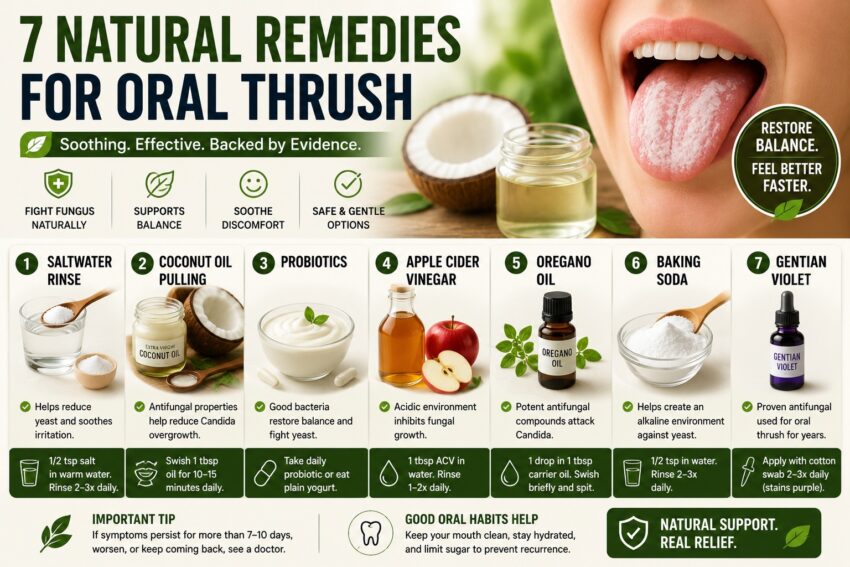
1. Saltwater Rinse
Saltwater is the simplest starting point and has legitimate antimicrobial properties. Salt creates a hostile environment for yeast by drawing water out of fungal cells through osmosis.
Dissolve half a teaspoon of non-iodized salt in a cup of warm water and rinse for 30 seconds, two to three times daily. Don’t swallow it. It won’t eradicate a heavy infection on its own, but it reduces irritation and can slow mild overgrowth.
2. Coconut Oil Pulling
Coconut oil contains caprylic acid and lauric acid, both of which have demonstrated antifungal activity against Candida in lab studies. A 2016 study published in the Journal of Medicinal Food found coconut oil was as effective as fluconazole against Candida albicans — though that was an in vitro study, not a human trial.
Oil pulling involves swishing a tablespoon of virgin coconut oil around your mouth for 10–15 minutes on an empty stomach, then spitting it out. Do this once daily. Use unrefined, cold-pressed virgin coconut oil for best results — refined versions may have less caprylic acid content.
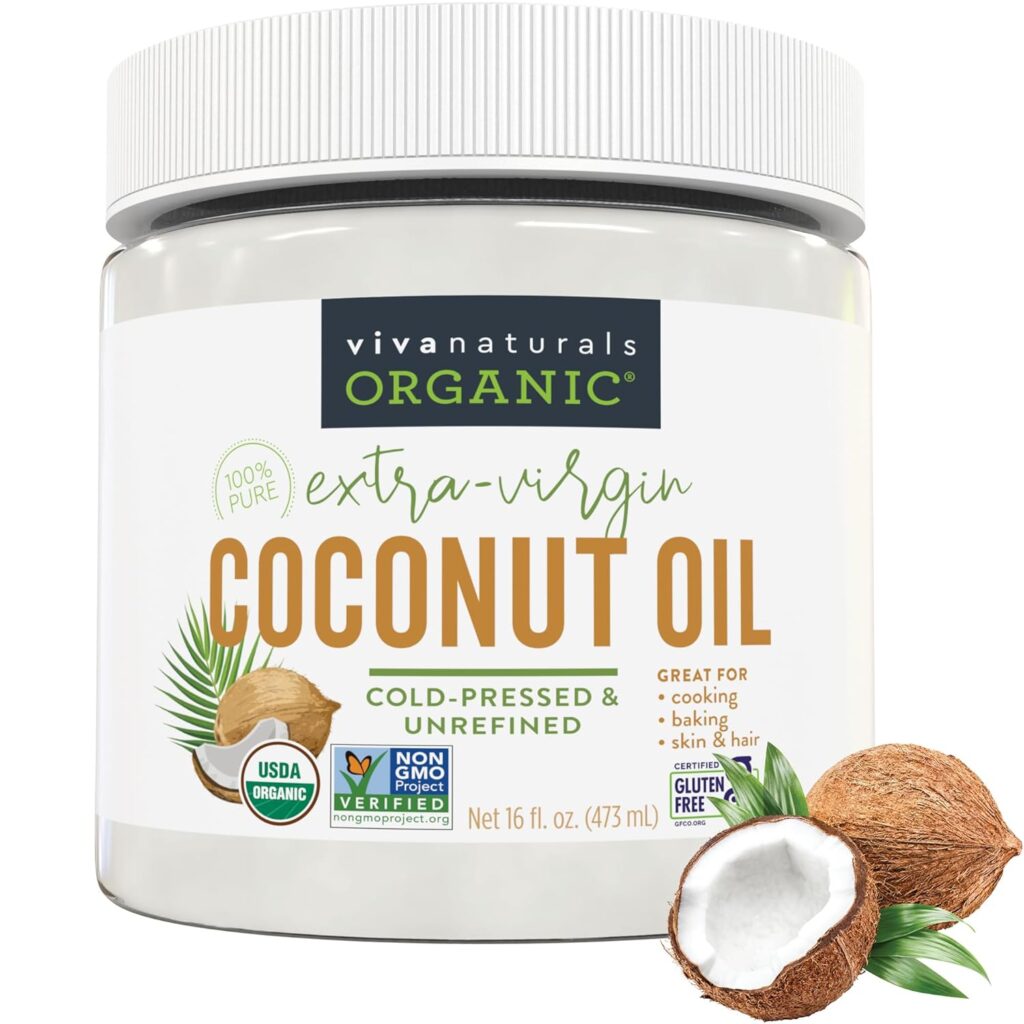
A good option: Viva Naturals Organic Extra Virgin Coconut Oil — cold-pressed, unrefined, and widely available.
3. Probiotics
This is one of the best-supported natural approaches. Probiotics — particularly Lactobacillus rhamnosus and Lactobacillus reuteri — compete directly with Candida for space and nutrients in the mouth and gut.
A 2019 review in the Journal of Oral Microbiology concluded that probiotic supplementation significantly reduced oral Candida counts, especially in elderly and denture-wearing populations. Eating plain unsweetened yogurt with live cultures also helps — the key word being live active cultures.
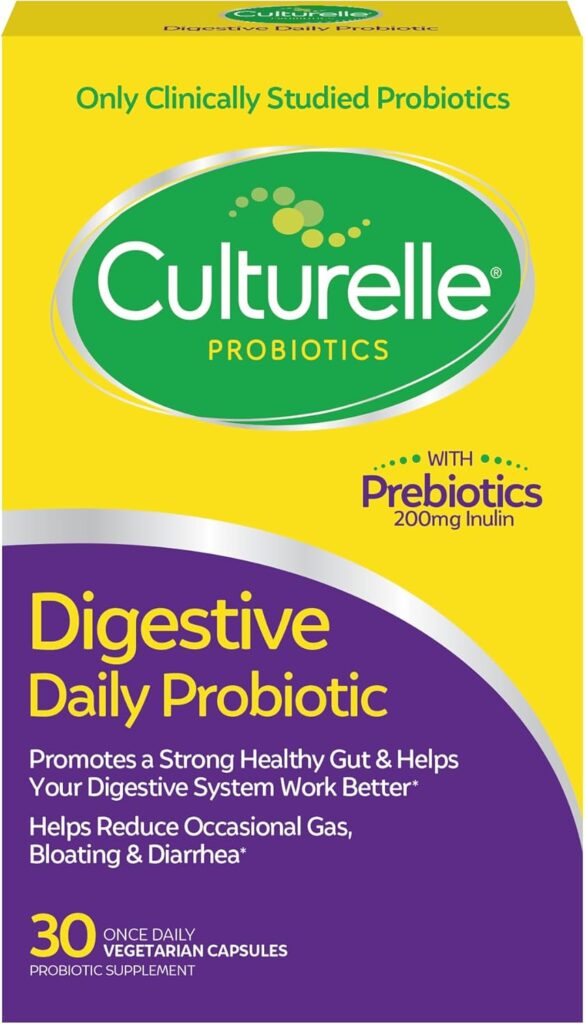
For supplemental probiotics, look for strains that specifically include Lactobacillus species. Culturelle Digestive Daily Probiotic contains Lactobacillus rhamnosus GG, one of the most studied strains for this purpose.
If you’re exploring other evidence-backed natural remedies, the same principle of restoring balance applies in our guide to natural remedies for pink eye — targeting the root imbalance, not just the symptoms.
4. Diluted Apple Cider Vinegar (ACV)
ACV is acidic enough to inhibit Candida growth — lab studies confirm it has antifungal properties. It works by lowering pH in the mouth, making it less hospitable to yeast.
Mix one tablespoon of raw, unfiltered ACV in a cup of water and use it as a mouth rinse once or twice daily. Never use it undiluted — it’s acidic enough to damage tooth enamel and irritate oral tissues. If you have mouth sores or broken tissue, skip this one entirely.
5. Oregano Oil
Oil of oregano contains carvacrol and thymol, compounds with potent antifungal properties. Studies — mostly in vitro — show it disrupts Candida cell membranes effectively.
To use it orally, dilute one drop of food-grade oregano oil in a tablespoon of carrier oil (coconut oil works well), swish briefly, and spit. Do not swallow. It’s strong-tasting and can cause irritation if overused. Our deeper look at oregano’s medicinal properties covers the broader evidence for this herb.
6. Baking Soda (Sodium Bicarbonate)
Baking soda raises the oral pH, which research shows inhibits Candida adhesion to oral surfaces. A study in the General Dentistry journal found sodium bicarbonate effective at reducing oral fungal load.
Mix half a teaspoon in a cup of water and rinse two to three times daily. It’s safe, cheap, and dentist-approved for short-term use. If you’re also dealing with mouth ulcers alongside thrush, see our guide on how to cure mouth ulcers fast naturally — some remedies overlap.
7. Gentian Violet
This one is old-school but genuinely effective. Gentian violet is a dye with antifungal properties that has been used for oral thrush — particularly in infants — for decades. The American Academy of Pediatrics (AAP) has historically acknowledged its use, though it notes it can stain tissues and clothing purple.
It’s available over the counter in 1% solution. Apply sparingly with a cotton swab to affected areas once daily for no more than seven days. Not recommended for prolonged use. For infant thrush, always consult a pediatrician before applying anything to a baby’s mouth.
8. Aloe Vera
Aloe vera has mild antifungal and anti-inflammatory properties that can soothe irritated oral tissues while mildly inhibiting Candida. A 2016 study in the Brazilian Oral Research journal found aloe vera gel comparable to nystatin in some measures of oral hygiene.
Use pure aloe vera gel (food-grade) as a mouth rinse or apply directly to patches. Rinse and spit — don’t consume large amounts. Look for gel without added alcohol or artificial flavors.
What to Avoid
Some popular “remedies” deserve skepticism:
- Hydrogen peroxide rinses: Can disrupt healthy oral bacteria and damage tissue lining. Not worth the risk for thrush.
- Colloidal silver: No credible clinical evidence for thrush. The FDA has warned against oral colloidal silver products for any health condition.
- Tea tree oil taken orally: Toxic if swallowed. Some diluted topical use has been studied, but the risk-to-benefit ratio in the mouth is poor.
- Sugar-heavy diets during treatment: Candida feeds on sugar. Continuing a high-sugar diet while treating thrush actively works against you.
Lifestyle Changes That Support Recovery
Remedies work better when you address the conditions that let thrush develop. A few key changes:
- Cut back on sugar and refined carbs — they directly fuel Candida overgrowth
- Rinse your mouth after using corticosteroid inhalers — this is the single most effective prevention for inhaler-related thrush
- Replace your toothbrush after the infection clears to prevent reinfection
- Sterilize dentures daily if you wear them — thrush loves the underside of poorly cleaned dentures
- Stay hydrated — saliva is a natural antifungal; dry mouth increases risk
- Avoid mouthwashes with alcohol during treatment — they dry out the mouth and kill beneficial bacteria
A diet shift toward fermented foods — yogurt, kefir, sauerkraut — naturally boosts the Lactobacillus bacteria that keep Candida in check. This mirrors the approach discussed in our article on natural remedies for nausea, where gut balance plays a central role.
Natural Remedies for Oral Thrush: Quick Comparison
| Remedy | Evidence Level | How to Use | Best For |
|---|---|---|---|
| Saltwater rinse | Moderate | Rinse 2–3x daily | Mild cases, soothing |
| Coconut oil pulling | Moderate (in vitro) | Swish 10–15 min, once daily | Mild–moderate cases |
| Probiotics | Strong | Daily supplement or yogurt | Prevention + treatment |
| Diluted ACV | Moderate (in vitro) | Rinse 1–2x daily, diluted | Mild cases |
| Oregano oil | Moderate (in vitro) | 1 drop diluted, swish + spit | Adults, short-term |
| Baking soda | Moderate | Rinse 2–3x daily | Mild cases, safe for most |
| Gentian violet | Strong (historical) | Apply 1x daily, max 7 days | Stubborn cases, infants (with MD) |
| Aloe vera | Moderate | Rinse or apply topically | Soothing + mild antifungal |
When to See a Doctor
Natural remedies have real limits. See a doctor if:
- Symptoms don’t improve within 7–10 days of home treatment
- Thrush spreads to your throat, causing difficulty swallowing
- You have a weakened immune system (HIV, cancer treatment, uncontrolled diabetes)
- An infant under 2 months has thrush
- You’re breastfeeding and both you and your baby have symptoms (nipple thrush)
- Symptoms keep coming back — recurrent thrush can signal an underlying condition
Doctors typically prescribe antifungal medications like nystatin (a rinse) or fluconazole (an oral tablet) for more serious cases. These are safe, effective, and shouldn’t be delayed if natural approaches aren’t working.
Recurrent oral infections — whether thrush, cold sores, or other issues — often share common immune-related triggers. Our coverage of natural remedies for cold sores explores that overlap in more detail.
Frequently Asked Questions
How long does oral thrush last with natural remedies?
Mild cases often improve within 7–14 days with consistent home treatment. If you see no improvement after a week, switch to prescription antifungals rather than continuing to wait.
Can oral thrush go away on its own?
In healthy adults with mild cases, it sometimes does — particularly if the trigger (like a short antibiotic course) has resolved. In infants and immunocompromised people, it rarely clears without treatment.
Is oral thrush contagious?
Not in the traditional sense. However, it can transfer between nursing mothers and infants, and in theory between sexual partners through oral contact. The NHS notes that standard casual contact doesn’t spread it.
Can I use coconut oil for oral thrush in babies?
Coconut oil is generally considered safe for infants in small amounts, but always consult a pediatrician before treating a baby’s oral thrush at home. Infants may need nystatin drops.
What foods should I avoid with oral thrush?
Sugar, refined carbohydrates, alcohol, and foods with yeast or mold (like aged cheeses and fermented items other than probiotic yogurt) can worsen Candida overgrowth. Focus on whole foods, lean proteins, and vegetables during recovery.
Does yogurt actually help oral thrush?
Yes, but only plain, unsweetened yogurt with live active cultures. The Lactobacillus strains in live yogurt compete with Candida and help restore microbial balance. Flavored or sweetened yogurts do the opposite.
Summary
Natural remedies for oral thrush work best on mild, uncomplicated cases — and the most credible options are probiotics, coconut oil pulling, saltwater rinses, baking soda, and diluted ACV. Gentian violet is genuinely effective but old-fashioned; probiotics have the strongest clinical backing for both prevention and treatment.
Pair whatever remedy you choose with real dietary changes — cut sugar, eat fermented foods, stay hydrated. And don’t wait longer than 10 days if things aren’t improving. Prescription antifungals are safe and fast-acting, and there’s no benefit to toughing it out when they’re available.
Medical Disclaimer: The information in this article is for educational purposes only. It is not a substitute for professional medical advice, diagnosis, or treatment. If you have symptoms of oral thrush, consult a qualified healthcare provider — especially if you are pregnant, immunocompromised, or treating an infant.